

Answer Summary:
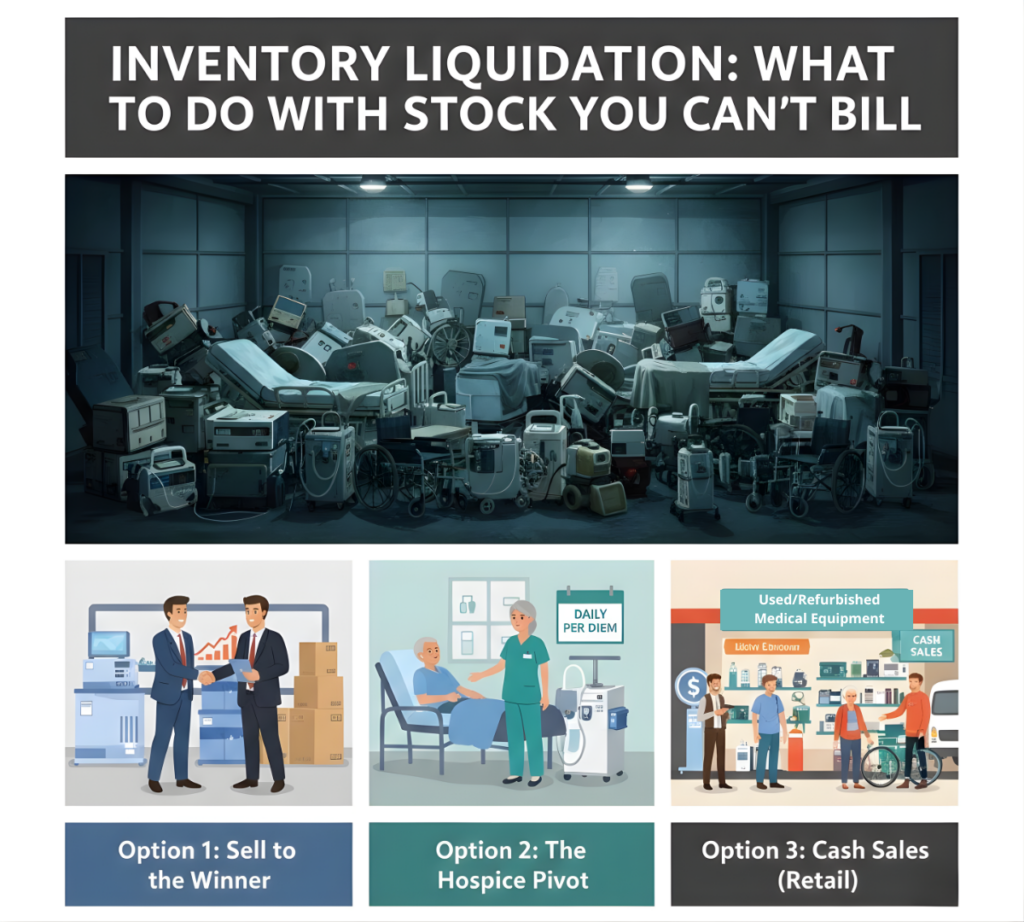
If you lost the bid and chose not to grandfather patients, you will soon have a warehouse full of used oxygen concentrators, hospital beds, and wheelchairs that you cannot bill to Medicare. Holding this inventory costs money (storage, depreciation). Providers should execute an Inventory Liquidation Plan in Q4. Options include selling assets to the “Winning” suppliers, pivoting to a “Cash/Retail” sales model, or contracting with Hospice Agencies who pay per-diem rates outside of the competitive bidding program.
Introduction:
Come January 1st, your warehouse is going to look like a graveyard of medical equipment.
Hundreds of used concentrators and beds will return from patients you transitioned.
If you can’t bill Medicare for them, are they worthless?
No. But they are depreciating assets. You need to monetize them fast.
Option 1: Sell to the Winner
The Winner needs fleet now.
- The Deal: Offer a bulk sale of your used fleet.
- The Value: A used concentrator is worth more to them (who can bill it) than to you.
- Compliance: Ensure you sanitize and recertify the equipment before transfer.
Option 2: The Hospice Pivot
Hospice is exempt from competitive bidding.
- The Model: Hospices pay a daily “Per Diem” for equipment.
- The Fit: Your used (but functional) fleet is perfect for Hospice contracts where cosmetic perfection is less critical than reliability.
Option 3: Cash Sales (Retail)
- The Model: “Used/Refurbished” sales to patients who don’t want to deal with insurance denials.
- The Requirement: You need a State Retailer License.
- The Market: Travel CPAPs, spare oxygen concentrators for RVs, backup wheelchairs.
WWS Value Proposition: We Manage the License Expansion
If you pivot to Hospice or Retail, you may need new credentialing (e.g., Hospice contracts or Retail Sales Tax permits). Wonder Worth Solutions handles the paperwork to open these new revenue channels.
Warehouse full of metal?
Turn it into cash for a Diversification Strategy Session