Author: wwsadmin

  • A Year in Review – Credentialing Lessons and Goals for 2026

    A Year in Review – Credentialing Lessons and Goals for 2026

    Introduction

    As 2025 comes to a close, it’s time to reflect on the successes, challenges, and lessons learned in credentialing. For DME providers, reviewing the past year’s performance offers valuable insights into what worked what didn’t, and how to prepare for the opportunities and challenges of 2026.
    In this final blog of the year, we’ll highlight key credentialing takeaways from 2025, discuss emerging trends to watch, and provide actionable goals to set your practice up for success in the new year.

    Key Credentialing Lessons from 2025

    1. The Importance of Automation
      • Lesson Learned:
        Practices that adopted automation tools experienced fewer errors, faster approval times, and improved efficiency.
      • Takeaway for 2026:
        Invest in credentialing software to streamline workflows and stay ahead of industry demands.
    2. Staying Ahead of Regulatory Changes
      • Lesson Learned:
        Practices that proactively adapted to new payer and accreditation requirements avoided compliance issues and penalties.
      • Takeaway for 2026:
        Monitor regulatory updates closely and conduct regular internal audits to ensure readiness.
    3. Collaboration Drives Success
      • Lesson Learned:
        Coordination between credentialing, billing, and compliance teams was essential for maintaining efficiency and avoiding revenue loss.
      • Takeaway for 2026:
        Establish clear communication channels and workflows across departments to support seamless operations.
    4. Data Is a Powerful Tool
      • Lesson Learned:
        Practices that tracked and analyzed key performance indicators (KPIs) were able to identify bottlenecks and improve processes.
      • Takeaway for 2026:
        Use dashboards and reports to monitor credentialing performance and make data-driven decisions.
    5. Patient-Centered Credentialing Matters
      • Lesson Learned:
        Efficient credentialing directly impacted patient satisfaction, trust, and retention.
      • Takeaway for 2026:
        Prioritize timely approvals and seamless payer interactions to enhance patient experiences.

    Emerging Trends to Watch in 2026

    1. AI and Advanced Analytics
      Credentialing platforms will increasingly leverage AI for predictive analytics, error detection, and process optimization.
    2. Greater Integration Across Systems
      Expect tighter integration between credentialing software, billing systems, and EHRs for improved data flow and operational efficiency.
    3. Enhanced Focus on Data Privacy
      With evolving regulations, data security and privacy will remain top priorities in credentialing processes.
    4. Value-Based Care Evolution
      Payers will place greater emphasis on outcomes and quality metrics, requiring providers to adapt their credentialing processes accordingly.
    5. Growth in Remote and Multi-State Operations
      Credentialing for telehealth and multi-state services will continue to grow, increasing the need for streamlined compliance tools.
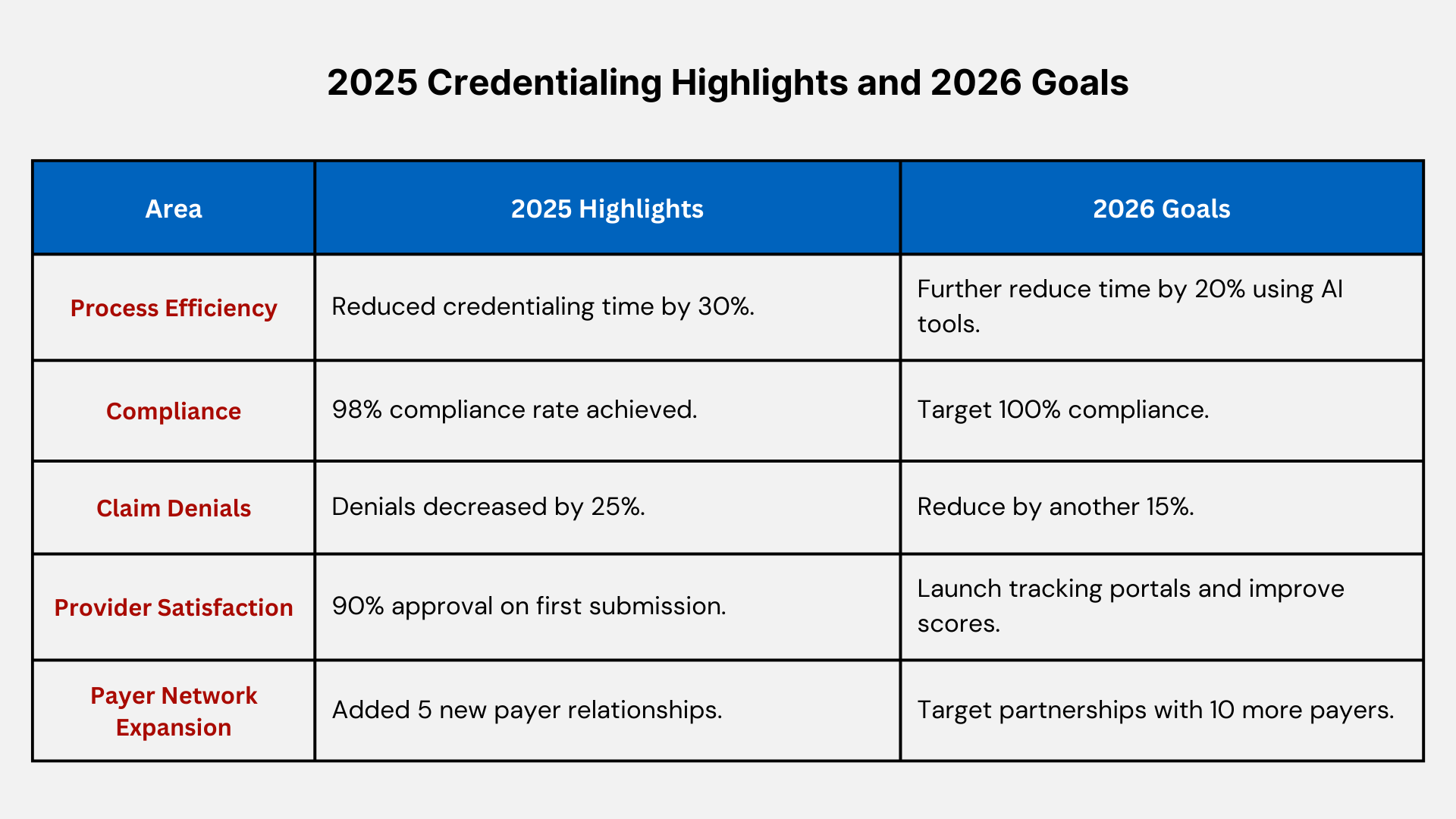
    Credentialing Trends & Goals

    Goals for Credentialing Success in 2026

    1. Automate More Processes
      • Why It’s Important:
        Automation reduces manual errors and accelerates timelines.
      • Action Plan:
        Identify high-impact areas like document tracking and payer submissions to automate in 2026.
    2. Expand Data-Driven Decision-Making
      • Why It’s Important:
        Data insights improve efficiency and compliance.
      • Action Plan:
        Set up dashboards to track KPIs like approval rates, denial trends, and turnaround times.
    3. Strengthen Payer Relationships
      • Why It’s Important:
        Strong relationships support faster approvals and smoother negotiations.
      • Action Plan:
        Schedule regular check-ins with payers to stay updated on requirements and address issues proactively.
    4. Prioritize Training and Education
      • Why It’s Important:
        Knowledgeable teams ensure compliance and minimize errors.
      • Action Plan:
        Provide ongoing training on regulatory updates, payer requirements, and credentialing best practices.
    5. Plan for Growth
      • Why It’s Important:
        Anticipating expansion ensures credentialing processes can scale without disruptions.
      • Action Plan:
        Review your credentialing workflows and tools to ensure scalability for new providers, payers, or regions.
    Pro Tip: Set Quarterly Goals
    Break down your 2026 credentialing objectives into quarterly milestones to track progress and adapt as needed.

    How WWS Can Help

    At WWS, we partner with DME providers to build on lessons learned and achieve their goals with:

    • Advanced Credentialing Solutions: Streamline workflows and stay ahead of regulatory demands with cutting-edge tools.
    • Data-Driven Insights: Use real-time reporting and analytics to monitor performance and drive improvement.
    • Tailored Support: From compliance to payer relationships, we provide expertise to meet your unique needs.

    Schedule a consultation with WWS today to set your practice up for credentialing success in 2026:
    Schedule a Meeting with WWS.

    Conclusion

    Reflecting on 2025’s credentialing lessons is key to setting actionable goals for 2026. By embracing technology, prioritizing compliance, and focusing on data-driven improvements, your practice can build on past successes and navigate future challenges with confidence.
    Partner with WWS to elevate your credentialing processes and achieve your 2026 goals—schedule your consultation today!

  • The ROI of Effective Credentialing – Why It’s Worth the Investment

    The ROI of Effective Credentialing – Why It’s Worth the Investment

    Introduction

    Effective credentialing is more than just a compliance requirement—it’s a strategic investment that directly impacts your practice’s financial health, operational efficiency, and patient satisfaction. By prioritizing credentialing processes, DME providers can avoid costly errors, secure timely reimbursements, and build stronger payer relationships, all while driving long-term profitability.
    In this blog, we’ll explore the return on investment (ROI) of effective credentialing and how implementing best practices and technologies can maximize the value of your credentialing efforts.

    The True Costs of Inefficient Credentialing

    1. Claims Denials and Revenue Loss
      • Impact:
        Errors or delays in credentialing lead to claim rejections, billing interruptions, and lost revenue.
      • Example:
        An uncredentialed provider submits claims, resulting in denials and rework costs.
    2. Increased Administrative Burden
      • Impact:
        Manual processes consume staff time and resources, reducing efficiency.
      • Example:
        Staff spend hours correcting documentation errors or resubmitting applications.
    3. Payer Delisting and Compliance Penalties
      • Impact:
        Non-compliance with payer or regulatory standards results in fines or network delisting.
      • Example:
        A missed re-credentialing deadline causes a provider to lose payer participation.
    4. Damaged Patient Satisfaction
      • Impact:
        Delays in service delivery or billing issues erode patient trust.
      • Example:
        A patient’s insurance denies coverage due to credentialing gaps, delaying their access to needed equipment.

    Key Benefits of Effective Credentialing

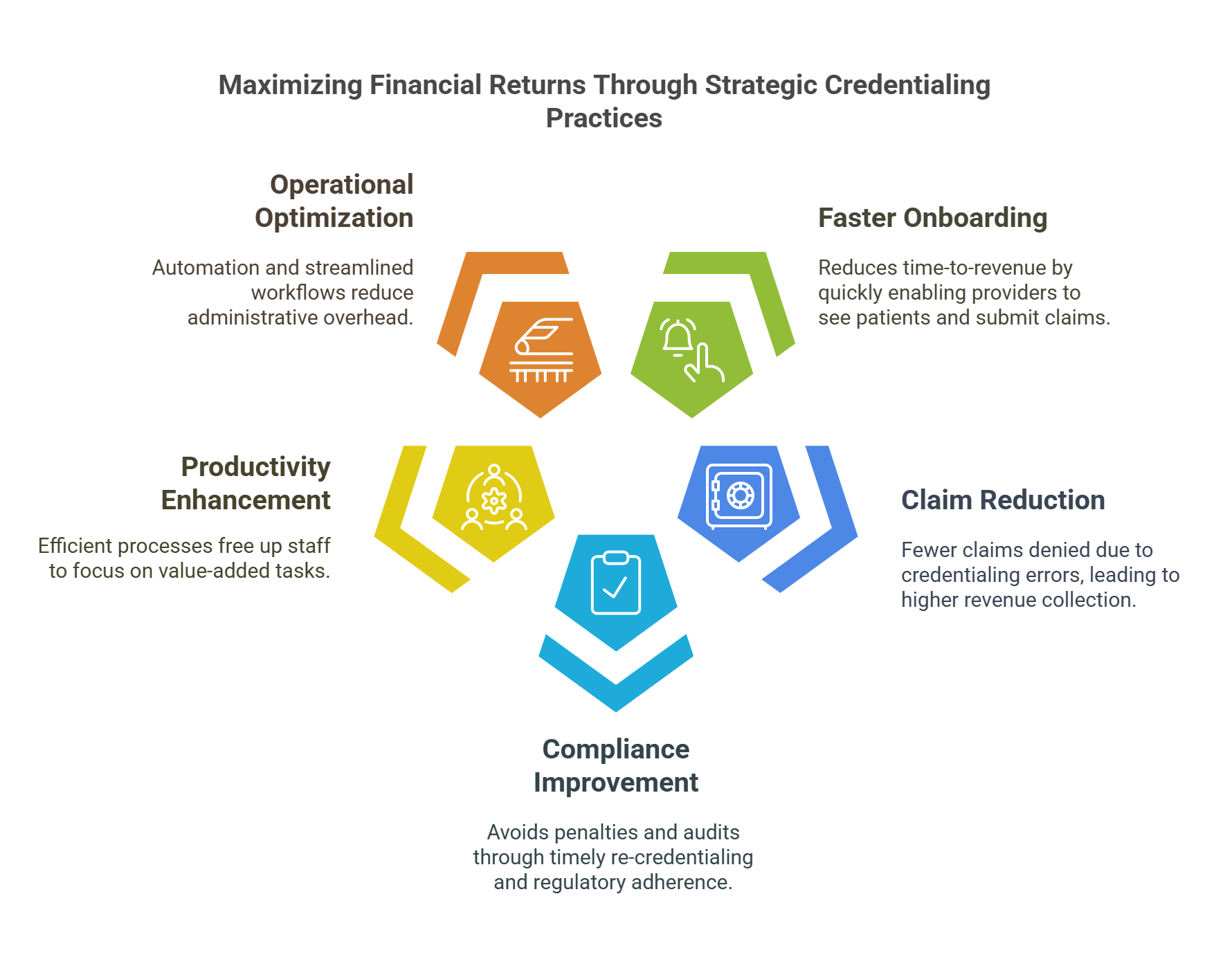
    1. Accelerated Reimbursements
      Why It Matters:
      Proper credentialing ensures timely claim approvals, reducing billing cycles and improving cash flow.
    2. Reduced Administrative Costs
      Why It Matters:
      Automation and streamlined workflows lower the time and effort required to manage credentialing.
    3. Stronger Payer Relationships
      Why It Matters:
      Accurate and efficient credentialing builds trust with payers, fostering smoother negotiations and faster issue resolution.
    4. Enhanced Patient Experience
      Why It Matters:
      Seamless credentialing supports uninterrupted care delivery, improving patient satisfaction and loyalty.
    5. Improved Compliance and Risk Mitigation
      Why It Matters:
      Adherence to payer and regulatory standards minimizes penalties and protects your practice’s reputation.

    ROI of Effective Credentialing

    Calculating the ROI of Credentialing

    1. Quantify Cost Savings
      • What to Measure:
        Time saved through automation, reduction in denial rates, and fewer rework efforts.
      • Example:
        Automating credentialing reduces staff hours by 30%, saving $50,000 annually in administrative costs.
    2. Assess Revenue Impact
      • What to Measure:
        Revenue gained by reducing denials, accelerating approvals, and avoiding delisting.
      • Example:
        Streamlined credentialing reduces denials by 20%, resulting in $100,000 in recovered revenue.
    3. Evaluate Operational Efficiency
      • What to Measure:
        Improved workflows, faster onboarding, and lower error rates.
      • Example:
        New providers are onboarded 50% faster, allowing them to generate revenue sooner.
    4. Factor in Patient Retention
      • What to Measure:
        Improved patient satisfaction and loyalty due to uninterrupted service delivery.
      • Example:
        Happy patients generate referrals, contributing to long-term revenue growth.

    Strategies to Maximize Credentialing ROI

    1. Invest in Technology
      • Why It Works:
        Automation and advanced reporting tools reduce manual errors and improve efficiency.
      • How to Do It:
        Implement credentialing platforms with features like real-time tracking and automated reminders.
    2. Train Your Credentialing Team
      • Why It Works:
        Well-trained staff ensure accuracy and consistency, reducing errors and delays.
      • How to Do It:
        Schedule regular training sessions on payer requirements, compliance updates, and best practices.
    3. Monitor Key Metrics
      • Why It Works:
        Tracking KPIs like approval timelines and denial rates provides actionable insights for improvement.
      • How to Do It:
        Use dashboards to evaluate performance and identify bottlenecks.
    4. Prioritize High-Impact Areas
      • Why It Works:
        Focusing on key payers or high-value services maximizes returns with minimal effort.
      • How to Do It:
        Identify priority payers and ensure their credentialing requirements are always met promptly.
    5. Collaborate Across Teams
      • Why It Works:
        Coordination between credentialing, billing, and compliance teams ensures seamless operations.
      • How to Do It:
        Establish clear workflows and communication channels between departments.
    Pro Tip: Track Long-Term Outcomes
    Measure the cumulative impact of improved credentialing on revenue, compliance, and patient satisfaction over time to fully understand its ROI.

    How WWS Can Help

    At WWS, we deliver measurable ROI for DME providers through:

    • Advanced Credentialing Platforms: Reduce administrative costs and accelerate approvals with automation.
    • Tailored Solutions: Focus on your practice’s unique needs to maximize financial and operational benefits.
    • Expert Support: Minimize errors, meet payer requirements, and achieve compliance with confidence.

    Schedule a consultation with WWS today to optimize your credentialing ROI and drive long-term success:
    Schedule a Meeting with WWS.

    Conclusion

    Effective credentialing is a smart investment that delivers tangible returns in the form of reduced costs, improved revenue, and enhanced patient experiences. By adopting best practices, leveraging technology, and focusing on measurable outcomes, your practice can maximize the value of its credentialing processes.
    Partner with WWS to achieve the full ROI potential of your credentialing efforts—schedule your consultation today!

  • Credentialing KPIs – How to Measure and Improve Performance

    Credentialing KPIs – How to Measure and Improve Performance

    Introduction

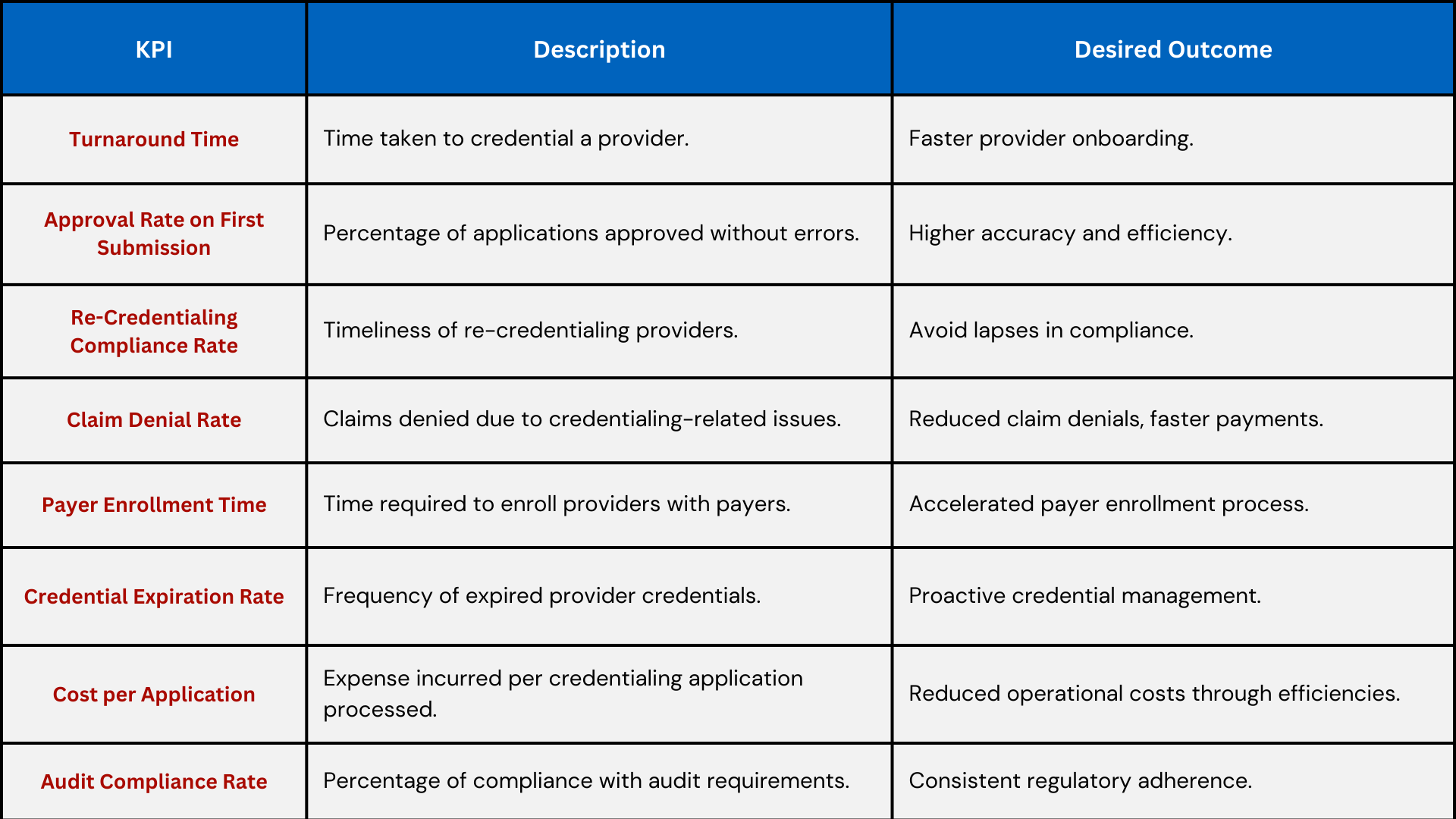
    Measuring the success of your credentialing processes is essential for maintaining compliance, minimizing delays, and optimizing operations. Key Performance Indicators (KPIs) provide actionable insights into your credentialing efficiency, highlighting areas for improvement and driving better outcomes.
    In this blog, we’ll outline the most important credentialing KPIs for DME providers and share strategies to monitor and enhance your performance.

    Why Tracking Credentialing KPIs Is Critical

    1. Identifies Bottlenecks
      KPIs reveal process inefficiencies, helping you address delays and improve workflows.
    2. Ensures Compliance
      Monitoring metrics ensures adherence to payer and regulatory standards, reducing risks of penalties or delisting.
    3. Enhances Payer Relationships
      Strong KPI performance demonstrates reliability and fosters trust with payers.
    4. Protects Revenue
      Tracking approval rates and timelines minimizes claim denials and improves cash flow.
    5. Supports Continuous Improvement
      Regularly evaluating KPIs allows you to refine processes and achieve long-term success.

    Top Credentialing KPIs for DME Providers

    1. Application Approval Rate
      • What It Measures:
        Percentage of credentialing applications approved on the first submission.
      • Why It Matters:
        A high approval rate indicates accurate documentation and efficient workflows.
    2. Average Time to Credential
      • What It Measures:
        Time taken from application submission to approval.
      • Why It Matters:
        Shorter timelines improve provider onboarding and revenue generation.
    3. Denial and Rejection Rate
      • What It Measures:
        Percentage of applications denied or sent back for revisions.
      • Why It Matters:
        High rates highlight documentation errors or inconsistencies that need correction.
    4. Claims Denials Due to Credentialing Errors
      • What It Measures:
        Number or percentage of claims denied due to credentialing-related issues.
      • Why It Matters:
        Reducing these denials protects revenue and improves payer relationships.
    5. Re-Credentialing Compliance Rate
      • What It Measures:
        Percentage of providers re-credentialed before deadlines.
      • Why It Matters:
        Ensures uninterrupted payer participation and compliance.
    6. Payer-Specific Turnaround Times
      • What It Measures:
        Average time for credentialing approvals with individual payers.
      • Why It Matters:
        Identifies payers with slower processes, enabling targeted follow-ups.
    7. Provider Credentialing Costs
      • What It Measures:
        Total costs of credentialing activities divided by the number of providers.
      • Why It Matters:
        Helps identify inefficiencies and opportunities to reduce administrative expenses.

    KPIs for DME Providers

    Strategies to Monitor and Improve Credentialing KPIs

    1. Use Real-Time Dashboards
      • Why It Works:
        Dashboards provide instant visibility into performance metrics and trends.
      • How to Do It:
        Invest in credentialing software with built-in reporting and analytics features.
    2. Conduct Regular Performance Reviews
      • Why It Works:
        Reviewing KPIs regularly highlights areas for improvement.
      • How to Do It:
        Schedule monthly or quarterly reviews with your team to discuss metrics and action plans.
    3. Automate Tracking and Reporting
      • Why It Works:
        Automation ensures accurate data collection and minimizes manual effort.
      • How to Do It:
        Use tools that generate real-time reports and send alerts for underperforming metrics.
    4. Address Root Causes of Denials
      • Why It Works:
        Resolving common issues improves approval rates and reduces delays.
      • How to Do It:
        Analyze denial trends and implement targeted training or process adjustments.
    5. Align KPIs with Organizational Goals
      • Why It Works:
        Focusing on relevant metrics ensures your credentialing process supports broader objectives.
      • How to Do It:
        Collaborate with leadership to identify priority KPIs that align with your practice’s strategic goals.
    Pro Tip: Benchmark Your Performance
    Compare your KPIs to industry benchmarks to evaluate your practice’s credentialing efficiency and set realistic improvement targets.

    How WWS Can Help

    At WWS, we empower DME providers to monitor and enhance credentialing performance with:

    • Customizable Dashboards: Track key metrics in real time with tailored visualizations.
    • Automation Tools: Simplify data collection, reporting, and trend analysis.
    • Expert Guidance: Identify opportunities for improvement and implement best practices for KPI success.

    Schedule a consultation with WWS today to optimize your credentialing performance:
    Schedule a Meeting with WWS.

    Conclusion

    Tracking and improving credentialing KPIs is essential for optimizing your processes, maintaining compliance, and protecting revenue. By focusing on the right metrics, leveraging technology, and fostering a culture of continuous improvement, your practice can achieve long-term success in credentialing.
    Partner with WWS to elevate your credentialing performance and streamline your operations—schedule your consultation today!
  • Credentialing Best Practices for Growing DME Practices

    Credentialing Best Practices for Growing DME Practices

    Introduction

    Growth is an exciting milestone for any DME practice, but it brings unique challenges, particularly in credentialing. Expanding into new locations, onboarding more providers, or increasing service offerings often complicate compliance and payer interactions. A proactive approach to credentialing ensures that your growth is smooth, compliant, and scalable.
    In this blog, we’ll cover the best practices for managing credentialing in a growing DME practice, helping you maintain efficiency and compliance as you expand.

    Challenges of Credentialing in a Growing DME Practice

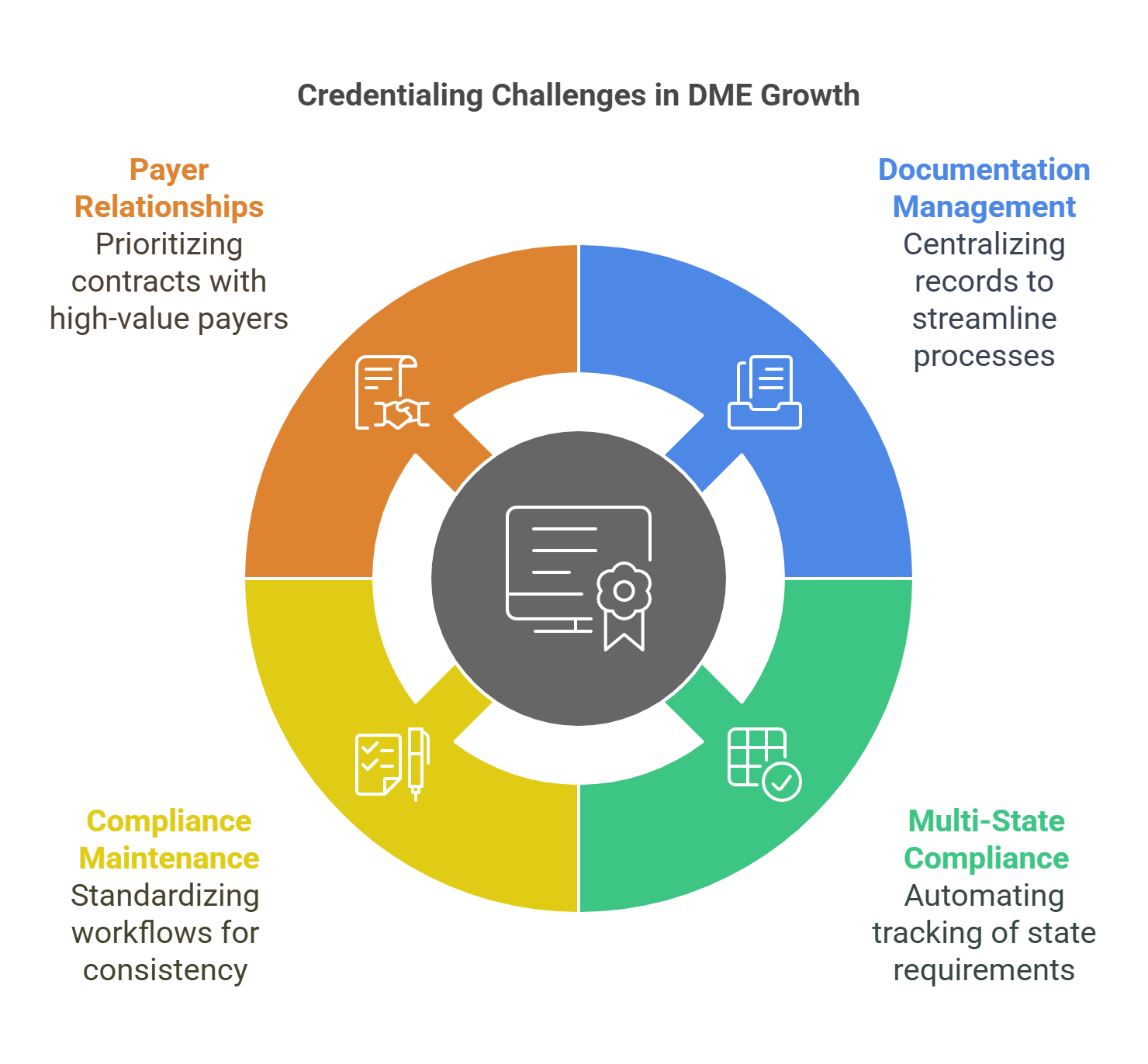
    1. Managing Increased Documentation
      • Challenge: As your provider network grows, so does the volume of licenses, certifications, and other documentation to manage.
      • Solution: Centralize all credentialing records in a secure, easily accessible system.
    2. Navigating Multi-State Requirements
      • Challenge: Expanding into new regions requires compliance with diverse state regulations and licensing standards.
      • Solution: Use automated tools to track state-specific credentialing requirements and deadlines.
    3. Maintaining Compliance During Rapid Growth
      • Challenge: Scaling operations quickly increases the risk of credentialing lapses or errors.
      • Solution: Develop standardized workflows to ensure consistent compliance across all providers and locations.
    4. Expanding Payer Relationships
      • Challenge: Establishing contracts and credentialing with new payers in expanded service areas can delay revenue generation.
      • Solution: Build payer-specific credentialing workflows and prioritize high-value payers in new regions.

    Growing DME Practices

    Best Practices for Credentialing in Growing DME Practices

    1. Standardize Credentialing Workflows
      • Why It Works:
        Standardization ensures consistency and reduces errors across a larger team or network.
      • How to Do It:
        Create detailed checklists and templates for all credentialing tasks, from documentation collection to payer submission.
    2. Centralize Credentialing Management
      • Why It Works:
        A centralized system simplifies access to records and improves coordination across multiple locations.
      • How to Do It:
        Use a credentialing platform to store provider files, automate updates, and track deadlines.
    3. Prioritize High-Value Payers and Providers
      • Why It Works:
        Focusing on high-impact areas minimizes disruptions during growth phases.
      • How to Do It:
        Identify payers with the largest patient base and prioritize their credentialing requirements first.
    4. Leverage Automation to Scale
      • Why It Works:
        Automation reduces manual effort, enabling your team to handle increased credentialing workloads efficiently.
      • How to Do It:
        Invest in credentialing software that tracks applications, sends reminders, and validates documentation.
    5. Train and Expand Your Credentialing Team
      • Why It Works:
        A well-prepared team can handle the complexities of growth without sacrificing accuracy or compliance.
      • How to Do It:
        Provide ongoing training and consider hiring additional staff as your credentialing needs grow.
    6. Monitor Metrics and Performance
      • Why It Works:
        Tracking key metrics ensures that growth doesn’t compromise credentialing efficiency or compliance.
      • How to Do It:
        Use dashboards to monitor approval timelines, error rates, and compliance trends.
    Pro Tip: Plan Credentialing for Growth in Advance
    Begin credentialing for new providers, payers, or locations as soon as expansion plans are finalized to avoid delays in service delivery or revenue generation.

    How WWS Can Help

    At WWS, we help growing DME practices manage credentialing with:

    • Scalable Solutions: Tailored workflows and automation tools to handle increased credentialing volumes.
    • Compliance Expertise: Ensure consistency and adherence to payer and regulatory requirements across all locations.
    • Proactive Planning: Support for expanding into new regions or onboarding additional providers.

    Schedule a consultation with WWS today to streamline credentialing during your practice’s growth:
    Schedule a Meeting with WWS.

    Conclusion

    Growth brings opportunities and challenges, but with the right credentialing strategies, your DME practice can scale efficiently and maintain compliance. By standardizing workflows, leveraging technology, and prioritizing high-impact areas, you can ensure that your expansion is smooth and successful.
    Partner with WWS to optimize credentialing and support your practice’s growth—schedule your consultation today!

  • The Future of Credentialing – Trends and Innovations to Watch

    The Future of Credentialing – Trends and Innovations to Watch

    Introduction

    As the healthcare industry continues to evolve, so do the processes and technologies surrounding credentialing. Emerging trends and innovations are transforming how DME providers manage compliance, streamline workflows, and improve payer relationships. Staying ahead of these changes is essential for maintaining efficiency, reducing costs, and meeting growing regulatory demands.
    In this blog, we’ll explore the future of credentialing, highlighting key trends and technological innovations shaping the industry and how DME providers can prepare for what’s ahead.

    Key Trends Shaping the Future of Credentialing

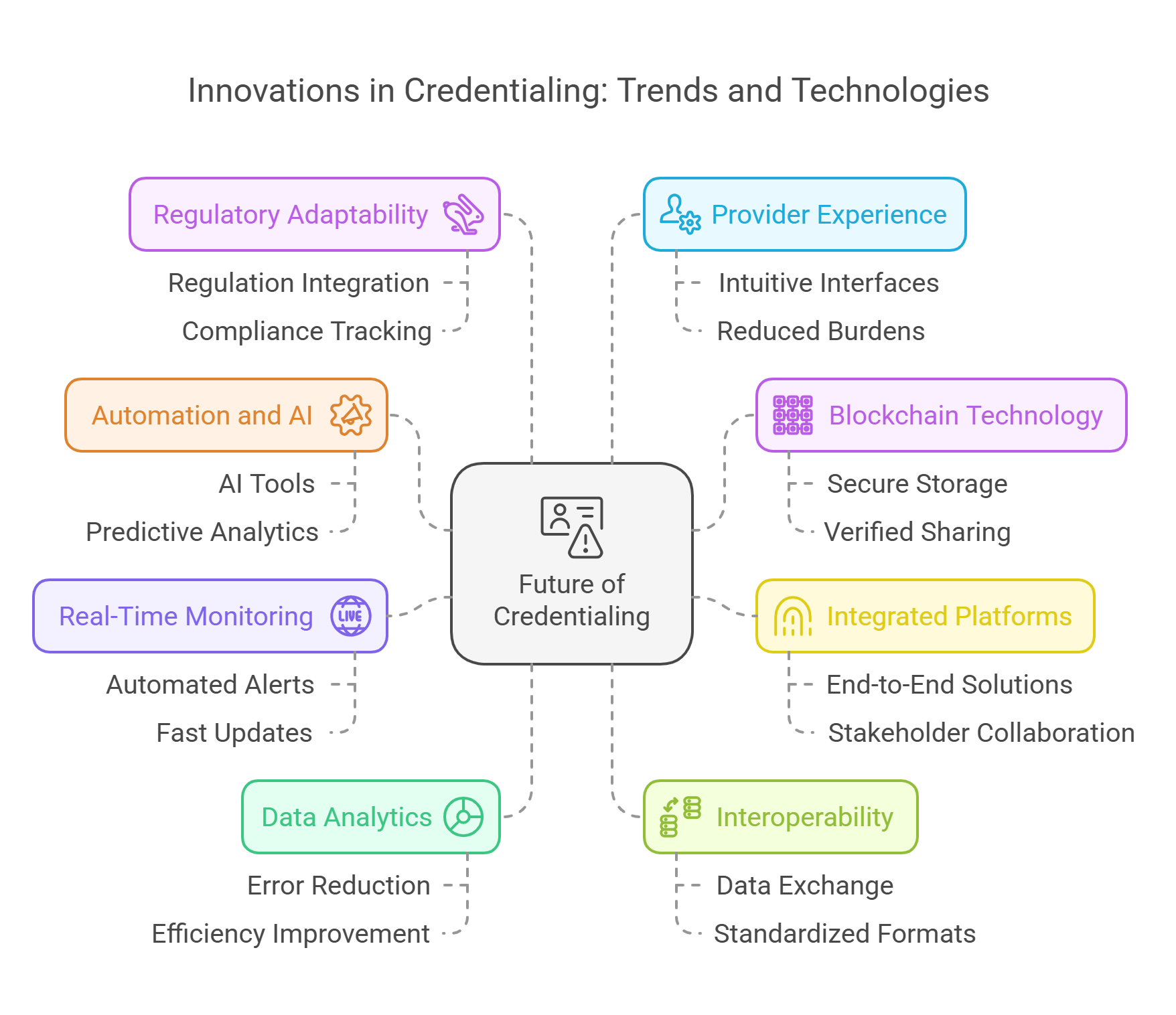
    1. Increased Use of Automation and AI
      • What to Expect:
        Credentialing systems will leverage artificial intelligence (AI) and automation to reduce manual tasks, flag errors, and accelerate processing times.
      • Impact on DME Providers:
        Fewer administrative delays, improved accuracy, and faster approvals.
    2. Integration with Advanced Analytics
      • What to Expect:
        Credentialing platforms will offer predictive analytics to forecast trends, identify bottlenecks, and optimize workflows.
      • Impact on DME Providers:
        Data-driven insights for improving credentialing efficiency and compliance.
    3. Shift Toward Interoperability
      • What to Expect:
        Credentialing systems will integrate more seamlessly with electronic health records (EHRs), billing platforms, and other healthcare systems.
      • Impact on DME Providers:
        Enhanced data sharing, reduced redundancies, and smoother operations across departments.
    4. Emphasis on Provider Mobility
      • What to Expect:
        Credentialing processes will adapt to support providers working across multiple states or regions, particularly in telehealth and remote care.
      • Impact on DME Providers:
        Streamlined multi-state compliance and faster onboarding for new hires.
    5. Regulatory Adaptations for Value-Based Care
      • What to Expect:
        Credentialing will increasingly focus on quality metrics, patient outcomes, and cost efficiency to align with value-based care models.
      • Impact on DME Providers:
        Greater emphasis on tracking and reporting performance metrics during credentialing.

    Technological Innovations in Credentialing

    1. Blockchain Technology
      • How It Works:
        Creates a secure, decentralized ledger for storing provider credentials and tracking updates.
      • Benefits:
        Reduces duplication, enhances data security, and simplifies information sharing across organizations.
    2. Cloud-Based Credentialing Systems
      • How It Works:
        Allows providers to access credentialing data from anywhere with internet connectivity.
      • Benefits:
        Greater flexibility, centralized management, and streamlined collaboration.
    3. Biometric Verification
      • How It Works:
        Uses fingerprint or facial recognition to verify provider identities and ensure credential authenticity.
      • Benefits:
        Enhanced security and reduced risk of fraud.
    4. Real-Time Compliance Monitoring
      • How It Works:
        Automatically tracks regulatory updates and flags areas of non-compliance in real time.
      • Benefits:
        Immediate action on compliance issues, minimizing risks and penalties.

    Future of Credentialing

    Preparing Your Practice for the Future of Credentialing

    1. Embrace Technology Early
      • Why It Matters:
        Early adoption positions your practice to stay competitive as new systems and tools become standard.
      • How to Do It:
        Invest in credentialing platforms with automation, analytics, and integration capabilities.
    2. Stay Informed on Industry Trends
      • Why It Matters:
        Understanding emerging trends helps you adapt proactively to changes in credentialing requirements.
      • How to Do It:
        Subscribe to industry updates, attend conferences, and network with peers to stay ahead.
    3. Focus on Data Security
      • Why It Matters:
        Protecting sensitive provider and patient information is critical as credentialing becomes more digitized.
      • How to Do It:
        Implement robust cybersecurity measures and ensure compliance with data privacy regulations like HIPAA.
    4. Train Your Team on New Tools
      • Why It Matters:
        Maximizing the benefits of advanced credentialing tools requires a well-trained staff.
      • How to Do It:
        Schedule ongoing training sessions and provide access to user-friendly resources.
    5. Partner with Credentialing Experts
      • Why It Matters:
        Industry experts can guide you in adopting best practices and navigating emerging challenges.
      • How to Do It:
        Collaborate with a credentialing service provider to stay ahead of innovations and maintain compliance.
    Pro Tip: Prioritize Scalable Solutions
    Choose credentialing systems and tools that can grow with your practice, accommodating future expansions and new regulatory demands.

    How WWS Can Help

    At WWS, we prepare DME providers for the future of credentialing with:

    • Cutting-Edge Technology: Access the latest tools and platforms to automate, track, and optimize your credentialing processes.
    • Expert Guidance: Stay ahead of trends with insights and strategies tailored to your practice’s needs.
    • Compliance Support: Navigate evolving regulations with confidence, ensuring seamless operations.

    Schedule a consultation with WWS today to future-proof your credentialing processes:
    Schedule a Meeting with WWS.

    Conclusion

    The future of credentialing is driven by technology, data integration, and evolving regulatory demands. By embracing these innovations and adapting proactively, DME providers can streamline workflows, enhance compliance, and maintain a competitive edge.
    Partner with WWS to navigate the future of credentialing and optimize your practice—schedule your consultation today!
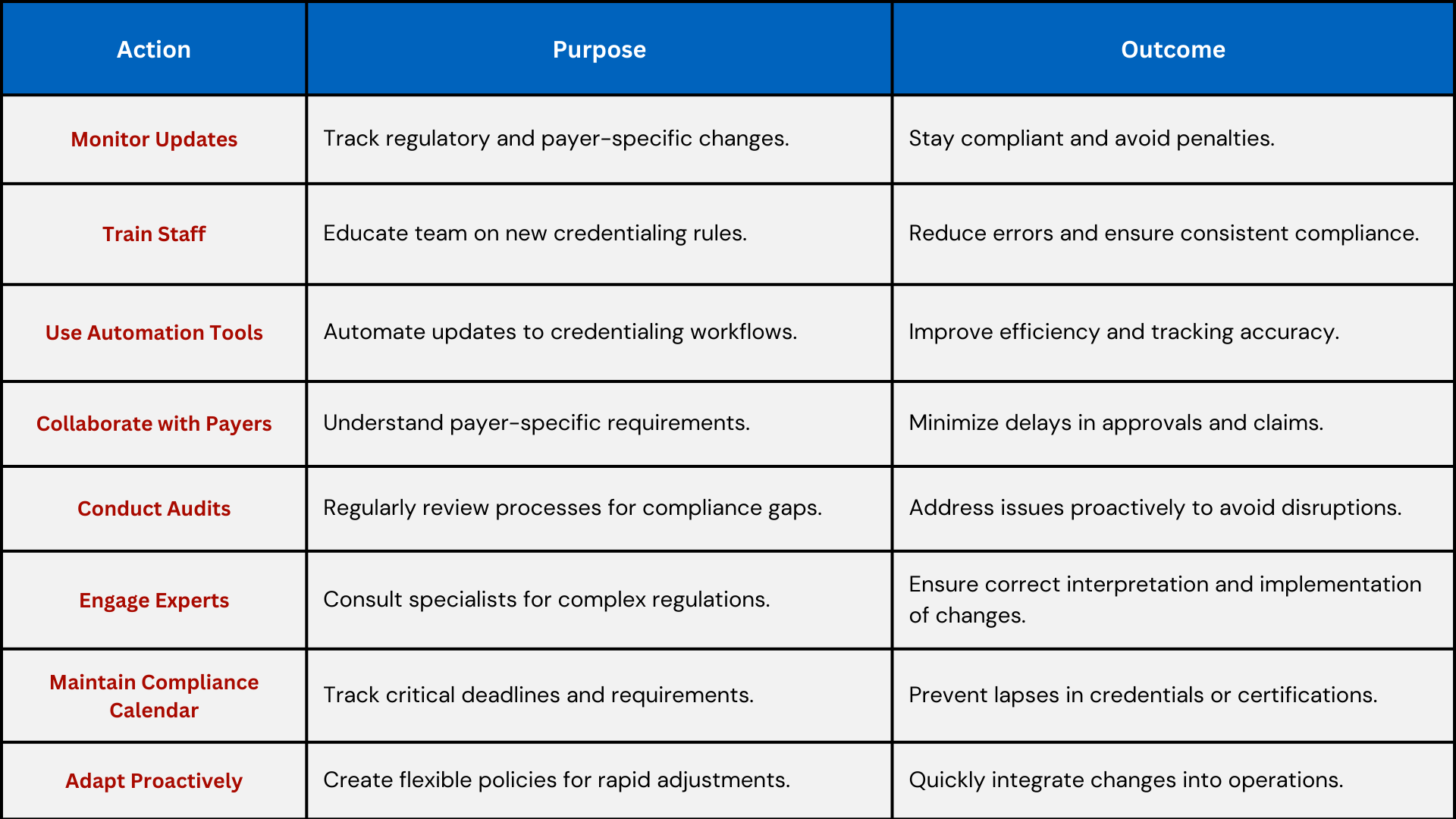
  • Credentialing and Compliance – Staying Ahead of Regulatory Changes

    Credentialing and Compliance – Staying Ahead of Regulatory Changes

    Introduction

    The healthcare landscape is continuously evolving, with frequent updates to payer rules, accreditation standards, and state and federal regulations. For DME providers, staying compliant with these changes is critical to avoiding penalties, maintaining network participation, and ensuring seamless operations. Credentialing plays a central role in aligning your practice with regulatory updates and safeguarding your compliance efforts.
    In this blog, we’ll discuss the challenges of navigating regulatory changes, highlight their impact on credentialing, and share strategies to stay ahead in a dynamic environment.

    How Regulatory Changes Affect Credentialing

    1. New Accreditation Standards
      Accrediting bodies like ACHC, CHAP, and others regularly update their criteria, requiring providers to adapt quickly.
    2. State-Specific Licensing Updates
      DME providers must navigate evolving state requirements for licensing, certifications, and documentation.
    3. Payer-Specific Rules
      Payers frequently revise their credentialing guidelines, creating variations in processes and documentation needs.
    4. Increased Focus on Data Privacy and Security
      Compliance with laws like HIPAA and state-specific privacy regulations adds complexity to credentialing workflows.
    5. Stricter Enforcement of Quality Metrics
      Providers must meet updated performance benchmarks to remain compliant and competitive in value-based care models.

    Challenges of Keeping Up with Regulatory Changes

    1. Monitoring Multiple Sources
      • Challenge: Staying updated on changes from multiple payers, accrediting bodies, and regulatory agencies.
      • Solution:
        Subscribe to industry newsletters, attend webinars, and use credentialing platforms that provide regulatory alerts.
    2. Managing Documentation Updates
      • Challenge: Adapting to new requirements for licenses, certifications, and policies.
      • Solution:
        Centralize document management to ensure timely updates and compliance.
    3. Meeting Tight Deadlines
      • Challenge: Regulatory changes often come with short implementation timelines, creating administrative pressure.
      • Solution:
        Automate tracking and reminders to stay ahead of compliance deadlines.
    4. Training Staff on New Standards
      • Challenge: Ensuring your team understands and implements updated regulations correctly.
      • Solution:
        Provide regular training sessions and maintain up-to-date policy manuals.

    Navigating Regulatory Changes

    Strategies for Staying Ahead of Regulatory Changes

    1. Centralize Regulatory Monitoring
      • Why It Works:
        Centralizing updates ensures you capture changes from all relevant sources.
      • How to Do It:
        Use software tools that aggregate updates from payers, accrediting bodies, and regulatory agencies.
    2. Automate Compliance Tracking
      • Why It Works:
        Automation minimizes human error and keeps you ahead of critical deadlines.
      • How to Do It:
        Implement credentialing software to track expirations, monitor compliance status, and send alerts.
    3. Build a Compliance Committee
      • Why It Works:
        A dedicated team ensures consistent oversight and quick adaptation to changes.
      • How to Do It:
        Assign team members to specific areas of compliance, such as payer rules or licensing requirements.
    4. Conduct Regular Internal Audits
      • Why It Works:
        Audits identify gaps and ensure readiness for external reviews or inspections.
      • How to Do It:
        Use checklists tailored to updated regulations and payer requirements.
    5. Invest in Ongoing Staff Education
      • Why It Works:
        Training helps staff stay informed and implement new standards effectively.
      • How to Do It:
        Schedule periodic workshops, share regulatory updates, and provide access to educational resources.
    Pro Tip: Partner with Credentialing Experts
    Credentialing experts stay on top of regulatory changes, providing the insights and tools you need to remain compliant without adding to your administrative workload.

    How WWS Can Help

    At WWS, we help DME providers navigate regulatory changes and maintain compliance with:

    • Regulatory Monitoring Tools: Stay updated on new requirements with automated alerts and tailored guidance.
    • Compliance Audits: Proactively identify and address gaps in your credentialing and documentation processes.
    • Staff Training Support: Provide your team with the resources they need to adapt to evolving standards.

    Schedule a consultation with WWS today to stay ahead of regulatory changes and streamline your compliance efforts:
    Schedule a Meeting with WWS.

    Conclusion

    Regulatory changes can be challenging to navigate, but with the right strategies and tools, your practice can maintain compliance and protect its operations. By centralizing monitoring, automating workflows, and investing in staff education, you can stay ahead of evolving requirements and continue delivering quality care.
    Partner with WWS to simplify credentialing and compliance in a changing regulatory environment—schedule your consultation today!

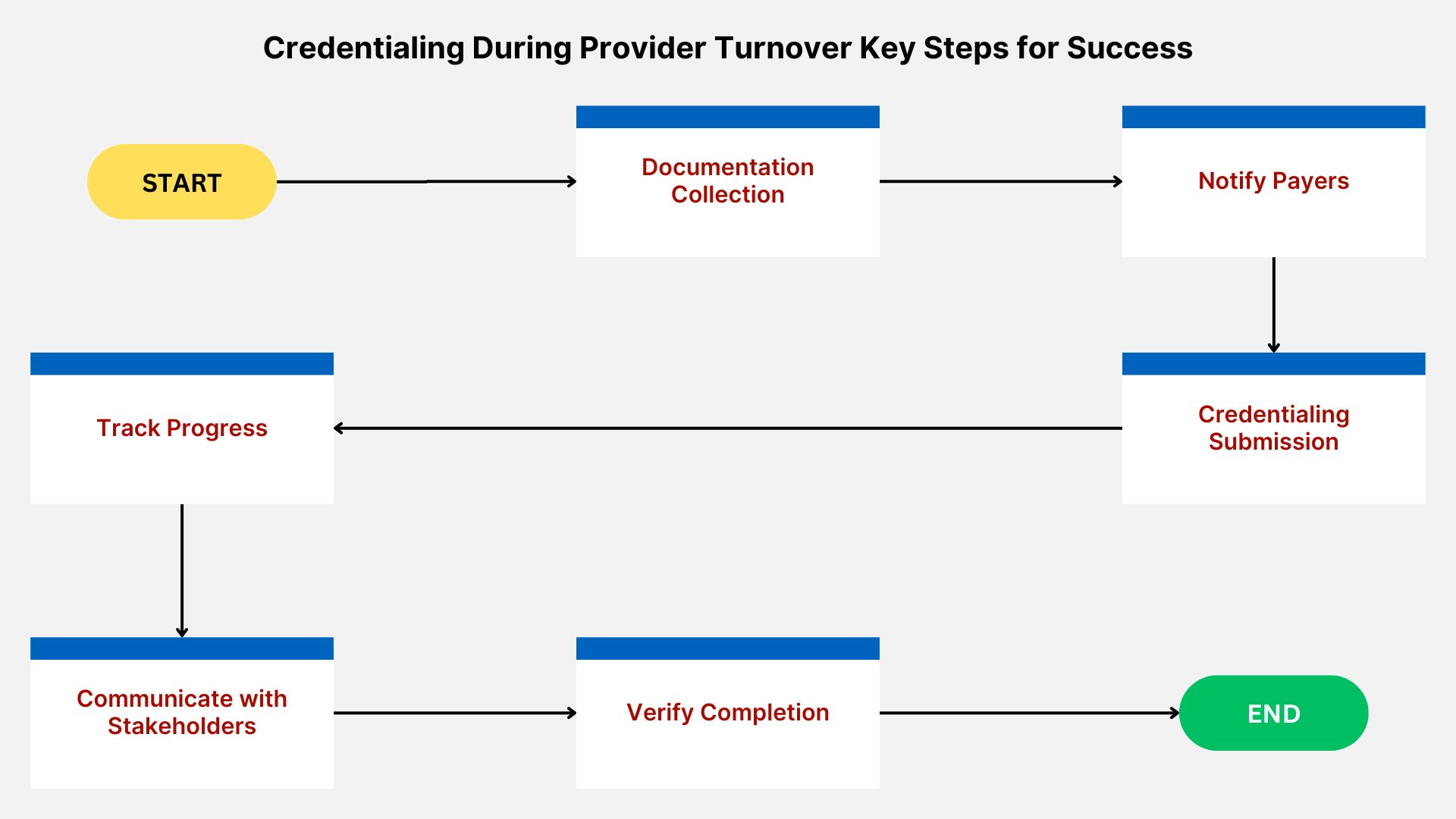
  • Credentialing During Provider Turnover – Maintaining Continuity and Compliance

    Credentialing During Provider Turnover – Maintaining Continuity and Compliance

    Introduction

    Provider turnover is an inevitable challenge for DME practices. Whether onboarding new providers or managing the departure of existing ones, credentialing during these transitions is critical to maintaining compliance and avoiding disruptions in service delivery and revenue.
    In this blog, we’ll explore the key challenges of credentialing during provider turnover and share actionable strategies to ensure seamless transitions while maintaining operational continuity.

    The Impact of Provider Turnover on Credentialing

    1. Risk of Credentialing Gaps
      Turnover can lead to lapses in provider credentials, resulting in billing interruptions or payer delisting.
    2. Increased Administrative Workload
      Managing credentialing for departing and incoming providers adds to the administrative burden.
    3. Potential for Errors and Delays
      The rush to credential new providers or manage transitions can result in incomplete applications or missed deadlines.
    4. Compliance Challenges
      Ensuring all licensing, payer enrollment, and documentation requirements are met during transitions can strain resources.

    Challenges in Credentialing During Provider Turnover

    1. Onboarding New Providers Quickly
      • Challenge: Delays in credentialing new hires impact their ability to see patients and bill payers.
      • Solution:
        Start credentialing during the hiring process and use automation to expedite submissions.
    2. Managing Departing Provider Responsibilities
      • Challenge: Uncredentialed replacements may not be able to take over patient care or billing responsibilities immediately.
      • Solution:
        Overlap credentialing timelines to ensure continuity of care and reimbursement.
    3. Updating Payer Networks
      • Challenge: Failure to update payers about provider changes can lead to compliance issues or claims rejections.
      • Solution:
        Notify payers promptly and provide necessary documentation for updates.
    4. Handling Increased Documentation Requirements
      • Challenge: Collecting, verifying, and managing documentation for multiple transitions strains administrative resources.
      • Solution:
        Centralize documentation management to streamline the process.

    Provider Turnover

    Strategies for Seamless Credentialing During Provider Turnover

    1. Create a Turnover Credentialing Checklist
      • Why It Works:
        A structured checklist ensures all steps are completed for both departing and incoming providers.
      • How to Do It:
        Include items like payer notifications, license verifications, and documentation updates.
    2. Start Early for New Hires
      • Why It Works:
        Initiating credentialing during onboarding reduces delays.
      • How to Do It:
        Begin collecting documentation and submitting applications as soon as the hiring process begins.
    3. Overlap Credentialing Timelines
      • Why It Works:
        Overlapping ensures that replacements are ready to take over responsibilities without interruptions.
      • How to Do It:
        Coordinate credentialing timelines for departing and incoming providers to minimize gaps.
    4. Automate Documentation and Tracking
      • Why It Works:
        Automation reduces errors and ensures deadlines are met.
      • How to Do It:
        Use credentialing software to track provider statuses, manage deadlines, and send reminders.
    5. Communicate Clearly with Payers
      • Why It Works:
        Timely communication ensures network updates are processed smoothly.
      • How to Do It:
        Assign a dedicated team member to handle payer notifications and follow-ups.
    Pro Tip: Maintain a Credentialing Reserve Team
    Prepare a cross-trained credentialing team that can handle increased workloads during provider transitions without sacrificing accuracy.

    How WWS Can Help

    At WWS, we simplify credentialing during provider turnover with:

    • Comprehensive Turnover Workflows: Tailored strategies to ensure smooth transitions for departing and incoming providers.
    • Automation Tools: Streamline tracking, submissions, and documentation management for turnover scenarios.
    • Payer Communication Support: Ensure timely updates and approvals with expert liaison services.

    Schedule a consultation with WWS today to manage credentialing during provider turnover seamlessly:
    Schedule a Meeting with WWS.

    Conclusion

    Provider turnover doesn’t have to disrupt your operations or compliance. By starting credentialing early, automating workflows, and maintaining clear communication with payers, your practice can navigate transitions effectively and maintain service continuity.
    Partner with WWS to streamline credentialing during provider turnover—schedule your consultation today!
  • The Role of Credentialing in Revenue Cycle Management (RCM)

    The Role of Credentialing in Revenue Cycle Management (RCM)

    Introduction

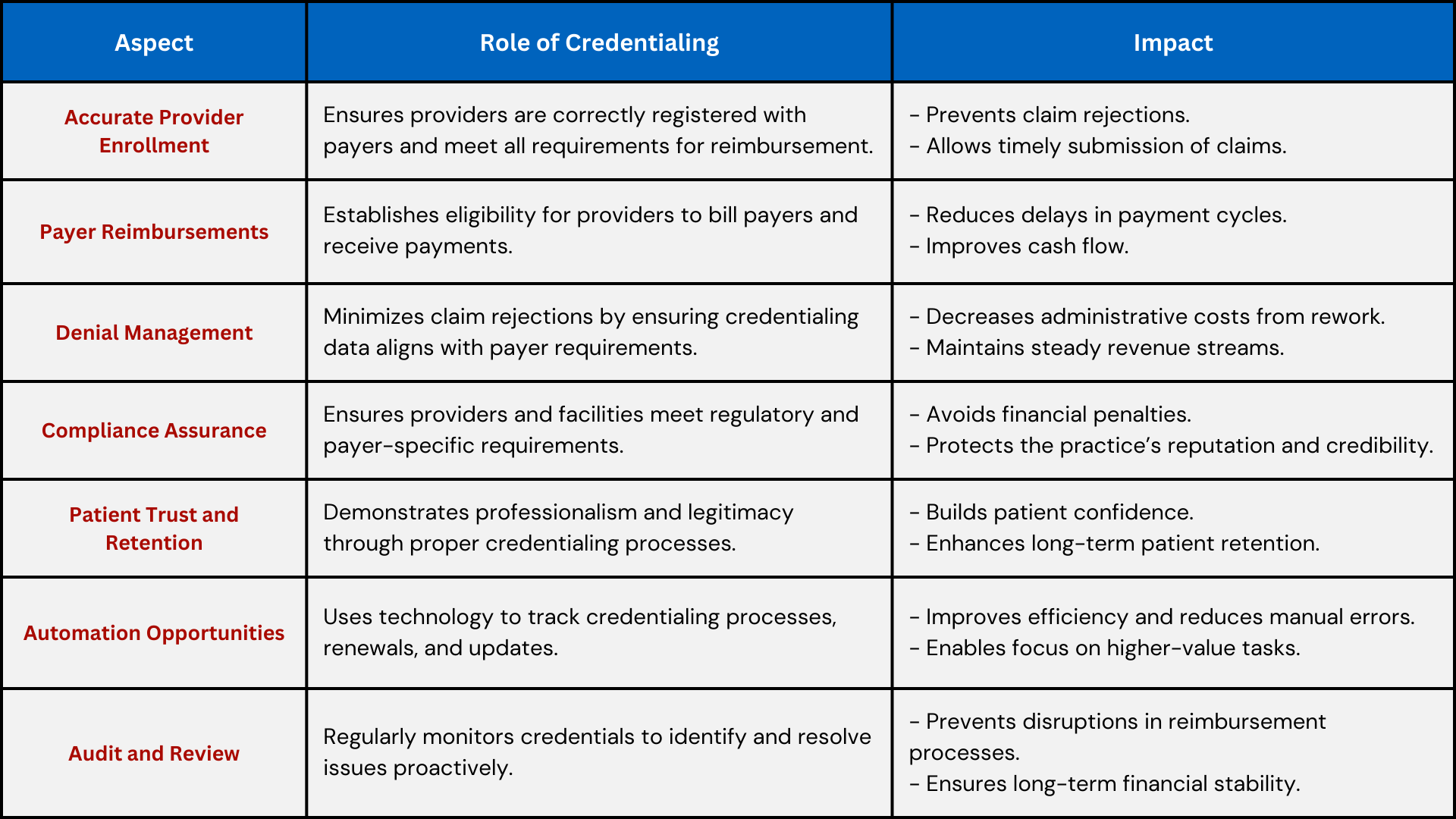
    Credentialing is a critical yet often overlooked component of Revenue Cycle Management (RCM). Ensuring providers are properly credentialed with payers is essential for seamless billing, timely reimbursements, and maintaining a healthy cash flow. For DME providers, delays or errors in credentialing can lead to denied claims, operational inefficiencies, and lost revenue.
    In this blog, we’ll explore how credentialing impacts RCM, common challenges, and strategies to optimize your credentialing processes for financial success.

    How Credentialing Influences RCM

    1. Ensures Claims Are Accepted
      Impact: Payers only process claims from credentialed providers. Missing or incomplete credentials result in denials, delaying reimbursements.
    2. Prevents Revenue Loss
      Impact: Credentialing errors or delays disrupt cash flow and increase administrative costs to rework claims.
    3. Facilitates Contract Negotiations
      Impact: Accurate credentialing ensures providers can secure favorable terms during payer contracting.
    4. Enhances Billing Accuracy
      Impact: Credentialing ensures correct payer information is linked to providers, reducing claim rejections due to mismatched data.
    5. Strengthens Payer Relationships
      Impact: Efficient credentialing builds trust with payers, supporting faster approvals and smoother negotiations.

    Common Credentialing Challenges in RCM

    1. Delayed Credentialing Approvals
      • Challenge: Lengthy approval timelines stall billing for new providers.
      • Solution: Use credentialing software to track deadlines and expedite submissions with complete documentation.
    2. Errors in Provider Data
      • Challenge: Inaccurate information leads to claim rejections and costly corrections.
      • Solution: Regularly audit provider files and standardize data entry processes.
    3. Missed Re-Credentialing Deadlines
      • Challenge: Lapses in credentialing status result in temporary delisting and interrupted billing.
      • Solution: Automate reminders for upcoming expirations and prioritize high-value payers.
    4. Payer-Specific Requirements
      • Challenge: Variations in payer policies complicate the credentialing process and delay reimbursements.
      • Solution: Develop payer-specific workflows to streamline submissions and ensure compliance.
    5. Lack of Integration with Billing Systems
      • Challenge: Disconnects between credentialing and billing teams lead to inefficiencies and denied claims.
      • Solution: Integrate credentialing processes with billing platforms to ensure consistent data flow.

    Credentialing and RCM

    Strategies to Optimize Credentialing for RCM Success

    1. Centralize Provider Documentation
      • Why It Works:
        A centralized system ensures all documents are current and accessible, reducing errors.
      • How to Do It:
        Use a credentialing platform to store and manage licenses, certifications, and payer forms.
    2. Automate Credentialing Workflows
      • Why It Works:
        Automation minimizes manual errors and accelerates submission timelines.
      • How to Do It:
        Invest in software that tracks deadlines, validates data, and sends reminders for renewals.
    3. Foster Collaboration Between Teams
      • Why It Works:
        Coordination between credentialing and billing teams ensures seamless revenue cycle management.
      • How to Do It:
        Schedule regular meetings to align processes and address potential issues proactively.
    4. Monitor and Analyze Key Metrics
      • Why It Works:
        Tracking metrics like denial rates and approval timelines highlights areas for improvement.
      • How to Do It:
        Use reporting tools to generate insights and refine workflows for better performance.
    5. Build Strong Relationships with Payers
      • Why It Works:
        Positive payer relationships facilitate faster approvals and issue resolution.
      • How to Do It:
        Assign dedicated team members to handle payer communications and maintain regular follow-ups.
    Pro Tip: Integrate Credentialing Into Your RCM Strategy
    Make credentialing a core component of your RCM plan by aligning it with your billing, compliance, and contracting processes.

    How WWS Can Help

    At WWS, we help DME providers optimize credentialing for RCM success with:

    • Centralized Credentialing Management: Streamline documentation, deadlines, and workflows for maximum efficiency.
    • Automation Tools: Eliminate errors and accelerate approvals with advanced credentialing platforms.
    • RCM Integration Expertise: Align credentialing processes with billing systems to enhance accuracy and cash flow.

    Schedule a consultation with WWS today to align your credentialing and RCM processes for financial success:
    Schedule a Meeting with WWS.

    Conclusion

    Credentialing plays a pivotal role in revenue cycle management by ensuring seamless billing, reducing denials, and maintaining steady cash flow. By centralizing documentation, automating workflows, and fostering collaboration, your practice can optimize credentialing processes and achieve financial success.
    Partner with WWS to streamline your credentialing and RCM operations—schedule your consultation today!
  • Credentialing Red Flags – How to Spot and Address Potential Issues

    Credentialing Red Flags – How to Spot and Address Potential Issues

    Introduction

    Credentialing is a meticulous process, and overlooking potential red flags can result in payer disputes, delayed approvals, or compliance penalties. For DME providers, identifying and addressing these issues early ensures a seamless process and protects both revenue and patient care.
    In this blog, we’ll outline common credentialing red flags, their potential consequences, and proactive strategies to resolve them before they escalate.

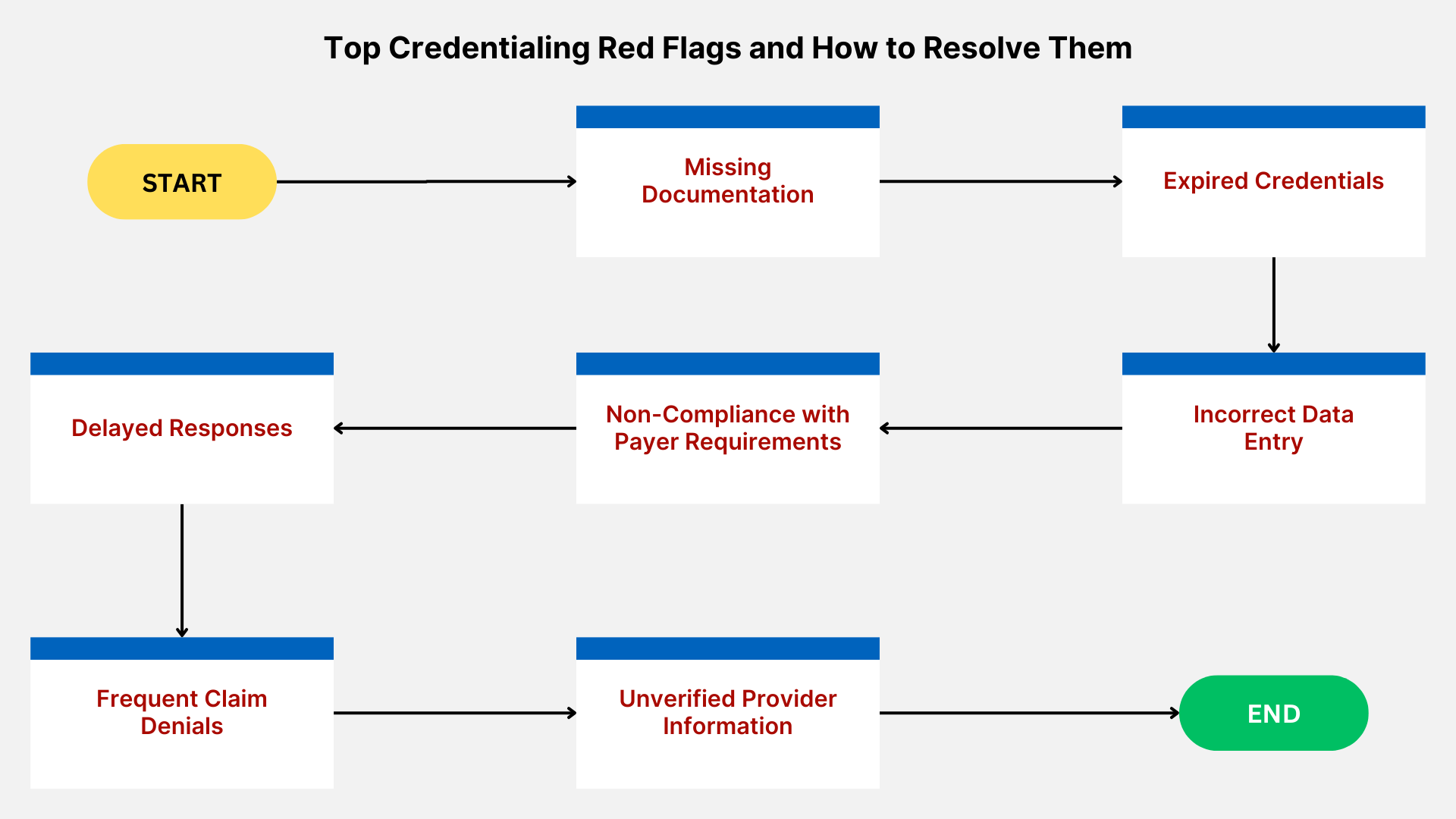
    Common Credentialing Red Flags and Their Risks

    1. Missing or Expired Documentation
      • Risk: Incomplete or outdated provider licenses, certifications, or insurance policies lead to application denials or delisting from payer networks.
      • Solution:
        Regularly update and audit provider files, using automated reminders for upcoming expirations.
    2. Inconsistent Information Across Applications
      • Risk: Discrepancies in provider details (e.g., mismatched addresses or NPI numbers) delay approvals or trigger payer audits.
      • Solution:
        Standardize provider data and use credentialing software to maintain consistency across all applications.
    3. Non-Compliance with Payer Requirements
      • Risk: Failure to meet specific payer guidelines results in rejections and longer credentialing timelines.
      • Solution:
        Create payer-specific workflows and cross-check applications against their requirements.
    4. High Application Denial Rates
      • Risk: Frequent denials signal underlying issues with documentation accuracy or team training.
      • Solution:
        Review denial trends and implement targeted training to address recurring errors.
    5. Delayed Submissions
      • Risk: Missing credentialing deadlines disrupt provider enrollment, leading to revenue loss and patient access issues.
      • Solution:
        Track deadlines with credentialing software and assign clear responsibilities within your team.
    6. Lack of Follow-Up on Pending Applications
      • Risk: Unmonitored applications stall indefinitely, delaying approvals and reimbursements.
      • Solution:
        Implement a tracking system with reminders for regular payer follow-ups.
    7. Provider Gaps in Network Participation
      • Risk: Temporary lapses in credentialing status result in claims denials and patient dissatisfaction.
      • Solution:
        Proactively renew credentials before expiration and confirm network status regularly.

    Credentialing Red flags

    How to Identify Credentialing Red Flags Early

    1. Conduct Regular Audits
      • Why It Works:
        Audits highlight gaps in documentation, processes, and compliance, preventing future issues.
      • How to Do It:
        Use a checklist to review provider files, application statuses, and payer-specific requirements.
    2. Monitor Credentialing Metrics
      • Why It Works:
        Key metrics like denial rates and approval timelines provide insights into potential problems.
      • How to Do It:
        Set up dashboards to track and analyze credentialing performance in real time.
    3. Leverage Technology
      • Why It Works:
        Automation minimizes human errors and ensures timely updates and submissions.
      • How to Do It:
        Use credentialing software to manage deadlines, track applications, and maintain accurate provider data.
    4. Train Your Team
      • Why It Works:
        Educated staff are better equipped to spot and address issues during application preparation.
      • How to Do It:
        Schedule regular training sessions on payer requirements, compliance standards, and documentation accuracy.
    5. Communicate Proactively with Payers
      • Why It Works:
        Clear communication helps resolve issues quickly and prevents delays.
      • How to Do It:
        Assign dedicated team members to handle payer follow-ups and maintain relationships.
    Pro Tip: Track Trends to Prevent Future Red Flags
    Analyze recurring issues across applications to identify root causes, such as outdated templates or unclear workflows, and implement corrective actions.

    How WWS Can Help

    At WWS, we help DME providers eliminate credentialing red flags with:

    • Proactive Audits: Identify and address issues before they impact your credentialing process.
    • Automation Tools: Streamline documentation tracking, deadline reminders, and application consistency.
    • Team Training: Provide customized training on credentialing best practices and compliance requirements.

    Schedule a consultation with WWS today to safeguard your credentialing process against red flags:
    Schedule a Meeting with WWS.

    Conclusion

    Spotting and addressing credentialing red flags early is critical to maintaining compliance, avoiding delays, and protecting revenue. By leveraging technology, monitoring key metrics, and fostering a proactive approach, your practice can navigate potential issues effectively and ensure a seamless credentialing process.
    Partner with WWS to optimize your credentialing and eliminate red flags—schedule your consultation today!
  • The Impact of Credentialing on Patient Care and Satisfaction

    The Impact of Credentialing on Patient Care and Satisfaction

    Introduction

    Credentialing is often viewed as a behind-the-scenes process, but its effects are directly felt by patients. Timely and accurate credentialing ensures that providers meet the necessary qualifications, maintain compliance, and deliver high-quality care. For DME providers, a seamless credentialing process not only supports operational efficiency but also enhances patient satisfaction by reducing delays, errors, and access issues.
    In this blog, we’ll explore how credentialing impacts patient care and satisfaction and share strategies to strengthen this connection.

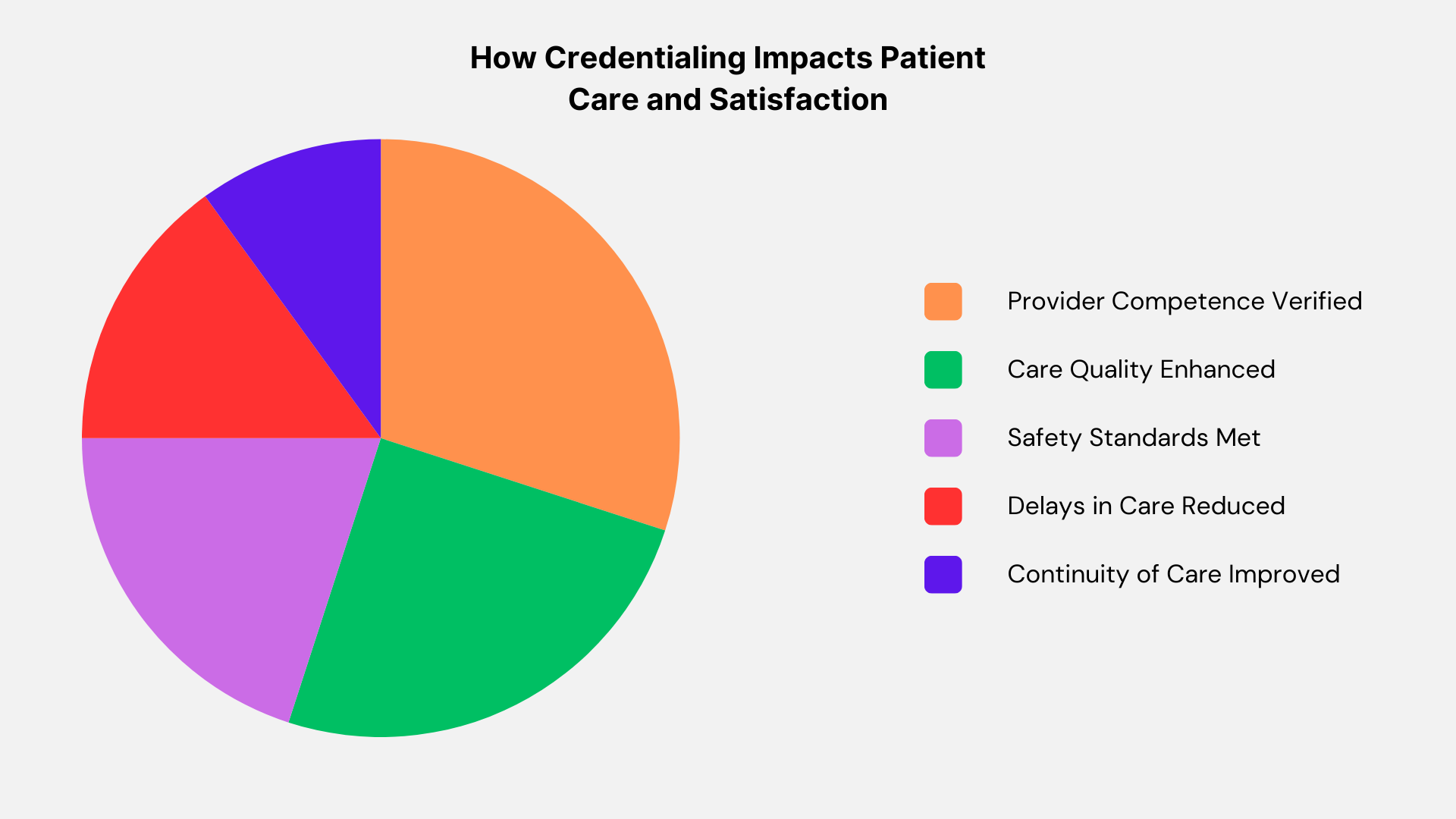
    How Credentialing Influences Patient Care

    • Ensures Provider Competency
      Credentialing verifies that providers meet the qualifications and standards required to deliver safe, effective care.
    • Reduces Service Disruptions
      Proper credentialing prevents interruptions caused by payer delisting or licensing lapses, ensuring continuous patient access to care.
    • Enhances Trust and Transparency
      Patients feel more confident knowing their providers are accredited and meet strict compliance standards.
    • Improves Access to Specialized Equipment
      Credentialed providers can offer a wider range of services and devices, meeting diverse patient needs.
    • Supports Timely Reimbursements
      Efficient credentialing minimizes claim denials, reducing delays in equipment delivery or care services.

    The Patient Perspective: Key Factors That Matter

    • Seamless Service Delivery
      • Expectation: Patients want their equipment and services delivered promptly, without administrative delays.
      • Credentialing’s Role: Prevents billing interruptions and ensures providers can fulfill orders on time.
    • Access to Qualified Providers
      • Expectation: Patients value working with skilled, certified professionals.
      • Credentialing’s Role: Confirms that providers have the necessary training, licenses, and certifications.
    • Clear Communication
      • Expectation: Patients appreciate transparency about processes and timelines.
      • Credentialing’s Role: Supports smooth operations and better communication by preventing payer-related disputes or delays.
    • Financial Clarity
      • Expectation: Patients expect minimal out-of-pocket expenses and accurate billing.
      • Credentialing’s Role: Ensures providers are in-network with payers, reducing financial surprises.

    Strategies to Enhance Patient Satisfaction Through Credentialing

    1. Prioritize Timely Credentialing
      • Why It Works:
        Reduces wait times for equipment and services by ensuring all providers are active with payers.
      • How to Do It:
        Use credentialing software to track deadlines and automate reminders for renewals.
    2. Ensure Provider Compliance
      • Why It Works:
        Maintains high standards of care and builds patient trust.
      • How to Do It:
        Conduct regular audits to verify that providers meet all licensing and accreditation requirements.
    3. Streamline Communication with Payers
      • Why It Works:
        Resolves issues quickly, minimizing disruptions in patient care.
      • How to Do It:
        Assign dedicated team members to handle payer interactions and expedite credentialing processes.
    4. Integrate Credentialing with Patient Services
      • Why It Works:
        Ensures that the credentialing process supports overall patient satisfaction goals.
      • How to Do It:
        Coordinate credentialing efforts with billing, compliance, and patient service teams.
    5. Monitor and Respond to Patient Feedback
      • Why It Works:
        Identifies gaps in service delivery related to credentialing delays or errors.
      • How to Do It:
        Use surveys and feedback tools to track patient satisfaction and address concerns promptly.
    Pro Tip: Emphasize Patient-Centered Metrics
    Track metrics like patient satisfaction scores and care delivery timelines alongside credentialing performance to evaluate the broader impact on patient care.

    How WWS Can Help

    At WWS, we help DME providers connect credentialing to improved patient care with:

    • Streamlined Credentialing Solutions: Reduce delays and errors to ensure seamless service delivery.
    • Compliance Expertise: Maintain high standards of provider qualifications and network participation.
    • Integrated Workflow Support: Align credentialing processes with patient service goals to enhance satisfaction.

    Schedule a consultation with WWS today to strengthen the link between credentialing and patient care:
    Schedule a Meeting with WWS.

    Conclusion

    Credentialing plays a critical role in shaping patient experiences, from ensuring provider competency to minimizing service disruptions. By prioritizing accuracy, compliance, and timely processes, DME providers can enhance patient trust, satisfaction, and care outcomes.
    Partner with WWS to optimize credentialing and elevate your patient care standards—schedule your consultation today!