Introduction:
In the dynamic world of Durable Medical Equipment (DME), effective contracting is the lifeline of your business. As we progress through 2024, the contracting landscape continues to evolve, presenting both challenges and opportunities for DME providers. This blog post brings you invaluable insights from industry leaders, offering practical tips to streamline your contracting process, negotiate favorable terms, and build strong, lasting relationships with payers.
Preparing for Success: Pre-Contracting Strategies
Before diving into negotiations, industry leaders emphasize the importance of thorough preparation:
- Know Your Value Proposition:
- Clearly define what sets your DME business apart from competitors.
- Quantify your value in terms of patient outcomes, cost savings, or unique services.
- Understand Payer Priorities:
- Research each payer’s strategic goals and pain points.
- Align your offerings with their specific needs and objectives.
- Data-Driven Approach:
- Gather comprehensive data on your performance metrics.
- Prepare case studies demonstrating your impact on patient care and cost reduction.
“The most successful DME providers come to the table with a clear understanding of not just their own value, but how that value aligns with the payer’s goals.”
– Sarah Johnson, Healthcare Contracting Consultant
Mastering the Art of Negotiation
Effective negotiation skills are crucial for securing favorable contract terms:
- Focus on Win-Win Outcomes:
- Approach negotiations with a collaborative mindset.
- Look for opportunities that benefit both your business and the payer.
- Be Prepared to Walk Away:
- Know your bottom line and be willing to step away from unfavorable terms.
- Having alternative options strengthens your negotiating position.
- Leverage Bundled Services:
- Consider offering bundled services or products to increase your value proposition.
- Demonstrate how bundled offerings can lead to better patient outcomes and cost savings.
“In negotiations, knowledge is power. The more you understand about the payer’s needs and constraints, the better positioned you are to craft mutually beneficial agreements.”
– Michael Chen, DME Contract Negotiation Specialist
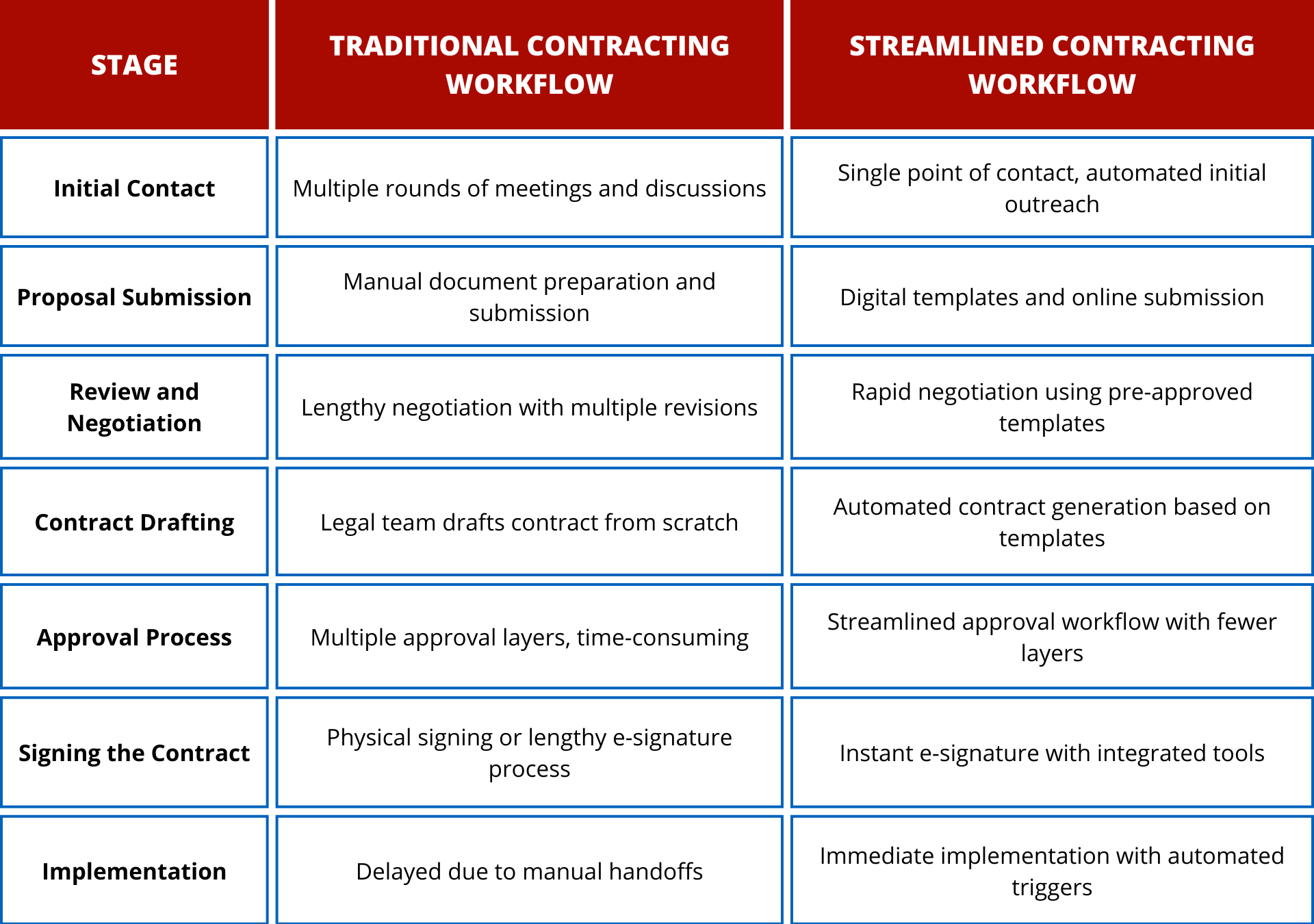
Streamlining the Contracting Workflow
Efficiency in the contracting process can save time and resources:
- Standardize Your Approach:
- Develop templates for common contract types and terms.
- Create a standardized process for contract review and approval.
- Leverage Technology:
- Implement contract management software to track deadlines and automate renewals.
- Use digital signature tools to expedite the signing process.
- Establish a dedicated contracting team:
- Train staff specifically in DME contracting nuances.
- Ensure clear communication channels between contracting, legal, and operations teams.
“A well-oiled contracting machine can be your secret weapon. When you can move quickly and efficiently, you’re more likely to secure favorable terms before competitors even get to the table.”
– Lisa Rodriguez, DME Operations Director
Building Strong Payer Relationships
Long-term success in DME contracting often hinges on the strength of your payer relationships:
- Regular Communication:
- Schedule periodic check-ins with key payer contacts.
- Proactively share updates on your services, outcomes, and innovations.
- Be a Problem Solver:
- Offer solutions to payer challenges, even if they’re not directly related to your current contract.
- Position yourself as a valuable partner, not just a vendor.
- Continuous Improvement:
- Regularly seek feedback on your performance.
- Demonstrate your commitment to addressing any issues or concerns promptly.
“The most successful DME providers I’ve worked with treat payers as true partners. They’re always looking for ways to add value beyond the contract terms.”
– David Thompson, Healthcare Network Management Expert
Navigating Complex Contract Terms
As contracts become more sophisticated, pay close attention to these key areas:
- Performance Metrics:
- Ensure clarity on how performance will be measured and evaluated.
- Negotiate realistic and achievable performance targets.
- Risk-Sharing Provisions:
- Carefully assess any risk-sharing clauses and their potential impact on your business.
- Consider engaging legal experts to review complex risk arrangements.
- Technology and Data Requirements:
- Understand and prepare for any technology integration or data sharing requirements.
- Ensure compliance with data privacy regulations in all contract terms.
“Don’t shy away from complex contract terms – they often present opportunities for differentiation. But make sure you fully understand the implications before signing.”
– Amanda Foster, Healthcare Contract Law Specialist
Future-Proofing Your Contracts
In the rapidly evolving DME landscape, consider these forward-looking strategies:
- Flexibility Clauses:
- Include provisions that allow for adjustments based on significant market changes.
- Consider clauses that address potential technological advancements in DME.
- Value-Based Care Alignment:
- Incorporate terms that align with the shift towards value-based care models.
- Be prepared to demonstrate your impact on overall patient health outcomes.
- Telehealth and Remote Monitoring:
- Address the integration of telehealth services in your DME offerings.
- Consider how remote patient monitoring might factor into future contract terms.
“The DME providers who will thrive in the coming years are those who can anticipate and adapt to change. Your contracts should reflect this forward-thinking approach.”
– Robert Patel, DME Industry Futurist
Conclusion:
Streamlining your DME contracting process is not just about efficiency – it’s about positioning your business for long-term success in a competitive market. By implementing these expert tips, you can negotiate more effectively, build stronger payer relationships, and create contracts that support your business goals while adapting to the evolving healthcare landscape.
Remember, successful contracting is an ongoing process of negotiation, relationship-building, and continuous improvement. Stay informed, be proactive, and always look for ways to demonstrate your value to payers and patients alike.
How WWS Can Help:
At Wonder Worth Solutions (WWS), we understand the intricacies of DME contracting and the challenges providers face in navigating this complex landscape. Our team of experts can assist you in:
- Developing a comprehensive contracting strategy tailored to your business goals
- Providing expert negotiation support to secure favorable contract terms
- Implementing efficient contract management systems and processes
- Offering ongoing education and support to keep you ahead of industry trends
- Analyzing your contracts to identify opportunities for improvement and risk mitigation
Let WWS be your partner in optimizing your DME contracting process. Our expertise can help you transform your approach to contracting, building stronger payer relationships and driving sustainable growth for your business.
CTA:
Ready to revolutionize your DME contracting process? Let’s work together to develop a strategy that maximizes your payer relationships and drives business growth. Schedule your Collaborative Discovery Meeting with our contracting experts today!
Click here to book: https://calendly.com/wwshcs/wws-collaborative-discovery-meeting