
Category: Revenue Cycle Management

  • Streamlining Your DME Contracting Process: Tips from Industry Leaders

    Streamlining Your DME Contracting Process: Tips from Industry Leaders

    Introduction:

    In the dynamic world of Durable Medical Equipment (DME), effective contracting is the lifeline of your business. As we progress through 2024, the contracting landscape continues to evolve, presenting both challenges and opportunities for DME providers. This blog post brings you invaluable insights from industry leaders, offering practical tips to streamline your contracting process, negotiate favorable terms, and build strong, lasting relationships with payers.

    Preparing for Success: Pre-Contracting Strategies

    Before diving into negotiations, industry leaders emphasize the importance of thorough preparation:

    1. Know Your Value Proposition:
      • Clearly define what sets your DME business apart from competitors.
      • Quantify your value in terms of patient outcomes, cost savings, or unique services.
    2. Understand Payer Priorities:
      • Research each payer’s strategic goals and pain points.
      • Align your offerings with their specific needs and objectives.
    3. Data-Driven Approach:
      • Gather comprehensive data on your performance metrics.
      • Prepare case studies demonstrating your impact on patient care and cost reduction.

    “The most successful DME providers come to the table with a clear understanding of not just their own value, but how that value aligns with the payer’s goals.”

    – Sarah Johnson, Healthcare Contracting Consultant

    Mastering the Art of Negotiation

    Effective negotiation skills are crucial for securing favorable contract terms:

    1. Focus on Win-Win Outcomes:
      • Approach negotiations with a collaborative mindset.
      • Look for opportunities that benefit both your business and the payer.
    2. Be Prepared to Walk Away:
      • Know your bottom line and be willing to step away from unfavorable terms.
      • Having alternative options strengthens your negotiating position.
    3. Leverage Bundled Services:
      • Consider offering bundled services or products to increase your value proposition.
      • Demonstrate how bundled offerings can lead to better patient outcomes and cost savings.

    “In negotiations, knowledge is power. The more you understand about the payer’s needs and constraints, the better positioned you are to craft mutually beneficial agreements.”

    – Michael Chen, DME Contract Negotiation Specialist

    Streamlining the Contracting Workflow

    Efficiency in the contracting process can save time and resources:

    1. Standardize Your Approach:
      • Develop templates for common contract types and terms.
      • Create a standardized process for contract review and approval.
    2. Leverage Technology:
      • Implement contract management software to track deadlines and automate renewals.
      • Use digital signature tools to expedite the signing process.
    3. Establish a dedicated contracting team:
      • Train staff specifically in DME contracting nuances.
      • Ensure clear communication channels between contracting, legal, and operations teams.

    “A well-oiled contracting machine can be your secret weapon. When you can move quickly and efficiently, you’re more likely to secure favorable terms before competitors even get to the table.”

    – Lisa Rodriguez, DME Operations Director
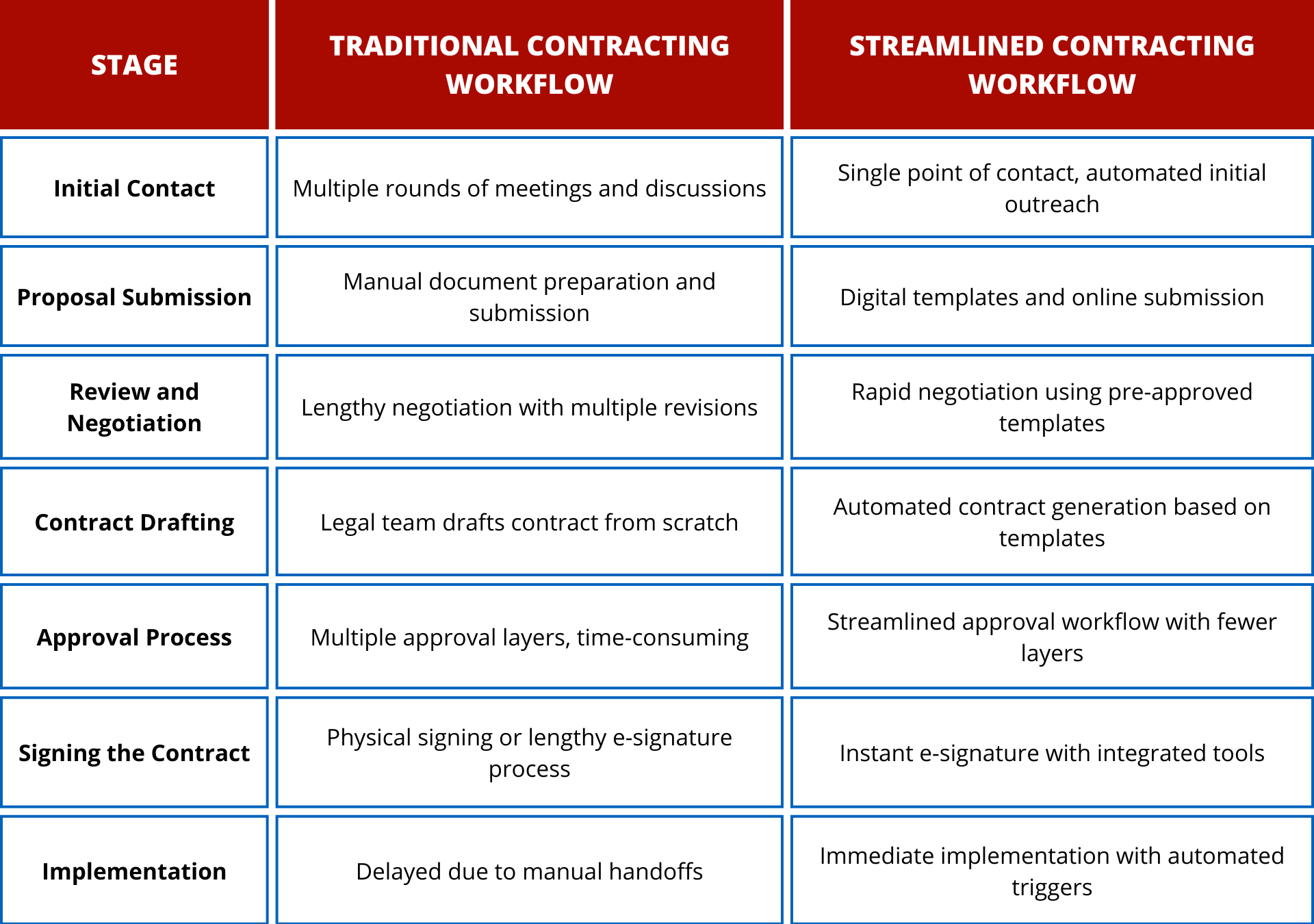
    Traditional vs. Streamlined Contracting Workflows

    Building Strong Payer Relationships

    Long-term success in DME contracting often hinges on the strength of your payer relationships:

    1. Regular Communication:
      • Schedule periodic check-ins with key payer contacts.
      • Proactively share updates on your services, outcomes, and innovations.
    2. Be a Problem Solver:
      • Offer solutions to payer challenges, even if they’re not directly related to your current contract.
      • Position yourself as a valuable partner, not just a vendor.
    3. Continuous Improvement:
      • Regularly seek feedback on your performance.
      • Demonstrate your commitment to addressing any issues or concerns promptly.

    “The most successful DME providers I’ve worked with treat payers as true partners. They’re always looking for ways to add value beyond the contract terms.”

    – David Thompson, Healthcare Network Management Expert

    Navigating Complex Contract Terms

    As contracts become more sophisticated, pay close attention to these key areas:

    1. Performance Metrics:
      • Ensure clarity on how performance will be measured and evaluated.
      • Negotiate realistic and achievable performance targets.
    2. Risk-Sharing Provisions:
      • Carefully assess any risk-sharing clauses and their potential impact on your business.
      • Consider engaging legal experts to review complex risk arrangements.
    3. Technology and Data Requirements:
      • Understand and prepare for any technology integration or data sharing requirements.
      • Ensure compliance with data privacy regulations in all contract terms.

    “Don’t shy away from complex contract terms – they often present opportunities for differentiation. But make sure you fully understand the implications before signing.”

    – Amanda Foster, Healthcare Contract Law Specialist

    Future-Proofing Your Contracts

    In the rapidly evolving DME landscape, consider these forward-looking strategies:

    1. Flexibility Clauses:
      • Include provisions that allow for adjustments based on significant market changes.
      • Consider clauses that address potential technological advancements in DME.
    2. Value-Based Care Alignment:
      • Incorporate terms that align with the shift towards value-based care models.
      • Be prepared to demonstrate your impact on overall patient health outcomes.
    3. Telehealth and Remote Monitoring:
      • Address the integration of telehealth services in your DME offerings.
      • Consider how remote patient monitoring might factor into future contract terms.

    “The DME providers who will thrive in the coming years are those who can anticipate and adapt to change. Your contracts should reflect this forward-thinking approach.”

    – Robert Patel, DME Industry Futurist

    Conclusion:

    Streamlining your DME contracting process is not just about efficiency – it’s about positioning your business for long-term success in a competitive market. By implementing these expert tips, you can negotiate more effectively, build stronger payer relationships, and create contracts that support your business goals while adapting to the evolving healthcare landscape.

    Remember, successful contracting is an ongoing process of negotiation, relationship-building, and continuous improvement. Stay informed, be proactive, and always look for ways to demonstrate your value to payers and patients alike.

    How WWS Can Help:

    At Wonder Worth Solutions (WWS), we understand the intricacies of DME contracting and the challenges providers face in navigating this complex landscape. Our team of experts can assist you in:

    • Developing a comprehensive contracting strategy tailored to your business goals
    • Providing expert negotiation support to secure favorable contract terms
    • Implementing efficient contract management systems and processes
    • Offering ongoing education and support to keep you ahead of industry trends
    • Analyzing your contracts to identify opportunities for improvement and risk mitigation

    Let WWS be your partner in optimizing your DME contracting process. Our expertise can help you transform your approach to contracting, building stronger payer relationships and driving sustainable growth for your business.

    CTA:

    Ready to revolutionize your DME contracting process? Let’s work together to develop a strategy that maximizes your payer relationships and drives business growth. Schedule your Collaborative Discovery Meeting with our contracting experts today!
    Click here to book: https://calendly.com/wwshcs/wws-collaborative-discovery-meeting
  • Mastering DME Provider Credentialing: Expert Strategies for Success in 2024

    Mastering DME Provider Credentialing: Expert Strategies for Success in 2024

    Introduction:

    In the ever-evolving landscape of Durable Medical Equipment (DME) provision, robust credentialing remains a cornerstone of success. As we navigate through 2024, the credentialing process continues to grow in complexity, requiring DME providers to stay ahead of the curve. This comprehensive guide will equip you with expert strategies to master DME provider credentialing, helping you avoid common pitfalls and position your business for sustainable growth.

    Understanding the Evolving Landscape of DME Credentialing

    The DME credentialing landscape in 2024 is characterized by:

    • Increased scrutiny from payers and regulatory bodies
    • Growing emphasis on quality metrics and patient outcomes
    • Integration of telehealth and remote patient monitoring considerations
    • Rising importance of cybersecurity and data protection measures

    Key action: Stay informed about industry changes through professional associations, regulatory updates, and continuing education.

    Building a Robust Credentialing Infrastructure

    A solid credentialing foundation is crucial for long-term success:

    1. Centralized Credentialing System:
      • Implement a centralized, digital system for managing all credentialing documentation
      • Ensure easy accessibility and regular updates of critical information
    2. Dedicated Credentialing Team:
      • Assign staff specifically to oversee credentialing processes
      • Invest in ongoing training to keep the team updated on best practices
    3. Standardized Processes:
      • Develop clear, written procedures for all aspects of credentialing
      • Create checklists and timelines to ensure consistency and completeness
    4. Proactive Renewal Management:
      • Implement an alert system for upcoming expirations and renewals
      • Begin renewal processes well in advance to avoid lapses

    Leveraging Technology for Efficient Credentialing

    Embrace technological solutions to streamline your credentialing process:

    1. Credentialing Software:
      • Invest in specialized credentialing software to automate data collection and verification
      • Look for solutions that offer integration with other business systems
    2. Digital Document Management:
      • Implement secure, cloud-based storage for all credentialing documents
      • Ensure easy retrieval and sharing of information when needed
    3. Automated Verification:
      • Utilize services that offer real-time verification of licenses and certifications
      • Implement systems for continuous monitoring of exclusion lists and sanctions

    Navigating Payer-Specific Requirements

    Different payers often have unique credentialing requirements. Develop strategies to manage these effectively:

    1. Payer Matrix:
      • Create a comprehensive matrix of all payer requirements
      • Regularly update this matrix to reflect changes in payer policies
    2. Tailored Application Packages:
      • Develop customized application packages for each major payer
      • Include all necessary documentation to expedite the review process
    3. Relationship Management:
      • Foster positive relationships with payer credentialing departments
      • Maintain open lines of communication to address issues promptly

    Quality Assurance in Credentialing

    Implement robust quality assurance measures to minimize errors and ensure compliance:

    1. Internal Audits:
      • Conduct regular internal audits of your credentialing files
      • Address any discrepancies or incomplete information promptly
    2. Peer Review:
      • Implement a peer review system for credentialing applications
      • Have a second set of eyes review all submissions for accuracy
    3. Ongoing Education:
      • Provide regular training to staff on credentialing best practices
      • Stay updated on regulatory changes and industry standards

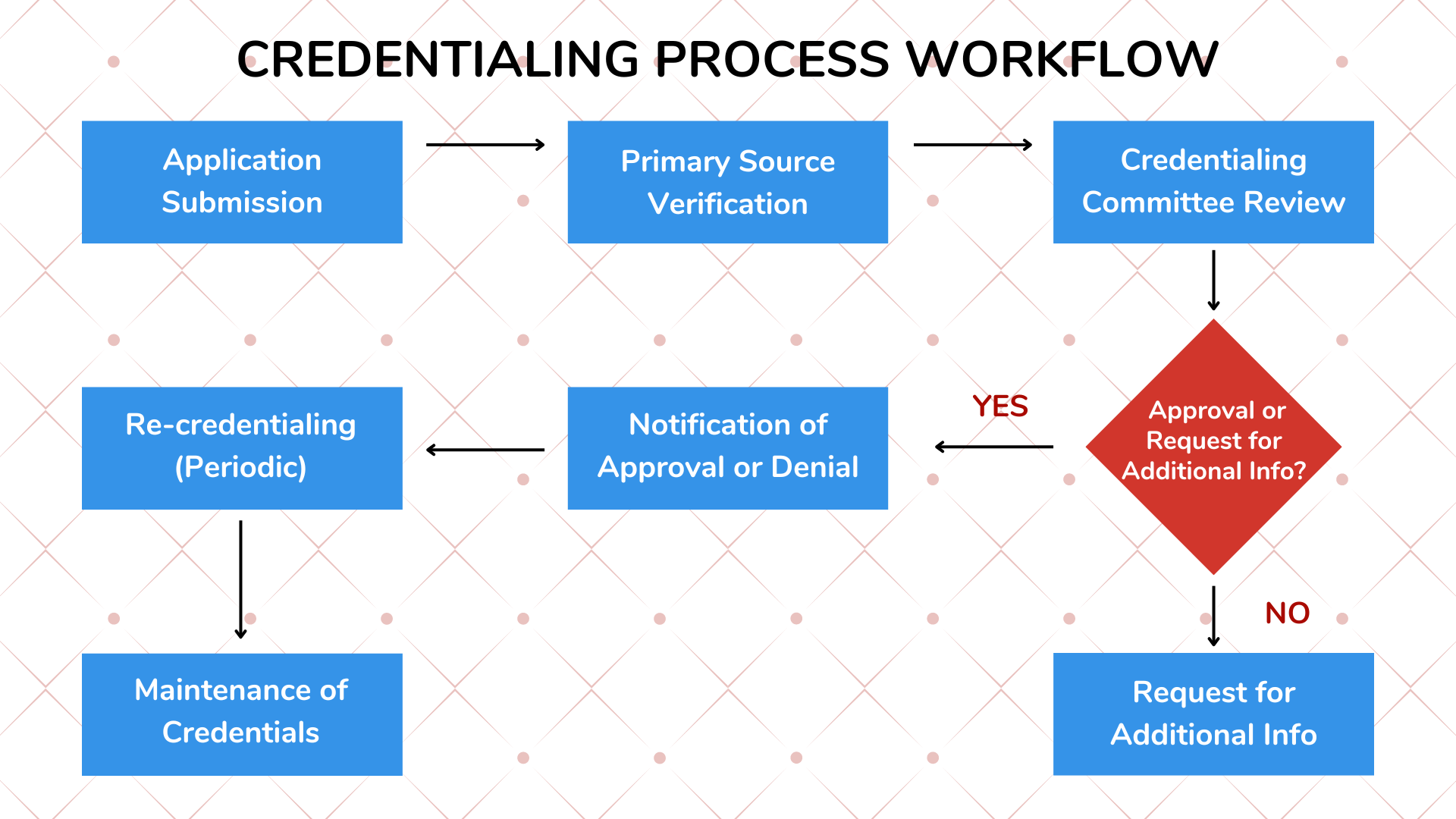
    Credentialing Process Workflow

    Addressing Common Credentialing Challenges

    Be prepared to tackle these frequent credentialing hurdles:

    1. Incomplete Applications:
      • Develop a thorough pre-submission checklist
      • Implement a system for tracking and quickly addressing information requests
    2. Delays in Primary Source Verification:
      • Maintain direct contacts at primary sources
      • Consider using Credential Verification Organizations (CVOs) for efficiency
    3. Keeping Up with Regulatory Changes:
      • Subscribe to regulatory update services
      • Assign team members to monitor and report on relevant changes
    4. Managing Multi-State Credentialing:
      • Develop a clear understanding of each state’s unique requirements
      • Consider partnering with local experts in states where you’re expanding

    Preparing for the Future of DME Credentialing

    Stay ahead of the curve by anticipating future trends:

    1. Value-Based Credentialing:
      • Begin incorporating quality metrics and patient outcome data into your credentialing processes
      • Develop systems for tracking and reporting on these metrics
    2. Enhanced Cybersecurity Requirements:
      • Strengthen your data protection measures
      • Consider obtaining cybersecurity certifications relevant to healthcare
    3. Telehealth Integration:
      • Ensure your credentialing processes account for telehealth services
      • Stay informed about evolving regulations around remote patient monitoring

    Conclusion:

    Mastering DME provider credentialing in 2024 requires a multifaceted approach that combines technological innovation, process optimization, and a commitment to quality and compliance. By implementing these expert strategies, you can transform credentialing from a necessary burden into a competitive advantage for your DME business.

    Remember, effective credentialing is not just about meeting minimum requirements—it’s about demonstrating your commitment to excellence and building trust with payers, healthcare providers, and patients. As the healthcare landscape continues to evolve, those who excel in credentialing will be best positioned to thrive and grow.

    I apologize for the confusion, and thank you for the correction. I’ll make sure to use the correct company name, Wonder Worth Solutions (WWS), in all future content. Let me update the “How WWS Can Help” section of the last blog post to reflect this:

    How WWS Can Help:

    At Wonder Worth Solutions (WWS), we specialize in helping DME providers navigate the complex world of credentialing. Our expert team can assist you in:

    • Developing a customized credentialing strategy tailored to your business needs
    • Implementing efficient credentialing processes and technologies
    • Staying compliant with ever-changing regulatory requirements
    • Preparing for and managing payer audits
    • Optimizing your credentialing to support business growth and expansion

    Let WWS be your partner in mastering DME provider credentialing. Our expertise can help you transform your credentialing processes, reduce administrative burden, and position your business for success in the competitive DME market.

    CTA:

    Ready to elevate your DME credentialing to the next level? Let’s work together to create a credentialing strategy that drives your business forward. Schedule your Collaborative Discovery Meeting with our credentialing experts today! Click here to book: https://calendly.com/wwshcs/wws-collaborative-discovery-meeting
  • Is Credentialing The First Step Of Revenue Cycle

    Is Credentialing The First Step Of Revenue Cycle

    The first stage of the revenue cycle is payer enrollment. This process can be time-consuming and complex, but it is essential for ensuring that patients can receive the care they need.

    During payer enrollment, providers must submit accurate and complete information to insurance companies. This includes demographic information, provider credentials, and details about the services they provide. Once this information is submitted, insurance companies will review it and determine whether the provider is eligible to participate in their network. If the provider is approved, they will be assigned a contract that outlines the terms of their participation.

    The primary form of insurance payment is the fee-for-service model. Providers are paid a set amount of money for each service they bill. These payments are based on the type of service, the duration of service, and the location of the service.

    Typically, providers are paid in two ways. The first is the fee schedule, where they are reimbursed based on the type of service provided.

    In addition to payer enrollment, providers must track insurance claims. This is the second stage of the revenue cycle. The process of tracking claims differs depending on the type of insurance. For example, if the provider accepts commercial insurance, they will submit their claims electronically directly to the payer using a software program. Insurance companies do not directly pay the provider. Instead, they will make a pre-payment to a clearinghouse.

    The provider must then have their staff review the contract to ensure that all information is accurate and up-to-date. If there are any inconsistencies, the provider must contact the insurance company and work together to resolve them.

    The second stage of the revenue cycle is payment. From the perspective of insurance companies, this is the most complex part of the revenue cycle. They must use all the information they have gathered during enrollment to determine how much they will pay the provider.

    The next stage of the revenue cycle is coverage verification. During this stage, providers must show proof to patients that they are in-network for the insurance company that is issuing the claim. Patients will provide this information to providers when they visit the doctor.

    The last stage of the revenue cycle is the actual claim submission. After the patient’s visit, providers will submit the claim to their insurance company.


  • Is Payer Enrollment The First Step?

    Is Payer Enrollment The First Step?

    WWS assist healthcare organizations in deciphering the complicated process of credentialing providers and enrolling them in payer networks.

    Payer enrollment is the process by which a provider joins the network of a health insurance plan. Requesting participation in a payer network, completing credentialing requirements, submitting documents to the payer, and signing a contract are all part of the process.

    Failing to complete the payer enrollment process on time will result in an increase in on-hold claims — and, in some cases, claim denials.

    However, for most healthcare organizations, completing payer enrollment is a time-consuming and complex process, and the need to streamline and improve the process is growing as providers face an increasingly competitive marketplace.

    Enhancing PAYER ENROLLMENT TO SAVE TIME AND MONEY

    Payer enrollment is a time-consuming process that can take several months to complete.

    Payers typically require 90 to 120 days to complete provider credentialing alone, resulting in an average enrollment process of months. Smaller plans with fewer resources may require even more time to process provider enrollment.

    Healthcare organizations can exacerbate the situation by failing to collect all required documents for credentialing and engaging in redundant efforts to complete payer enrollment. As a result, when workflow inefficiencies add time to an already lengthy process, organizations are likely to face claims reimbursement delays (and possibly an increase in denials).

     NAVIGATING PAYER REQUIREMENTS AND RULES

    Healthcare organizations work with dozens of payers at the same time, and their providers must be enrolled with each insurance company in order to receive timely reimbursement.

    However, neither private nor public payers have a standardized process for enrolling new members. When it comes to plan enrollment, medical services staff must understand each payer’s rules and requirements.

    Humana, for example, requires providers to use CAQH Proview, a service provided by the Council for Affordable Quality Care (CAQH), to submit credentialing information. Additionally, providers must have a Drug Enforcement Agency and/or Controlled Dangerous Substances certificate.

    Aetna, on the other hand, requires providers to use the CAQH Proview platform. However, the payer also evaluates provider credentials using quality standards established by the National Committee for Quality Assurance (NCQA).

    KEEPING UP WITH REENROLLMENT

    Despite enrolling every provider in a healthcare organization in the appropriate payer networks, the payer enrollment process is incomplete. Payer enrollment is, in fact, a continuous process for each provider.

    Payers require network providers to re-enroll or verify their credentials every couple of years to ensure they are still eligible to provide high-quality care. The Affordable Care Act, for example, required Medicare provider revalidation every five years.

    It takes time and is prone to error to keep track of when each provider’s enrollment and certificates expire. A payer enrollment service, on the other hand, specifically monitors enrollment and documentation expirations.

    A payer enrollment service also updates provider data on required platforms, such as CAQH’s Proview, on a regular basis.

    Enrolling providers in health plans on time has become a critical requirement for maintaining a thriving practice. WWS payor enrollment services can help you reduce paperwork, streamline your provider onboarding process, and increase your healthcare organization’s profitability. We make payor enrollment easier for healthcare organizations all over the nation.