Category: Credential management

  • Streamlining Your DME Contracting Process: Tips from Industry Leaders

    Streamlining Your DME Contracting Process: Tips from Industry Leaders

    Introduction:

    In the dynamic world of Durable Medical Equipment (DME), effective contracting is the lifeline of your business. As we progress through 2024, the contracting landscape continues to evolve, presenting both challenges and opportunities for DME providers. This blog post brings you invaluable insights from industry leaders, offering practical tips to streamline your contracting process, negotiate favorable terms, and build strong, lasting relationships with payers.

    Preparing for Success: Pre-Contracting Strategies

    Before diving into negotiations, industry leaders emphasize the importance of thorough preparation:

    1. Know Your Value Proposition:
      • Clearly define what sets your DME business apart from competitors.
      • Quantify your value in terms of patient outcomes, cost savings, or unique services.
    2. Understand Payer Priorities:
      • Research each payer’s strategic goals and pain points.
      • Align your offerings with their specific needs and objectives.
    3. Data-Driven Approach:
      • Gather comprehensive data on your performance metrics.
      • Prepare case studies demonstrating your impact on patient care and cost reduction.

    “The most successful DME providers come to the table with a clear understanding of not just their own value, but how that value aligns with the payer’s goals.”

    – Sarah Johnson, Healthcare Contracting Consultant

    Mastering the Art of Negotiation

    Effective negotiation skills are crucial for securing favorable contract terms:

    1. Focus on Win-Win Outcomes:
      • Approach negotiations with a collaborative mindset.
      • Look for opportunities that benefit both your business and the payer.
    2. Be Prepared to Walk Away:
      • Know your bottom line and be willing to step away from unfavorable terms.
      • Having alternative options strengthens your negotiating position.
    3. Leverage Bundled Services:
      • Consider offering bundled services or products to increase your value proposition.
      • Demonstrate how bundled offerings can lead to better patient outcomes and cost savings.

    “In negotiations, knowledge is power. The more you understand about the payer’s needs and constraints, the better positioned you are to craft mutually beneficial agreements.”

    – Michael Chen, DME Contract Negotiation Specialist

    Streamlining the Contracting Workflow

    Efficiency in the contracting process can save time and resources:

    1. Standardize Your Approach:
      • Develop templates for common contract types and terms.
      • Create a standardized process for contract review and approval.
    2. Leverage Technology:
      • Implement contract management software to track deadlines and automate renewals.
      • Use digital signature tools to expedite the signing process.
    3. Establish a dedicated contracting team:
      • Train staff specifically in DME contracting nuances.
      • Ensure clear communication channels between contracting, legal, and operations teams.

    “A well-oiled contracting machine can be your secret weapon. When you can move quickly and efficiently, you’re more likely to secure favorable terms before competitors even get to the table.”

    – Lisa Rodriguez, DME Operations Director
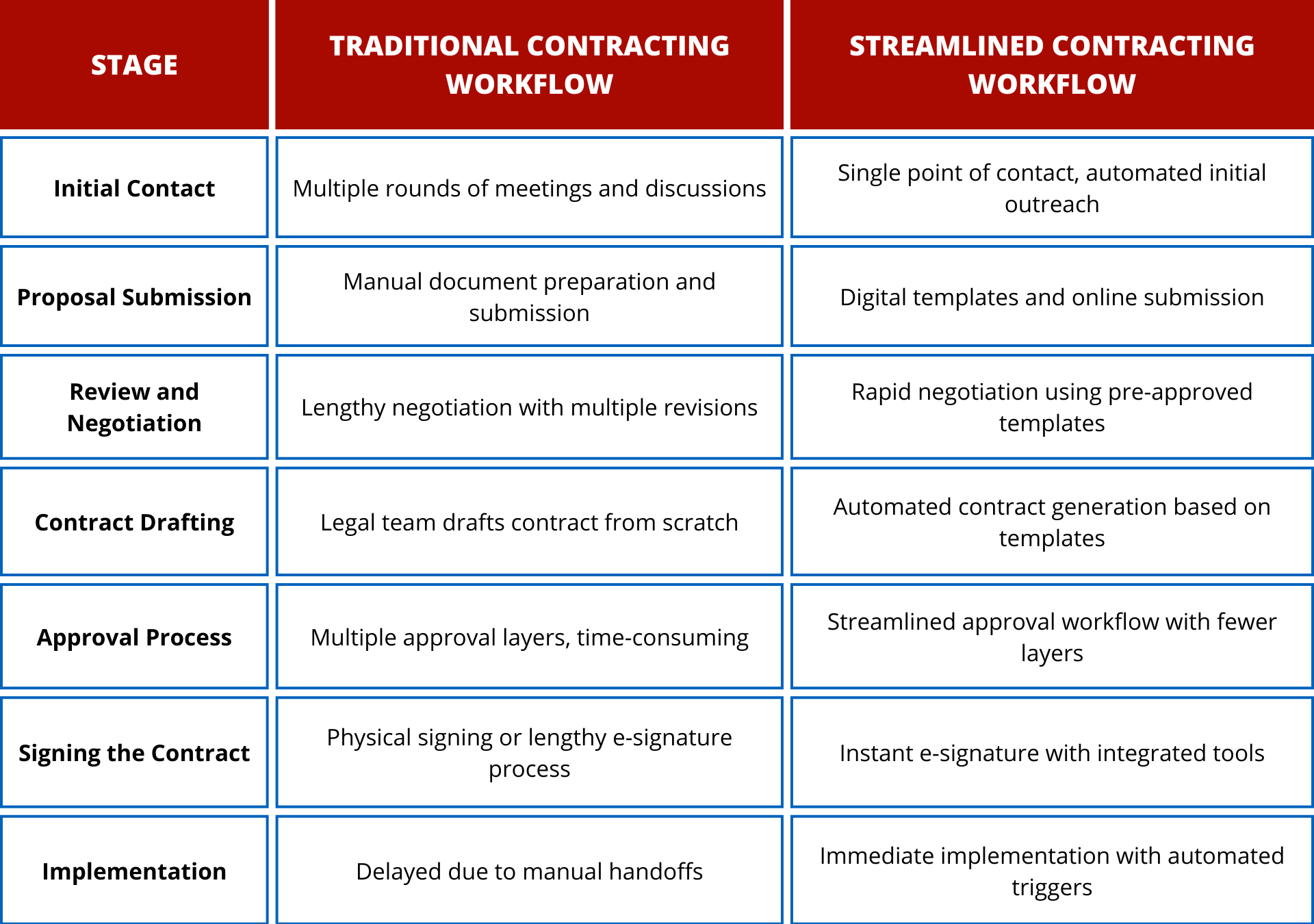
    Traditional vs. Streamlined Contracting Workflows

    Building Strong Payer Relationships

    Long-term success in DME contracting often hinges on the strength of your payer relationships:

    1. Regular Communication:
      • Schedule periodic check-ins with key payer contacts.
      • Proactively share updates on your services, outcomes, and innovations.
    2. Be a Problem Solver:
      • Offer solutions to payer challenges, even if they’re not directly related to your current contract.
      • Position yourself as a valuable partner, not just a vendor.
    3. Continuous Improvement:
      • Regularly seek feedback on your performance.
      • Demonstrate your commitment to addressing any issues or concerns promptly.

    “The most successful DME providers I’ve worked with treat payers as true partners. They’re always looking for ways to add value beyond the contract terms.”

    – David Thompson, Healthcare Network Management Expert

    Navigating Complex Contract Terms

    As contracts become more sophisticated, pay close attention to these key areas:

    1. Performance Metrics:
      • Ensure clarity on how performance will be measured and evaluated.
      • Negotiate realistic and achievable performance targets.
    2. Risk-Sharing Provisions:
      • Carefully assess any risk-sharing clauses and their potential impact on your business.
      • Consider engaging legal experts to review complex risk arrangements.
    3. Technology and Data Requirements:
      • Understand and prepare for any technology integration or data sharing requirements.
      • Ensure compliance with data privacy regulations in all contract terms.

    “Don’t shy away from complex contract terms – they often present opportunities for differentiation. But make sure you fully understand the implications before signing.”

    – Amanda Foster, Healthcare Contract Law Specialist

    Future-Proofing Your Contracts

    In the rapidly evolving DME landscape, consider these forward-looking strategies:

    1. Flexibility Clauses:
      • Include provisions that allow for adjustments based on significant market changes.
      • Consider clauses that address potential technological advancements in DME.
    2. Value-Based Care Alignment:
      • Incorporate terms that align with the shift towards value-based care models.
      • Be prepared to demonstrate your impact on overall patient health outcomes.
    3. Telehealth and Remote Monitoring:
      • Address the integration of telehealth services in your DME offerings.
      • Consider how remote patient monitoring might factor into future contract terms.

    “The DME providers who will thrive in the coming years are those who can anticipate and adapt to change. Your contracts should reflect this forward-thinking approach.”

    – Robert Patel, DME Industry Futurist

    Conclusion:

    Streamlining your DME contracting process is not just about efficiency – it’s about positioning your business for long-term success in a competitive market. By implementing these expert tips, you can negotiate more effectively, build stronger payer relationships, and create contracts that support your business goals while adapting to the evolving healthcare landscape.

    Remember, successful contracting is an ongoing process of negotiation, relationship-building, and continuous improvement. Stay informed, be proactive, and always look for ways to demonstrate your value to payers and patients alike.

    How WWS Can Help:

    At Wonder Worth Solutions (WWS), we understand the intricacies of DME contracting and the challenges providers face in navigating this complex landscape. Our team of experts can assist you in:

    • Developing a comprehensive contracting strategy tailored to your business goals
    • Providing expert negotiation support to secure favorable contract terms
    • Implementing efficient contract management systems and processes
    • Offering ongoing education and support to keep you ahead of industry trends
    • Analyzing your contracts to identify opportunities for improvement and risk mitigation

    Let WWS be your partner in optimizing your DME contracting process. Our expertise can help you transform your approach to contracting, building stronger payer relationships and driving sustainable growth for your business.

    CTA:

    Ready to revolutionize your DME contracting process? Let’s work together to develop a strategy that maximizes your payer relationships and drives business growth. Schedule your Collaborative Discovery Meeting with our contracting experts today!
    Click here to book: https://calendly.com/wwshcs/wws-collaborative-discovery-meeting
  • Master the intricacies of Medicare DME credentialing in 2024

    Master the intricacies of Medicare DME credentialing in 2024

    Introduction

    As a Durable Medical Equipment (DME) provider, obtaining and maintaining Medicare credentialing is crucial for your business’s success and compliance. In 2024, the landscape of Medicare DME credentialing continues to evolve, presenting both challenges and opportunities for providers. This comprehensive guide will walk you through the latest requirements, help you navigate the Provider Enrollment, Chain, and Ownership System (PECOS), and provide strategies to ensure a successful credentialing process.

    Overview of Medicare DME Credentialing in 2024

    Medicare DME credentialing is the process by which the Centers for Medicare & Medicaid Services (CMS) verifies that your business meets all necessary requirements to provide DME services to Medicare beneficiaries. This process ensures that only qualified, compliant providers can bill Medicare for DME supplies and services.
    Key aspects of Medicare DME credentialing in 2024 include:

    • Adherence to the 30 Medicare Supplier Standards
    • Enrollment through the PECOS system
    • Accreditation by a CMS-approved organization
    • Compliance with all federal and state regulations
    • Regular revalidation of your enrollment information

    Key Changes in Medicare Requirements This Year

    As we navigate through 2024, it’s crucial to stay informed about recent changes in Medicare DME credentialing requirements:

    • Enhanced Scrutiny: CMS has increased its focus on fraud prevention, leading to more rigorous screening processes.
    • Digital Transformation: There’s a greater emphasis on electronic submission and verification of credentials.
    • Telehealth Integration: New guidelines for DME providers offering telehealth services have been implemented.
    • Cybersecurity Standards: Stricter requirements for protecting patient data and maintaining secure systems are now in place.
    • Quality Reporting: Enhanced quality metrics and reporting requirements have been introduced for certain DME categories.

    Navigating the Provider Enrollment, Chain, and Ownership System (PECOS)

    PECOS is the online portal used for Medicare provider enrollment. Here’s a step-by-step guide to navigating PECOS for your DME credentialing:

    1. Create an Account: If you haven’t already, create a PECOS account at https://pecos.cms.hhs.gov/.
    2. Gather Information: Before starting, ensure you have all necessary information, including your NPI, tax ID, and licensure details.
    3. Start a New Application: Choose “DME Supplier” as your provider type when initiating a new enrollment.
    4. Complete All Sections: PECOS will guide you through various sections, including:
      • Identifying Information
      • Practice Location Information
      • Ownership Information
      • Final Adverse Legal Actions/Convictions
      • Billing Agency Information
    5. Upload Supporting Documents: Attach all required documentation, such as licenses, accreditation certificates, and liability insurance proof.
    6. Review and Submit: Carefully review all information before submitting your application.
    7. Track Your Application: Use PECOS to monitor the status of your application and respond promptly to any requests for additional information.

Medicare Supplier Standards: A Deep Dive

Medicare requires all DME suppliers to meet 30 supplier standards. Here’s a closer look at some key standards:

  • Standard 1: Compliance with all applicable federal and state licensure and regulatory requirements.
  • Standard 3: Maintenance of a physical facility on an appropriate site, accessible to the public and staffed during posted hours of operation.
  • Standard 7: Maintenance of a comprehensive liability insurance policy in the amount of at least $300,000.
  • Standard 8: Purchase of a surety bond in the amount of $50,000.
  • Standard 14: Provision of complete and accurate information on the DMEPOS claim form.
  • Standard 25: Active participation in the Medicare program and not under revocation or other sanctions.

[Include a full list or link to all 30 standards]

Common Reasons for Medicare DME Application Denials

Understanding common pitfalls can help you avoid delays or denials. Here are frequent reasons for application rejections:

  • Incomplete or inaccurate information on the application
  • Failure to meet one or more of the 30 supplier standards
  • Lack of required accreditation or licensure
  • Insufficient documentation to support the application
  • Failure to respond timely to requests for additional information
  • Non-compliance with CMS policies and procedures

Strategies for a Successful Medicare DME Credentialing Process

To increase your chances of a smooth credentialing process, consider these strategies:

  • Start Early: Begin the credentialing process well in advance of when you plan to start billing Medicare.
  • Stay Organized: Maintain a detailed checklist of all required documents and information.
  • Leverage Technology: Use credentialing software to streamline document management and track application progress.
  • Educate Your Team: Ensure all staff members understand the importance of maintaining compliance with Medicare standards.
  • Conduct Regular Self-Audits: Periodically review your practices to ensure ongoing compliance with all standards.
  • Seek Expert Assistance: Consider partnering with credentialing specialists who can guide you through the process.

Conclusion

Navigating Medicare DME credentialing in 2024 requires attention to detail, commitment to compliance, and a thorough understanding of the latest requirements. By familiarizing yourself with the PECOS system, adhering to the supplier standards, and implementing strategic approaches, you can successfully obtain and maintain your Medicare DME credentials.
Remember, credentialing is an ongoing process. Stay informed about changes in regulations and be prepared for regular revalidation to ensure your continued participation in the Medicare program.

How WWS Can Help

At WWS, we specialize in guiding DME providers through the complex Medicare credentialing process. Our team of experts stays up-to-date with the latest CMS requirements and can provide:

  • Comprehensive assistance with PECOS navigation and application submission
  • Expert review of your documentation to ensure compliance with all supplier standards
  • Guidance on accreditation and licensure requirements
  • Ongoing support for maintaining your Medicare credentials and preparing for revalidation

Let WWS be your partner in achieving and maintaining Medicare DME credentialing success. Our expertise can save you time, reduce stress, and minimize the risk of application denials or delays.

CTA

Ready to streamline your Medicare DME credentialing process? Schedule an introductory meeting with our experts today! Click here to book your Collaborative Discovery Meeting: https://calendly.com/wwshcs/wws-collaborative-discovery-meeting

  • Navigating Credentialing Challenges: A Guide for DME Providers

    Navigating Credentialing Challenges: A Guide for DME Providers

    As a Durable Medical Equipment (DME) provider, you’re not just a supplier—you’re a crucial healthcare provider in the patient care ecosystem. However, the path to becoming a recognized and reimbursable provider can be complex, particularly when it comes to insurance credentialing and provider enrollment. This guide will help you navigate these obstacles and streamline your credentialing process.

    Understanding DME-Specific Credentialing Challenges

    Understanding DME-Specific Credentialing Challenges

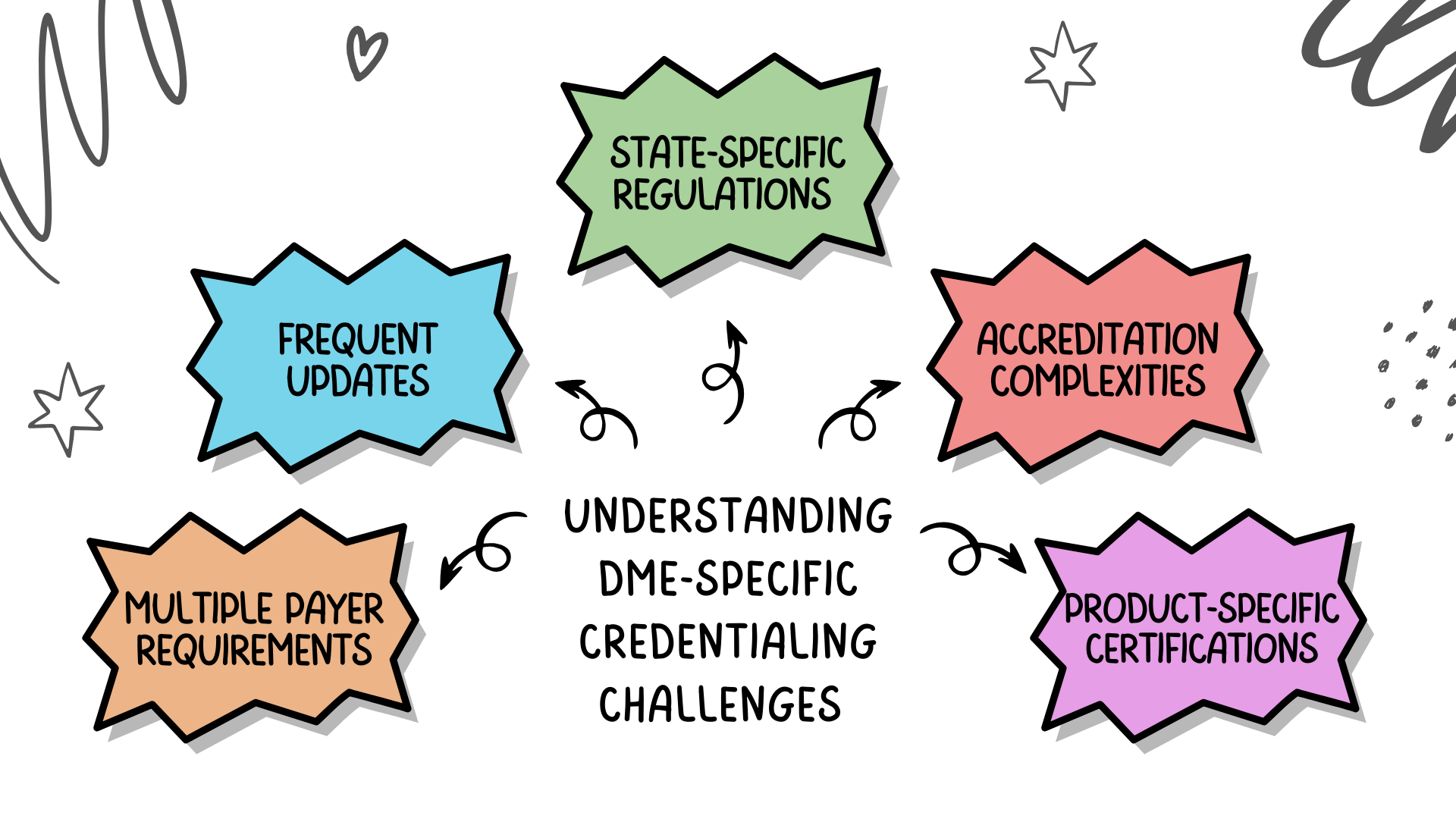
    DME providers face unique credentialing hurdles compared to other healthcare providers:

    1. Multiple Payer Requirements: Each insurance company, Traditional Medicare, and Medicaid credentialing process has its own set of credentialing requirements.

    2. Frequent Updates: DME product lines and services often change, requiring frequent updates to credentials and provider information.

    3. State-Specific Regulations: Licensing and regulatory compliance can vary significantly from state to state.

    4. Accreditation Complexities: Many payers require DME-specific accreditation from organizations like ACHC or JCAHO.

    5. Product-Specific Certifications: Certain DME products may require additional certifications or training.

    Strategies for Overcoming Credentialing Challenges

    Overcoming Credentialing Challenges
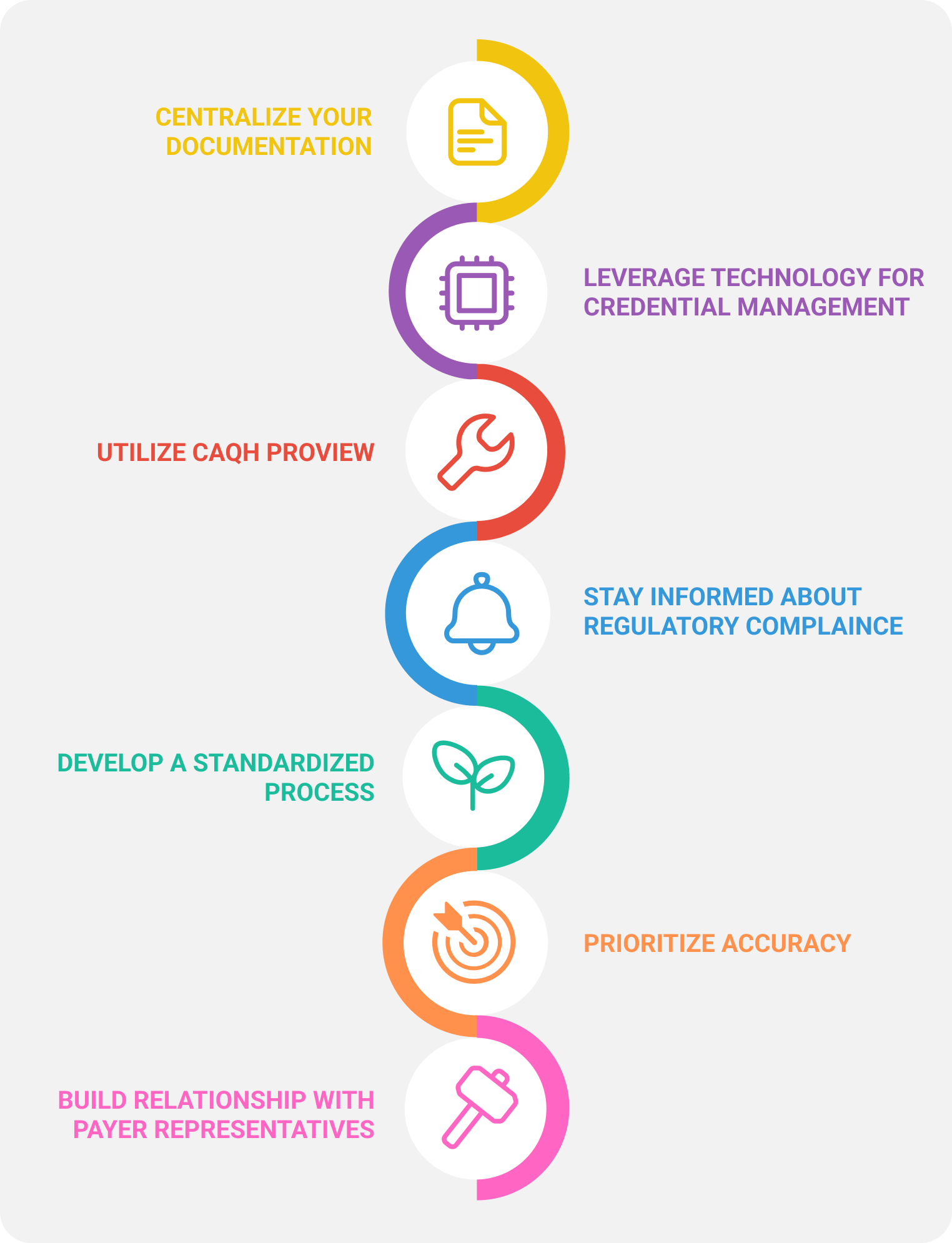
    1. Centralize Your Documentation

    Create a central repository for all your credentialing documents. This should include:
    – Business licenses
    – Accreditation certificates
    – Insurance policies
    – Product-specific certifications
    – Staff credentials and training records
    – NPI number documentation

    Keeping these documents organized and easily accessible can significantly speed up the provider enrollment process.

    2. Leverage Technology for Credential Management

    Invest in credentialing software or partner with a company like WWS that offers technological solutions. These tools can help you:
    – Track enrollment application statuses
    – Set reminders for renewals and updates
    – Automate data entry across multiple applications
    – Ensure data consistency across platforms

    3. Utilize CAQH ProView

    CAQH ProView is a vital tool for credential management and data sharing. It serves as a centralized repository and verification database for your provider information. Make sure to:
    – Keep your CAQH profile up-to-date
    – Regularly attest to the accuracy of your information
    – Use CAQH ProView to streamline your credentialing process with multiple payers

    4. Stay Informed About Regulatory Compliance

    Subscribe to industry newsletters and join professional organizations to stay updated on changes in credentialing requirements and regulatory compliance. This proactive approach can help you avoid delays and denials in the claims processing phase.

    5. Develop a Standardized Process

    Create a standardized workflow for credentialing applications. This should include:
    – Initial data gathering
    – Enrollment application submission
    – Follow-up procedures
    – Renewal tracking

    A consistent process can help reduce errors and improve efficiency in your insurance credentialing efforts.

    6. Prioritize Accuracy

    Errors in credentialing applications can lead to significant delays. Double-check all provider information before submission and consider having a second person review applications for accuracy.

    7. Build Relationships with Payer Representatives

    Establishing good relationships with payer representatives can be invaluable. They can provide insights into the credentialing process and help resolve issues more quickly, especially for complex cases like Medicaid credentialing.

    How WWS Can Help

    At WWS, we understand the unique challenges faced by DME providers in the credentialing process. Our comprehensive solutions are designed to streamline your credential management workflow:

    – Centralized Document Management: Our secure platform allows you to store and manage all your credentialing documents in one place, ensuring data consistency across all applications.

    – Automated Application Tracking: We provide real-time updates on the status of your enrollment applications across multiple payers, including Traditional Medicare and Medicaid.

    – Regulatory Compliance Monitoring: Our team stays on top of regulatory changes and updates you proactively to ensure continuous compliance.

    – Customized Workflows: We create tailored processes that align with your specific DME business needs, including specialized support for CAQH ProView management.

    – Expert Support: Our credentialing specialists are always available to answer your questions and provide guidance on complex issues like product-specific certifications and state-specific regulations.

    By partnering with WWS, you can navigate the complex world of DME credentialing with confidence, allowing you to focus on what matters most – providing quality care to your patients. Our solutions not only ensure accurate provider information across all platforms but also optimize your claims processing workflow, leading to faster reimbursements and improved financial performance.

    Remember, effective credentialing is not just about compliance; it’s about building a foundation for your DME business to thrive. With the right strategies and support, you can turn this challenge into an opportunity for growth and improved patient care.

    References and Further Reading:

    1. Centers for Medicare & Medicaid Services (CMS) – DME Center: https://www.cms.gov/Center/Provider-Type/Durable-Medical-Equipment-DME-Center
    2. National Supplier Clearinghouse (NSC): https://www.palmettogba.com/nsc
    3. CAQH ProView: https://proview.caqh.org/pr
    4. American Association for Homecare: https://www.aahomecare.org/