Category: Healthcare Providers

  • Antitrust in Healthcare Contracting

    Antitrust in Healthcare Contracting

    Introduction:

    In the intricate world of healthcare, where patient care intersects with business practices, understanding antitrust law is crucial for providers, administrators, and healthcare organizations. As we navigate the complexities of healthcare contracting in 2024, antitrust considerations play a pivotal role in shaping fair competition and protecting consumer interests. This comprehensive guide delves into the essence of antitrust law, its specific applications in healthcare contracting, and how it impacts your day-to-day operations and long-term strategies.

    What is Antitrust Law?

    Antitrust law, at its core, is designed to promote fair competition in the marketplace. It aims to prevent practices that could lead to monopolies, price-fixing, or other anti-competitive behaviors that harm consumers and stifle innovation.

    Key Components of Antitrust Law:

    1. Sherman Act (1890):
      • Prohibits agreements that unreasonably restrain trade
      • Bans monopolization and attempts to monopolize
    2. Clayton Act (1914):
      • Prohibits mergers and acquisitions that may substantially lessen competition
      • Bans certain types of price discrimination
    3. Federal Trade Commission Act (1914):
      • Created the Federal Trade Commission (FTC)
      • Prohibits unfair methods of competition and deceptive practices

    Antitrust in Healthcare: A Unique Landscape

    Healthcare presents a unique challenge for antitrust law due to its complex structure, involving providers, insurers, pharmaceutical companies, and medical device manufacturers. In this sector, antitrust laws aim to:

    • Maintain competitive markets to ensure quality care at reasonable prices
    • Prevent collusion among providers or insurers that could drive up costs
    • Ensure that mergers and acquisitions don’t lead to reduced competition or access to care

    Key Areas Where Antitrust Applies to Healthcare Contracting:

    1. Provider Collaborations:
      • Joint ventures between hospitals or physician groups
      • Accountable Care Organizations (ACOs) and clinically integrated networks
    2. Insurer-Provider Contracts:
      • Exclusive dealing arrangements
      • Most Favored Nation (MFN) clauses
    3. Mergers and Acquisitions:
      • Hospital system mergers
      • Acquisition of physician practices by hospitals
    4. Information Sharing:
      • Benchmarking activities
      • Sharing of pricing information among competitors
    5. Tying Arrangements:
      • Requiring purchase of one service to access another

    Antitrust Red Flags in Healthcare Contracting:

    1. Price Fixing:
      • Agreement among competitors to set prices for services
      • Example: A group of independent physicians agreeing on a standard fee schedule
    2. Market Allocation:
      • Dividing markets or patients among competitors
      • Example: Hospital systems agreeing not to expand into each other’s territories
    3. Group Boycotts:
      • Collective refusal to deal with a supplier or payer
      • Example: A group of specialists refusing to contract with a particular insurer
    4. Exclusive Dealing:
      • Agreements that limit a provider’s ability to contract with other insurers
      • Example: An insurer requiring a hospital to deal exclusively with them
    5. Tying:
      • Forcing purchase of one service to access another
      • Example: A hospital requiring insurers to include all its facilities in a network, even less desirable ones

    Case Study: Antitrust in Action

    In 2023, two large hospital systems in a metropolitan area proposed a merger. The FTC investigated due to concerns about reduced competition. The investigation revealed:

    • The merged entity would control over 60% of the local hospital market
    • Historical data showed that previous mergers in similar markets led to price increases
    • There were limited alternatives for certain specialized services

    Outcome: The FTC challenged the merger, leading to a negotiated settlement where the merging parties agreed to divest certain facilities and maintain separate contracting for key service lines.

    Key Lessons:

    • Market concentration is a critical factor in antitrust analysis
    • Historical data on pricing and competition plays a crucial role
    • Regulators consider the impact on specific service lines, not just overall market share

    Navigating Antitrust in Healthcare Contracting: Best Practices for 2024

    1. Conduct Regular Antitrust Audits:
      • Review your contracting practices for potential antitrust issues
      • Stay updated on the latest antitrust guidelines in healthcare
    2. Seek Legal Counsel:
      • Consult with antitrust experts before entering into significant contracts or collaborations
      • Have legal review of any exclusivity clauses or pricing arrangements
    3. Document Pro-Competitive Justifications:
      • Clearly articulate and document the benefits to patients and the healthcare system for any collaborations or significant contractual arrangements
    4. Be Cautious with Information Sharing:
      • Implement safeguards when sharing sensitive information, especially with competitors
      • Use aggregated, historical data for benchmarking activities
    5. Understand Your Market Position:
      • Regularly assess your market share and competitive landscape
      • Be especially cautious if you have a dominant market position
    6. Education and Training:
      • Provide regular antitrust training to executives and staff involved in contracting
      • Create clear internal guidelines on antitrust compliance
    7. Monitor Industry Trends:
      • Stay informed about antitrust enforcement actions in healthcare
      • Anticipate how emerging healthcare models (e.g., value-based care) intersect with antitrust concerns
    8. Transparency in Contracting:
      • Maintain clear, well-documented contracting processes
      • Be prepared to justify contract terms based on objective, pro-competitive criteria

    The Future of Antitrust in Healthcare Contracting

    As we look towards the future, several trends are shaping the antitrust landscape in healthcare:

    1. Increased Scrutiny of Digital Health:
      • Growing focus on data aggregation and its impact on competition
      • Examination of network effects in health IT platforms
    2. Vertical Integration Challenges:
      • Closer examination of mergers between providers and insurers
      • Scrutiny of pharmacy benefit manager (PBM) relationships with insurers and pharmacies
    3. >Focus on Labor Markets:
      • Increased attention to the impact of healthcare consolidation on labor markets
      • Examination of non-compete agreements in healthcare employment
    4. Value-Based Care Considerations:
      • Evolving guidelines for antitrust analysis in value-based care models
      • Balancing collaboration needs with competition concerns
    5. Enhanced Data Analytics in Enforcement:
      • Use of advanced analytics by regulators to detect anti-competitive patterns
      • Increased ability to model complex healthcare markets

    Conclusion:

    Navigating antitrust considerations in healthcare contracting requires a delicate balance between fostering beneficial collaborations and maintaining fair competition. As the healthcare landscape continues to evolve in 2024 and beyond, staying informed and proactive about antitrust issues is crucial for all healthcare stakeholders.

    Remember, the goal of antitrust law in healthcare is ultimately to ensure a competitive market that benefits patients through improved quality, increased innovation, and reasonable prices. By understanding and adhering to antitrust principles in your contracting practices, you not only mitigate legal risks but also contribute to a healthier, more competitive healthcare ecosystem.

    How WWS Can Help:

    At WWS, we understand the complexities of navigating antitrust considerations in healthcare contracting. Our team of experts is dedicated to helping healthcare providers and organizations stay compliant while achieving their strategic objectives. We offer:

    • Comprehensive antitrust risk assessments for your contracting practices
    • Customized training programs on antitrust compliance in healthcare
    • Expert consultation on structuring collaborations and contracts to minimize antitrust risks
    • Ongoing monitoring and updates on antitrust developments in healthcare
    • Support in developing internal antitrust compliance programs

    Ready to ensure your healthcare contracting practices are antitrust-compliant and strategically sound? Let’s discuss how we can support your success in this complex regulatory environment.

    Schedule an introductory meeting with us today: https://calendly.com/wwshcs/wws-collaborative-discovery-meeting

    Together, we can navigate the intricacies of antitrust law in healthcare contracting, ensuring that your practices foster fair competition while advancing your organizational goals and, ultimately, patient care.


  • “David vs. Goliath: How Antitrust Law Leveled the Playing Field for a Denied Healthcare Provider – A Case Study

    “David vs. Goliath: How Antitrust Law Leveled the Playing Field for a Denied Healthcare Provider – A Case Study

    Introduction:

    In the complex world of healthcare contracting, smaller providers often find themselves at a disadvantage when negotiating with large insurance companies. However, antitrust laws serve as a powerful tool to ensure fair competition and prevent monopolistic practices. This case study examines a recent incident where a healthcare provider, denied a contract by a dominant insurer, successfully leveraged antitrust law to challenge the decision and secure fair market access.

    The Setting:

    A mid-sized multi-specialty clinic in a suburban area had been serving its community for over two decades. In early 2024, the clinic found itself in a precarious position when the region’s dominant health insurer, with a 65% market share, refused to renew its contract.

    The Parties Involved:

    1. The Healthcare Provider:
      • A multi-specialty clinic with 50 physicians
      • Serving approximately 100,000 patients annually
      • Known for high-quality care and patient satisfaction
    2. The Dominant Insurer:
      • The largest health insurer in the region
      • Controlling 65% of the local insurance market
      • Recently acquired several smaller insurance companies

    The Contract Denial:

    In January 2024, during routine contract renewal negotiations, the dominant insurer informed the healthcare provider that it would not be renewing their contract. The reasons provided were vague, citing “network adequacy” and “strategic realignment.”

    The Impact:

    1. On the Healthcare Provider:
      • Potential loss of 40% of its patient base
      • Significant financial strain, threatening its ability to operate
      • Risk of laying off staff and reducing services
    2. On the Community:
      • Reduced access to care for patients insured by the dominant insurer
      • Potential overcrowding at other in-network facilities
      • Loss of choice in healthcare providers

    The Provider’s Initial Response:

    The healthcare provider attempted to negotiate with the insurer, offering to accept lower reimbursement rates and participate in value-based care initiatives. However, the insurer remained firm in its decision not to renew the contract.

    The Antitrust Angle:

    After exhausting conventional negotiation tactics, the provider’s leadership consulted with an antitrust attorney. The legal team identified several potential antitrust issues:

    1. Exclusionary Conduct:
      • The insurer’s actions could be seen as an attempt to exclude a competitor from the market, especially if the insurer had interests in competing healthcare facilities.
    2. Reduction of Consumer Choice:
      • The contract denial would significantly reduce options for healthcare services in the community.
    3. Potential Tying Arrangements:
      • Investigation revealed that the insurer had recently acquired an urgent care chain and was directing patients to these facilities.
    4. Market Concentration:
      • The insurer’s dominant market position (65% share) raised concerns about its ability to unilaterally affect market conditions.

    [The rest of the content remains the same, with all specific names replaced by generic identifiers like “the provider,” “the insurer,” etc.]

    Conclusion:

    This case demonstrates that even in the face of seemingly insurmountable odds, healthcare providers have recourse through antitrust laws. By understanding these laws, gathering compelling data, and strategically engaging with regulatory bodies, smaller providers can challenge unfair practices and ensure a more competitive, patient-focused healthcare market.

    As we move forward in 2024, this case serves as a reminder of the ongoing importance of antitrust regulations in maintaining a balanced and competitive healthcare ecosystem. It underscores the need for vigilance, preparation, and a willingness to stand up against anti-competitive practices, ultimately benefiting providers and patients alike.

    How WWS Can Help:

    at WWS, we understand the complexities of healthcare contracting in the post-BCBSM era. Our team of experts is dedicated to helping healthcare providers navigate this evolving landscape. We offer:

    • Comprehensive contract review and analysis services
    • Up-to-date training on healthcare contracting best practices
    • Data analytics to support your negotiation strategies
    • Consultation on adapting to value-based care models
    • Ongoing support to keep you informed of regulatory changes and market trends

    Ready to strengthen your position in healthcare contracting? Let’s discuss how we can support your success in this complex environment.

    Schedule an introductory meeting with us today: https://calendly.com/wwshcs/wws-collaborative-discovery-meeting

    Together, we can ensure that your contracting practices are not only compliant and competitive but also aligned with the evolving standards of fairness and transparency in healthcare.

  • Mastering DME Provider Credentialing: Expert Strategies for Success in 2024

    Mastering DME Provider Credentialing: Expert Strategies for Success in 2024

    Introduction:

    In the ever-evolving landscape of Durable Medical Equipment (DME) provision, robust credentialing remains a cornerstone of success. As we navigate through 2024, the credentialing process continues to grow in complexity, requiring DME providers to stay ahead of the curve. This comprehensive guide will equip you with expert strategies to master DME provider credentialing, helping you avoid common pitfalls and position your business for sustainable growth.

    Understanding the Evolving Landscape of DME Credentialing

    The DME credentialing landscape in 2024 is characterized by:

    • Increased scrutiny from payers and regulatory bodies
    • Growing emphasis on quality metrics and patient outcomes
    • Integration of telehealth and remote patient monitoring considerations
    • Rising importance of cybersecurity and data protection measures

    Key action: Stay informed about industry changes through professional associations, regulatory updates, and continuing education.

    Building a Robust Credentialing Infrastructure

    A solid credentialing foundation is crucial for long-term success:

    1. Centralized Credentialing System:
      • Implement a centralized, digital system for managing all credentialing documentation
      • Ensure easy accessibility and regular updates of critical information
    2. Dedicated Credentialing Team:
      • Assign staff specifically to oversee credentialing processes
      • Invest in ongoing training to keep the team updated on best practices
    3. Standardized Processes:
      • Develop clear, written procedures for all aspects of credentialing
      • Create checklists and timelines to ensure consistency and completeness
    4. Proactive Renewal Management:
      • Implement an alert system for upcoming expirations and renewals
      • Begin renewal processes well in advance to avoid lapses

    Leveraging Technology for Efficient Credentialing

    Embrace technological solutions to streamline your credentialing process:

    1. Credentialing Software:
      • Invest in specialized credentialing software to automate data collection and verification
      • Look for solutions that offer integration with other business systems
    2. Digital Document Management:
      • Implement secure, cloud-based storage for all credentialing documents
      • Ensure easy retrieval and sharing of information when needed
    3. Automated Verification:
      • Utilize services that offer real-time verification of licenses and certifications
      • Implement systems for continuous monitoring of exclusion lists and sanctions

    Navigating Payer-Specific Requirements

    Different payers often have unique credentialing requirements. Develop strategies to manage these effectively:

    1. Payer Matrix:
      • Create a comprehensive matrix of all payer requirements
      • Regularly update this matrix to reflect changes in payer policies
    2. Tailored Application Packages:
      • Develop customized application packages for each major payer
      • Include all necessary documentation to expedite the review process
    3. Relationship Management:
      • Foster positive relationships with payer credentialing departments
      • Maintain open lines of communication to address issues promptly

    Quality Assurance in Credentialing

    Implement robust quality assurance measures to minimize errors and ensure compliance:

    1. Internal Audits:
      • Conduct regular internal audits of your credentialing files
      • Address any discrepancies or incomplete information promptly
    2. Peer Review:
      • Implement a peer review system for credentialing applications
      • Have a second set of eyes review all submissions for accuracy
    3. Ongoing Education:
      • Provide regular training to staff on credentialing best practices
      • Stay updated on regulatory changes and industry standards

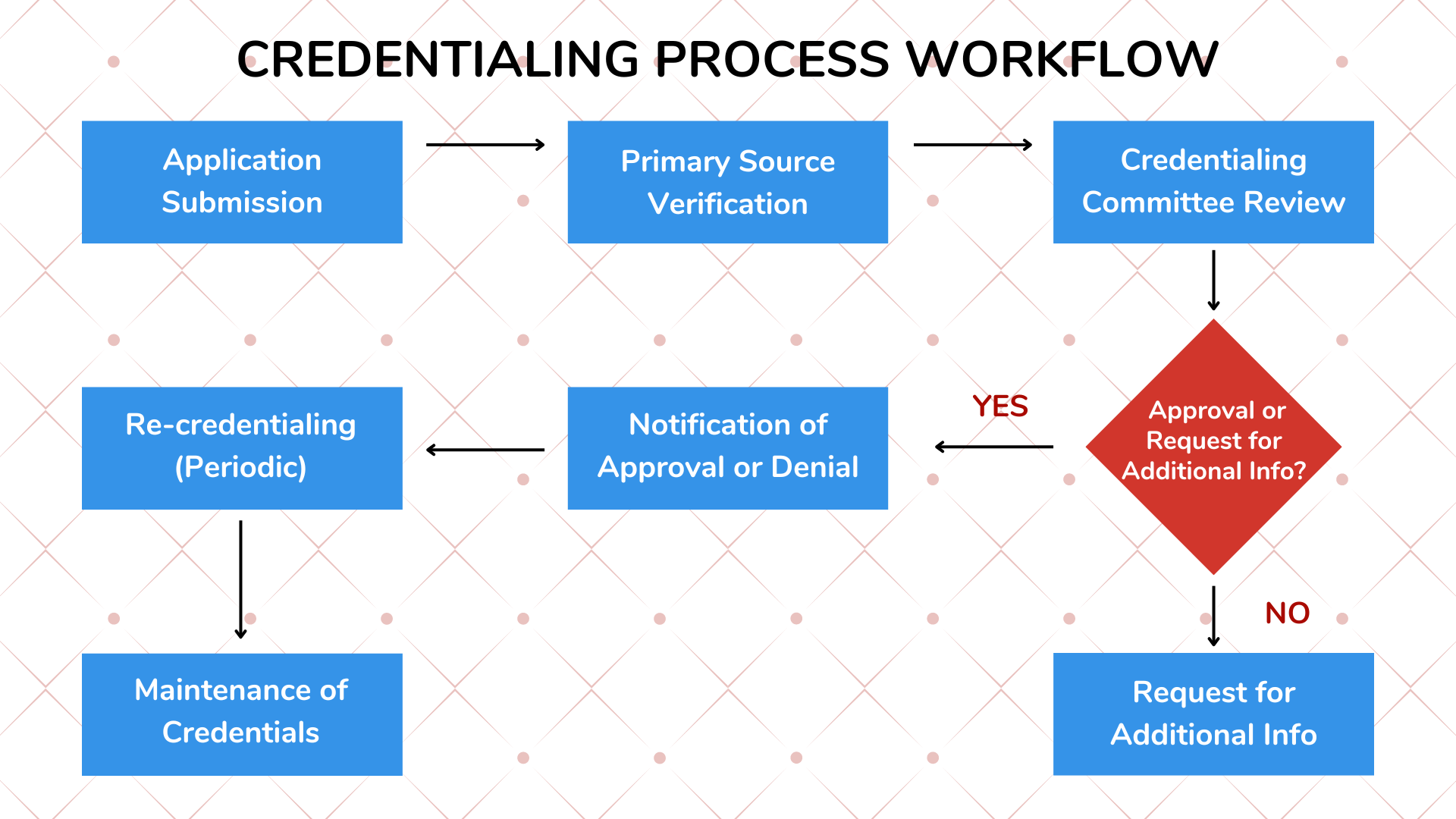
    Credentialing Process Workflow

    Addressing Common Credentialing Challenges

    Be prepared to tackle these frequent credentialing hurdles:

    1. Incomplete Applications:
      • Develop a thorough pre-submission checklist
      • Implement a system for tracking and quickly addressing information requests
    2. Delays in Primary Source Verification:
      • Maintain direct contacts at primary sources
      • Consider using Credential Verification Organizations (CVOs) for efficiency
    3. Keeping Up with Regulatory Changes:
      • Subscribe to regulatory update services
      • Assign team members to monitor and report on relevant changes
    4. Managing Multi-State Credentialing:
      • Develop a clear understanding of each state’s unique requirements
      • Consider partnering with local experts in states where you’re expanding

    Preparing for the Future of DME Credentialing

    Stay ahead of the curve by anticipating future trends:

    1. Value-Based Credentialing:
      • Begin incorporating quality metrics and patient outcome data into your credentialing processes
      • Develop systems for tracking and reporting on these metrics
    2. Enhanced Cybersecurity Requirements:
      • Strengthen your data protection measures
      • Consider obtaining cybersecurity certifications relevant to healthcare
    3. Telehealth Integration:
      • Ensure your credentialing processes account for telehealth services
      • Stay informed about evolving regulations around remote patient monitoring

    Conclusion:

    Mastering DME provider credentialing in 2024 requires a multifaceted approach that combines technological innovation, process optimization, and a commitment to quality and compliance. By implementing these expert strategies, you can transform credentialing from a necessary burden into a competitive advantage for your DME business.

    Remember, effective credentialing is not just about meeting minimum requirements—it’s about demonstrating your commitment to excellence and building trust with payers, healthcare providers, and patients. As the healthcare landscape continues to evolve, those who excel in credentialing will be best positioned to thrive and grow.

    I apologize for the confusion, and thank you for the correction. I’ll make sure to use the correct company name, Wonder Worth Solutions (WWS), in all future content. Let me update the “How WWS Can Help” section of the last blog post to reflect this:

    How WWS Can Help:

    At Wonder Worth Solutions (WWS), we specialize in helping DME providers navigate the complex world of credentialing. Our expert team can assist you in:

    • Developing a customized credentialing strategy tailored to your business needs
    • Implementing efficient credentialing processes and technologies
    • Staying compliant with ever-changing regulatory requirements
    • Preparing for and managing payer audits
    • Optimizing your credentialing to support business growth and expansion

    Let WWS be your partner in mastering DME provider credentialing. Our expertise can help you transform your credentialing processes, reduce administrative burden, and position your business for success in the competitive DME market.

    CTA:

    Ready to elevate your DME credentialing to the next level? Let’s work together to create a credentialing strategy that drives your business forward. Schedule your Collaborative Discovery Meeting with our credentialing experts today! Click here to book: https://calendly.com/wwshcs/wws-collaborative-discovery-meeting

  • Understanding the Role of Credentialing in Healthcare Contracting

    Understanding the Role of Credentialing in Healthcare Contracting

    Introduction:

    Credentialing is a vital process in the healthcare industry that verifies healthcare providers’ qualifications, skills, and experience. In this blog post, we will discuss the importance of credentialing in the healthcare industry and how it affects healthcare contracts, quality assurance, compliance with regulatory requirements, reimbursement and payment accuracy, legal and liability considerations, patient satisfaction, and trust.

    Why Is Credentialing Necessary in Healthcare Contracting?

    Credentialing is the process of verifying a healthcare provider’s qualifications and skills to ensure that only qualified and competent professionals provide care to patients. It helps healthcare organizations identify professionals who meet the necessary standards of care and who are legally authorized to provide medical care. Credentialing is essential for healthcare providers who wish to participate in government-funded healthcare programs such as Medicare and Medicaid. Finally, credentialing plays a crucial role in managing liability and risk for healthcare organizations. It helps them mitigate risk by ensuring that only qualified and competent providers are providing medical care.

    How Does Credentialing Work?

    Credentialing is a comprehensive process conducted by healthcare organizations to evaluate and verify the qualifications, experience, and credentials of healthcare providers. It ensures that healthcare professionals meet the necessary standards of care and are legally authorized to practice in their respective fields. Here is a detailed explanation of how the credentialing process works:

    Application Review:

    Healthcare providers submit their application to the credentialing committee of the healthcare organization. This application typically includes personal information, educational background, work experience, areas of specialization, and any certifications or licenses held.

    Verification of Credentials:

    The credentialing committee conducts a thorough review of the information provided in the application. They verify the authenticity of the provider’s credentials, such as educational degrees and diplomas, through direct contact with the educational institutions or certification boards. Licenses and certifications are verified with the relevant licensing bodies or professional organizations.

    Primary Source Verification (PSV):

    PSV is a critical step in credentialing that involves directly obtaining information from primary sources to validate the provider’s credentials. This can include contacting educational institutions, licensing boards, certification bodies, and previous employers to confirm the accuracy and validity of the information provided by the provider.

    Background Checks:

    Credentialing also involves conducting background checks on healthcare providers to identify any potential issues or red flags. These checks may include criminal background checks, checks for any history of malpractice litigation or disciplinary actions, and verification of professional references.

    Peer Review:

    In some cases, the credentialing committee may seek input from other healthcare professionals who have worked directly with the provider. This peer review helps to assess the provider’s clinical skills, communication abilities, and overall professionalism.

    Committee Evaluation:

    The credentialing committee carefully evaluates all the information gathered during the verification process. They consider factors such as the provider’s education, training, work experience, board certifications, peer reviews, and any potential concerns that may have surfaced during the verification and background checks.

    Decision-Making:

    Based on the evaluation, the credentialing committee decides the provider’s credentialing status. If the provider meets all the requirements and there are no significant concerns or discrepancies, they are granted credentialing privileges. However, if some issues or concerns need further investigation or clarification, the committee may request additional information from the provider before making a final decision.

    Ongoing Monitoring:

    Credentialing is not a one-time process. Healthcare organizations also conduct ongoing monitoring of healthcare providers to ensure that their credentials remain current and that they continue to meet the required standards. This may include periodic credential re-verification, licensure status tracking, and monitoring of any disciplinary actions or malpractice claims.

    How Does Credentialing Affect Healthcare Contracts?
    Quality Assurance:

    Credentialing helps healthcare organizations maintain a high standard of care by verifying that healthcare providers have the appropriate qualifications, skills, and experience to deliver quality healthcare services. By only contracting with credentialed providers, healthcare organizations can ensure that patients receive care from competent and qualified professionals.

    Compliance with Regulatory Requirements:

    Healthcare contracts must comply with various regulatory requirements from government bodies and health plans. These requirements often include specific credentialing criteria that healthcare providers must meet to participate in the contract. Credentialing ensures that healthcare providers meet these regulatory requirements, such as maintaining valid licenses and certifications, thereby ensuring compliance with contractual obligations.

    Reimbursement and Payment Accuracy:

    Health plans typically require healthcare providers to be credentialed for reimbursement purposes. Credentialing helps ensure that healthcare organizations are accurately reimbursed for the services provided by the credentialed providers. Health plans often have specific reimbursement rates and terms for credentialed providers, which may differ from those for non-credentialed providers.

    Legal and Liability Considerations:

    Credentialing helps healthcare organizations manage legal and liability risks. By ensuring that healthcare providers are properly credentialed, healthcare organizations can demonstrate that they have taken reasonable steps to verify the qualifications and competence of their contracted providers. In the event of medical malpractice or negligence claims, credentialing can serve as evidence that the healthcare organization has selected qualified professionals and fulfilled its duty of care.

    Patient Satisfaction and Trust:

    When patients choose a healthcare provider, they often expect that the provider has undergone a rigorous credentialing process to prove their competence and qualifications. Credentialing enhances patient trust and satisfaction by ensuring that the provider meets the necessary standards of care. By contracting with credentialed providers, healthcare organizations can maintain and enhance their reputation for delivering quality healthcare services.

    Conclusion:

    credentialing plays a crucial role in ensuring that healthcare providers meet the requirements to deliver high-quality care. It also helps healthcare organizations comply with regulatory requirements, accurately receive reimbursement, and manage legal and liability risks. Ongoing monitoring of credentials further ensures that healthcare providers continue to meet the required standards.