
Category: Credentialing Management

  • The Synergy of Credentialing and Contracting in DME: Maximizing Opportunities

    The Synergy of Credentialing and Contracting in DME: Maximizing Opportunities

    Introduction:

    In the dynamic world of Durable Medical Equipment (DME), success isn’t just about providing quality products and services. It’s also about navigating the complex landscape of healthcare regulations and payer relationships. Two critical processes that can make or break your DME business are credentialing and contracting. While often viewed separately, these processes are intrinsically linked and, when approached strategically, can create powerful synergies that drive growth and profitability. In this blog post, we’ll explore how to maximize opportunities by aligning your credentialing and contracting efforts.

    The Interconnected Nature of Credentialing and Contracting

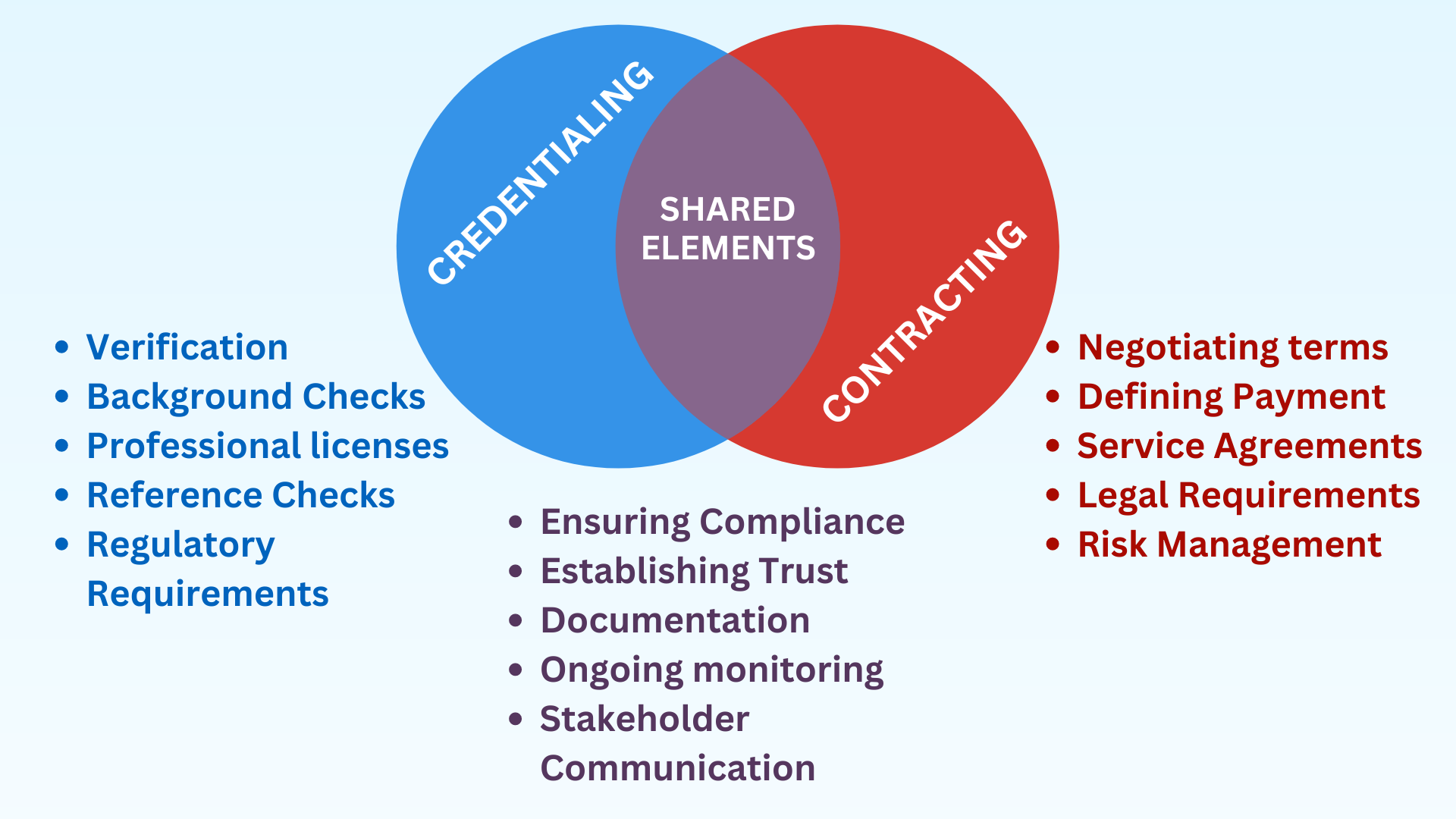
    Credentialing and contracting are two sides of the same coin in the DME industry:

    • Credentialing: The process of verifying a provider’s qualifications, experience, and compliance with regulatory standards.
    • Contracting: The negotiation and establishment of agreements with payers to provide DME services at agreed-upon rates.

    While credentialing focuses on establishing your eligibility to participate in healthcare programs, contracting determines the terms under which you’ll operate. The success of your contracting efforts often hinges on the strength of your credentialing profile.
    Credentialing and Contracting

    How Solid Credentialing Enhances Contracting Opportunities

    A robust credentialing profile can significantly impact your contracting success:

    • Increased Payer Trust: Thorough credentialing demonstrates your commitment to quality and compliance, making payers more likely to offer favorable contract terms.
    • Expanded Network Opportunities: Many payers require specific credentialing achievements before considering providers for their networks.
    • Competitive Advantage: Strong credentials can set you apart from competitors, potentially leading to preferred provider status.
    • Faster Contracting Process: Well-organized credentialing documentation can expedite the contracting process, allowing you to start serving patients sooner.

    Leveraging Credentialing Success in Contract Negotiations

    Here are strategies to use your credentialing achievements to your advantage during contract negotiations:

    • Highlight Unique Qualifications: Emphasize any specialized training, certifications, or accreditations that set you apart.
    • Demonstrate Compliance History: Showcase your track record of meeting and exceeding regulatory requirements.
    • Present Quality Metrics: If available, share data on patient outcomes, satisfaction scores, or other quality indicators tied to your credentialing efforts.
    • Emphasize Breadth of Services: Use your credentialing profile to illustrate the full range of DME services you’re qualified to provide.

    Streamlining Credentialing and Contracting Processes

    Efficiency in managing both credentialing and contracting can lead to significant time and cost savings:

    • Centralize Documentation: Maintain a centralized repository of all credentialing and contracting documents for easy access and updates.
    • Implement Tracking Systems: Use software solutions to monitor expiration dates, renewal requirements, and contract terms.
    • Align Timelines: Coordinate your credentialing renewal schedule with contract negotiation cycles to ensure you’re always negotiating from a position of strength.
    • Cross-train Staff: Ensure your team understands the interplay between credentialing and contracting to facilitate smoother processes.

    Case Studies: DME Providers Who Excel at Both

    Let’s look at two anonymized examples of DME providers who have successfully leveraged the synergy between credentialing and contracting:

    Case Study 1: Midwest DME Solutions

    • Challenge: Struggling to expand into new payer networks
    • Strategy: Invested in obtaining additional accreditations and certifications
    • Result: Secured contracts with three major regional payers, increasing revenue by 35% within one year

    Case Study 2: Coastal Home Health Supplies

    • Challenge: Facing pressure to reduce rates during contract renewals
    • Strategy: Used detailed credentialing data to demonstrate superior quality metrics and compliance record
    • Result: Maintained current rates and secured a preferred provider status with a key payer

    Future Trends: The Evolving Credentialing-Contracting Landscape

    As we look ahead, several trends are shaping the future of credentialing and contracting in the DME industry:

    • Digital Transformation: Increased adoption of blockchain and AI technologies for more efficient credentialing verification and contract management.
    • Value-Based Contracting: Growing emphasis on outcomes-based payments, making strong credentialing even more crucial.
    • Telehealth Integration: New credentialing and contracting considerations for DME providers offering telehealth services.
    • Increased Scrutiny: Heightened focus on fraud prevention, requiring more robust credentialing processes and stricter contract terms.
    • Consolidation: Mergers and acquisitions in the payer landscape may lead to more complex credentialing and contracting requirements.

    Conclusion:

    The synergy between credentialing and contracting in the DME industry is undeniable. By recognizing and leveraging this connection, DME providers can unlock new opportunities, strengthen payer relationships, and drive business growth. Remember, success in this area requires ongoing attention and strategic alignment of both processes.

    As you navigate the complex world of DME credentialing and contracting, consider how you can create a cohesive strategy that maximizes the benefits of both. With the right approach, you can turn these necessary business processes into powerful tools for differentiation and success in the competitive DME marketplace.

    How WWS Can Help:

    At WWS we understand the intricate relationship between credentialing and contracting in the DME industry. Our team of experts can help you:

    • Develop a comprehensive strategy that aligns your credentialing and contracting efforts
    • Streamline your documentation processes for both credentialing and contracting
    • Prepare compelling presentations for contract negotiations that highlight your credentialing strengths
    • Stay ahead of industry trends and regulatory changes that impact both areas
    • Maximize your revenue potential through optimized credentialing and contracting practices

    Let WWS be your partner in creating synergy between your credentialing and contracting efforts, driving your DME business towards greater success and profitability.

    CTA:

    Ready to unlock the full potential of your DME business through strategic credentialing and contracting? Schedule an introductory meeting with our experts today! Click here to book your

    Collaborative Discovery Meeting: https://calendly.com/wwshcs/wws-collaborative-discovery-meeting
  • The Complete Guide to DME Credentialing in 2024: Part 1 – Getting Started

    The Complete Guide to DME Credentialing in 2024: Part 1 – Getting Started

    Introduction:

    In the ever-evolving landscape of healthcare, Durable Medical Equipment (DME) providers play a crucial role in delivering essential medical supplies and equipment to patients. However, before you can serve this vital function, you must navigate the complex world of DME credentialing. This comprehensive guide will walk you through the fundamentals of DME credentialing in 2024, helping you understand the process, requirements, and initial steps to launch your credentialing journey successfully.

    What is DME Credentialing?

    DME credentialing is the process by which healthcare payers, including Medicare, Medicaid, and private insurance companies, verify and assess the qualifications of DME providers. This rigorous evaluation ensures that providers meet specific standards of quality, safety, and compliance before they can bill for services or equipment.

    Key aspects of DME credentialing include:

    • Verification of licensure and certification
    • Confirmation of education and training
    • Assessment of business practices and financial stability
    • Evaluation of compliance with healthcare regulations
    • Review of liability insurance coverage

    The Importance of Proper Credentialing in 2024

    As we navigate through 2024, proper credentialing has become more critical than ever for DME providers. Here’s why:

    • Regulatory Compliance: With increasing scrutiny on healthcare providers, maintaining proper credentials ensures you meet all legal and regulatory requirements.
    • Patient Trust: Credentialing demonstrates your commitment to quality care, building trust with patients and healthcare partners.
    • Financial Stability: Without proper credentialing, you can’t bill payers for your services, severely impacting your business’s financial health.
    • Competitive Advantage: In a crowded market, being fully credentialed sets you apart from less qualified providers.
    • Risk Mitigation: Credentialing helps protect your business from potential legal and financial risks associated with non-compliance.

    Key Players in the DME Credentialing Process

    Understanding the roles of various entities involved in DME credentialing is crucial for navigating the process effectively:

    • Centers for Medicare & Medicaid Services (CMS): Sets standards for Medicare and Medicaid DME providers.
    • National Supplier Clearinghouse (NSC): Handles the enrollment and credentialing process for Medicare DME suppliers.
    • Accreditation Organizations: Entities like The Joint Commission or ACHC that assess and accredit DME providers.
    • Private Payers: Insurance companies with their own credentialing requirements and processes.
    • Credentialing Verification Organizations (CVOs): Third-party entities that often handle credentialing on behalf of payers.

    Essential Documents and Requirements

    To begin the credentialing process, you’ll need to gather several essential documents and meet specific requirements. Here’s a checklist to get you started:

    • Business licenses and registrations
    • National Provider Identifier (NPI) number
    • Tax ID number (EIN)
    • Proof of liability insurance
    • Accreditation certificates
    • Owner and key personnel information
    • Financial statements
    • Policies and procedures documentation
    • Product and service lists
    • Facility information and photos

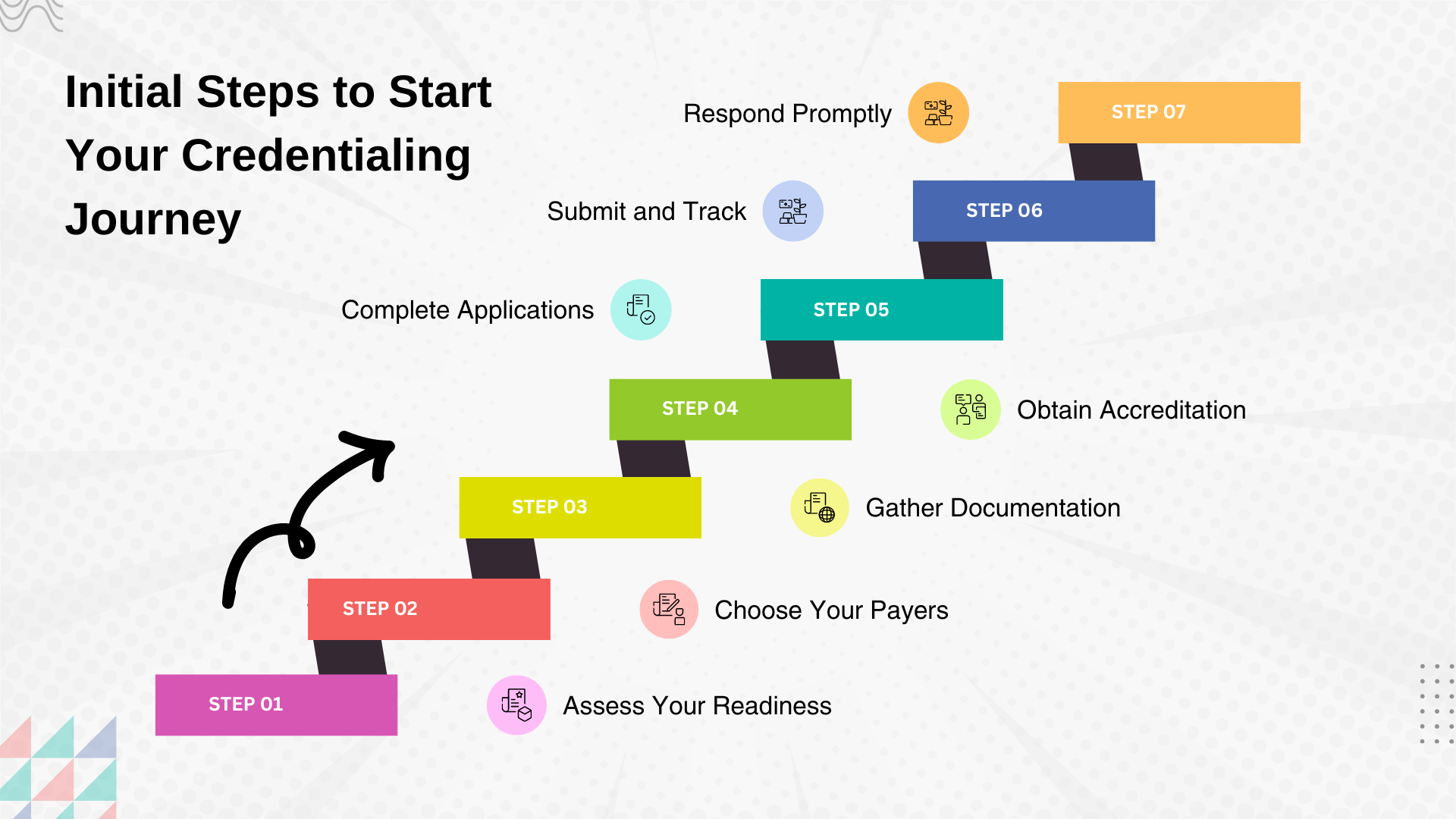
    Initial Steps to Start Your Credentialing Journey

    Credentialing Journey

    Now that you understand the basics, here are the initial steps to launch your DME credentialing process:

    a) Assess Your Readiness: Review all requirements and ensure your business meets the necessary standards.

    b) Choose Your Payers: Decide which payers you want to work with (Medicare, Medicaid, private insurers) and prioritize your applications.

    c) Gather Documentation: Collect all required documents listed in the previous section.

    d) Obtain Accreditation: If not already accredited, begin the process with a recognized accrediting organization.

    e) Complete Applications: Start with Medicare enrollment through PECOS (Provider Enrollment, Chain, and Ownership System) if applicable.

    f) Submit and Track: Send in your applications and diligently track their progress.

    g) Respond Promptly: Be prepared to quickly respond to any requests for additional information.

    Common Challenges for New DME Providers

    As you embark on your credentialing journey, be aware of these common challenges:

    • Time-consuming process: Credentialing can take several months. Start early and be patient.
    • Complex documentation: Ensuring all paperwork is complete and accurate can be daunting.
    • Changing requirements: Stay informed about updates to credentialing standards and regulations.
    • Multiple payer processes: Each payer may have different requirements and systems.
    • Maintaining credentials: Remember that credentialing is an ongoing process, not a one-time task.

    Conclusion:

    Embarking on your DME credentialing journey in 2024 may seem overwhelming, but with the right knowledge, preparation, and support, you can navigate the process successfully. This guide has provided you with a solid foundation to understand DME credentialing, its importance, key players, essential requirements, and initial steps to get started. In Part 2 of this guide, we’ll delve deeper into advanced strategies for successful credentialing and maintaining your credentials over time.
    Remember, proper credentialing is not just a regulatory requirement—it’s a testament to your commitment to quality care and a key factor in your business’s success. Stay tuned for more insights and expert advice on mastering DME credentialing in 2024 and beyond.

    How WWS Can Help:

    At (WWS), we understand the complexities of DME credentialing and are here to support you every step of the way. Our team of experts can guide you through the entire credentialing process, helping you avoid common pitfalls and ensure a smooth, efficient experience. We offer:

    • Comprehensive credentialing support
    • Expert guidance on regulatory compliance
    • Assistance with document preparation and submission
    • Ongoing monitoring and maintenance of your credentials

    Don’t navigate the credentialing maze alone. Let WWS be your trusted partner in achieving and maintaining your DME credentials.

    CTA:

    Ready to streamline your DME credentialing process? Schedule an introductory meeting with our experts today! Click here to book your Collaborative Discovery Meeting: https://calendly.com/wwshcs/wws-collaborative-discovery-meeting
  • Maximizing Revenue Through Strategic Contracting and Credentialing

    Maximizing Revenue Through Strategic Contracting and Credentialing

    Introduction:

    Credentialing and contracting a powerful tools for maximizing revenue. In this post, we’ll cover how to assess your existing business strategy and determine whether contracting or credentialing could be the next step toward achieving your goal. We’ll also look at some of the common pitfalls that can derail your effort, and how to avoid them.

    Maximizing Revenue Through Strategic Credentialing:

    Strategic contracting can be a valuable tool for hospitals to optimize revenue.
    Contracting is a business process that involves the exchange of goods or services for money. It’s used by many organizations, including hospitals, as a way to increase revenue by selling services at a higher rate than what they cost.

    Hospitals can maximize their revenue by strategically contracting with other organizations to provide greater value to patients and payers while improving patient experience during hospital stays

    Hospitals can also use data to better understand their markets and provide a higher level of service that patients value. Hospitals have traditionally used contracting as a way to increase revenue by selling services at a higher rate than what they cost. However, with the rise of accountable care organizations (ACOs) and bundled payment, hospitals need to rethink how they contract with payers because it’s no longer just about price, Instead, hospitals should focus on providing greater value while improving patient experience during hospital stays.

    Maximizing Revenue Through Strategic Contracting:

    When you’re looking to maximize revenue, one of the most effective ways to do so is through strategic credentialing. Credentialing is the process of verifying the credentials of an individual or organization to ensure their qualifications are consistent with the requirements of the position. It’s used to determine if an individual is qualified for a specific purpose and can be used in a variety of industries, including healthcare, education, and more.

    Credentialing provides several benefits for both employers and employees:

  • It helps organizations ensure that people have acquired the necessary skills before being hired for certain positions (or promoted). This ensures that teams are comprised entirely of qualified individuals who represent themselves honestly during interviews.
  • It gives job seekers greater confidence when applying for jobs because they know exactly what documents they need from previous employers before starting work–and no longer worry whether those documents will arrive in time.
  • Credentialing Management:

    Credentialing management is a critical component in the revenue cycle management process. It involves ensuring that providers are ready to provide quality care, as well as verifying that they have completed all required training and education.

    Providers need to be credentialed by an organization such as JCAHO or CMS before they can begin practicing medicine at a hospital or clinic. Credentialing managers make sure that providers meet the standards set by these organizations, which helps ensure patient safety while also reducing legal liability for the hospital or clinic if something goes wrong with the treatment provided by an uncertified provider.

    As the healthcare industry continues to grow and evolve, so too do the needs of hospitals and clinics. Credentialing management is essential in maintaining quality care, which can be challenging as more providers enter into the system Credentialing management is a critical component in the revenue cycle management process. It involves ensuring that providers are ready to provide quality care, as well as verifying that they have completed all required training and education. Providers need to be credentialed by an organization such as JCAHO or CMS before they can begin practicing medicine at a hospital or clinic. Credentialing managers make sure that providers meet the standards set by these organizations, which helps ensure patient safety while also reducing legal liability for the hospital or clinic if something goes wrong with the treatment provided by an uncertified provider.

    Revenue Management

    Revenue management is the process of managing revenue to maximize profitability. Revenue management can be categorized into two categories:

  • Strategic Contracting – This refers to the process of negotiating contracts with customers that are in your best interest, while also providing value for them. It also involves ensuring you have the right mix of products and services sold at each customer site so that they are satisfied with what they receive.
  • Strategic Credentialing – This refers to setting up a credentialing program so that you can get paid more money for selling higher-priced products or services (e.g., selling 50% more software licenses).
  • The two categories of revenue management are complementary. For example, strategic contracting can help you increase your money by selling additional products or services to a customer. However, without strategic credentialing (such as setting up a credit card processing system), you won’t be able to take advantage of those higher prices.

    Provider Credentialing

    Provider credentialing is the process of vetting providers for their ability to provide the services required. It also ensures that providers can provide those services promptly.

    Provider credentialing should be considered part of any contracting strategy, as it can help you:

  • Control costs by ensuring that only qualified contractors work on your projects
  • Meet deadlines by selecting only those contractors who have demonstrated their ability to meet – sensitive goals
  • Avoid Project delays by ensuring contractors have the necessary equipment and personnel to perform their work and protect yourself from liability by verifying that each provider has insurance coverage.

    You can maximize revenue with strategic credentialing

    Strategic credentialing is a process that identifies the most suitable providers for your patients. When you implement strategic credentialing, it can help you maximize revenue, reduce costs, and improve patient care.

    The first step in strategic credentialing is to identify how many procedures are performed in your facility each year by different types of providers (e.g., surgeons or independent medical examiners). Next, create a list of all possible providers who perform those procedures–including physicians from other hospitals or doctor’s offices; hospitals; independent practitioners such as radiologists and pathologists; clinical laboratory services companies; pharmaceutical companies with clinical trials programs; medical equipment manufacturers offering equipment used in surgery; etcetera! Then score each provider based on their expertise/experience level relative to the type of procedure being considered (e.g., score 1-5 if they have never done this procedure before). Once you’ve scored each potential provider against all criteria listed above then compare those scores against one another until only one name remains at the top: “This person should do this job!”

    The next step is to contact providers on your list and ask them if they are willing to be considered for a job. Set up interviews with each one, including a discussion about their experience/expertise in this area of medicine and how many procedures they have performed over the last year. Invite them back into the facility for an in-person demonstration of their skills (e.g., allowing them to perform surgery on a cadaver).

    Conclusion:

    We hope that you have found this article helpful in understanding how to maximize revenue. As always, we are here to help you with any questions or concerns that arise when it comes to credentialing and revenue management.