Category: Contract Management

  • The Hidden Costs of Poor DME Credentialing: Why It Pays to Get It Right

    The Hidden Costs of Poor DME Credentialing: Why It Pays to Get It Right

    Introduction:

    In the competitive world of Durable Medical Equipment (DME), providers often focus on visible costs like equipment and staffing. However, the hidden costs associated with poor credentialing can significantly impact a DME business’s bottom line. As we navigate through 2024, understanding and addressing these hidden costs is more crucial than ever. This blog post will explore the financial implications of inadequate credentialing practices and provide strategies to ensure your DME business stays ahead of the curve.

    The True Cost of Credentialing Errors

    Credentialing mistakes can lead to various financial repercussions:

    1. Claim Denials:
      • Issue: Incorrectly credentialed providers lead to rejected claims.
      • Cost: Potential loss of revenue, increased administrative work for resubmissions.
    2. Delayed Payments:
      • Issue: Incomplete credentialing information slows down the payment process.
      • Cost: Cash flow disruptions, potential need for short-term financing.
    3. Network Exclusion:
      • Issue: Failure to meet credentialing standards can result in network exclusion.
      • Cost: Loss of patient volume, reduced market share.
    4. Compliance Penalties:
      • Issue: Non-compliance with credentialing requirements can lead to fines.
      • Cost: Direct financial penalties, potential legal fees.

    The Ripple Effect on Operations

    Poor credentialing doesn’t just affect your bottom line; it can disrupt your entire operation:

    1. Administrative Burden:
      • Issue: Constantly addressing credentialing issues diverts staff from other tasks.
      • Cost: Reduced operational efficiency, potential need for additional staff.
    2. Provider Frustration:
      • Issue: Credentialing problems can frustrate and demotivate your team.
      • Cost: Potential turnover, recruitment and training expenses.
    3. Reputation Damage:
      • Issue: Credentialing errors can harm your reputation with payers and patients.
      • Cost: Lost business opportunities, marketing expenses to rebuild trust.

    The Investment in Proper Credentialing

    While robust credentialing processes require investment, the returns are substantial:

    1. Technology Solutions:
      • Investment: Implementing credentialing software and databases.
      • Return: Streamlined processes, reduced errors, better data management.
    2. Staff Training:
      • Investment: Ongoing education for credentialing staff.
      • Return: Fewer mistakes, more efficient processes, ability to handle complex cases.
    3. Quality Assurance Measures:
      • Investment: Implementing rigorous QA processes for credentialing.
      • Return: Reduced denials, faster approvals, improved payer relationships.
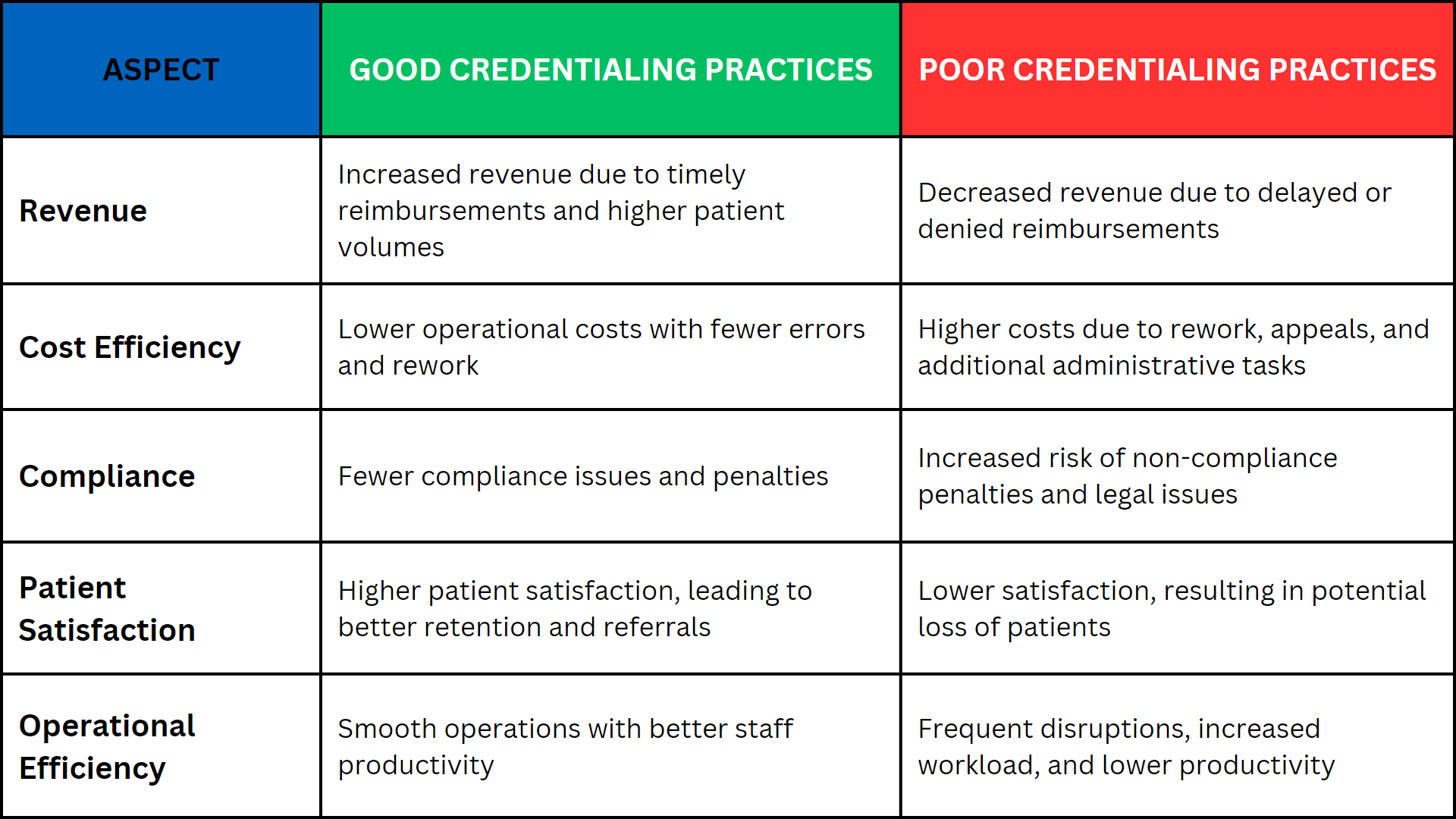
    Financial Impact of Good vs. Poor Credentialing Practices

    Best Practices to Minimize Hidden Costs

    Implement these strategies to optimize your credentialing process:

    1. Centralize Credentialing Operations:
      • Create a dedicated credentialing department or team.
      • Implement standardized processes across all payers and providers.
    2. Leverage Technology:
      • Invest in robust credentialing software.
      • Utilize automated verification services for real-time updates.
    3. Implement Proactive Monitoring:
      • Set up alerts for expiring credentials.
      • Regularly audit credentialing files for completeness and accuracy.
    4. Prioritize Ongoing Education:
      • Keep staff updated on changing regulations and payer requirements.
      • Encourage professional certifications in healthcare credentialing.

    Measuring the ROI of Effective Credentialing

    To justify investments in credentialing, track these key metrics:

    1. Claim Denial Rate:
      • Monitor the percentage of claims denied due to credentialing issues.
      • Set goals for continuous improvement.
    2. Days in Accounts Receivable:
      • Track how quickly you’re paid after submitting claims.
      • Look for improvements as credentialing processes are optimized.
    3. Provider Onboarding Time:
      • Measure how long it takes to fully credential new providers.
      • Aim to reduce this time without sacrificing accuracy.
    4. Audit Performance:
      • Track your performance in payer audits.
      • Use results to identify areas for improvement in your credentialing process.

    Conclusion:

    The hidden costs of poor DME credentialing can significantly impact your business’s financial health and operational efficiency. By recognizing these costs and implementing best practices, you can transform your credentialing process from a potential liability into a strategic asset.

    Investing in proper credentialing is not just about avoiding costs; it’s about creating a foundation for sustainable growth and success in the competitive DME market. As we continue through 2024, those providers who prioritize excellence in credentialing will be best positioned to thrive, building strong relationships with payers, providers, and patients alike.

    How WWS Can Help:

    At Wonder Worth Solutions (WWS), we understand the critical role that effective credentialing plays in the success of DME providers. Our team of experts can help you:

    • Assess your current credentialing processes and identify areas for improvement
    • Implement cutting-edge credentialing technologies tailored to your needs
    • Develop comprehensive training programs for your credentialing staff
    • Create robust quality assurance measures to minimize errors and denials
    • Optimize your credentialing operations for maximum efficiency and ROI

    Let WWS be your partner in transforming your DME credentialing from a cost center into a strategic advantage. Our expertise can help you navigate the complexities of credentialing, reduce hidden costs, and position your business for sustainable growth.

    CTA:

    Ready to uncover and eliminate the hidden costs in your DME credentialing process? Let’s work together to optimize your operations and boost your bottom line. Schedule your Collaborative Discovery Meeting with our credentialing experts today!
    Click here to book: https://calendly.com/wwshcs/wws-collaborative-discovery-meeting

  • The Synergy of Credentialing and Contracting in DME: Maximizing Opportunities

    The Synergy of Credentialing and Contracting in DME: Maximizing Opportunities

    Introduction:

    In the dynamic world of Durable Medical Equipment (DME), success isn’t just about providing quality products and services. It’s also about navigating the complex landscape of healthcare regulations and payer relationships. Two critical processes that can make or break your DME business are credentialing and contracting. While often viewed separately, these processes are intrinsically linked and, when approached strategically, can create powerful synergies that drive growth and profitability. In this blog post, we’ll explore how to maximize opportunities by aligning your credentialing and contracting efforts.

    The Interconnected Nature of Credentialing and Contracting

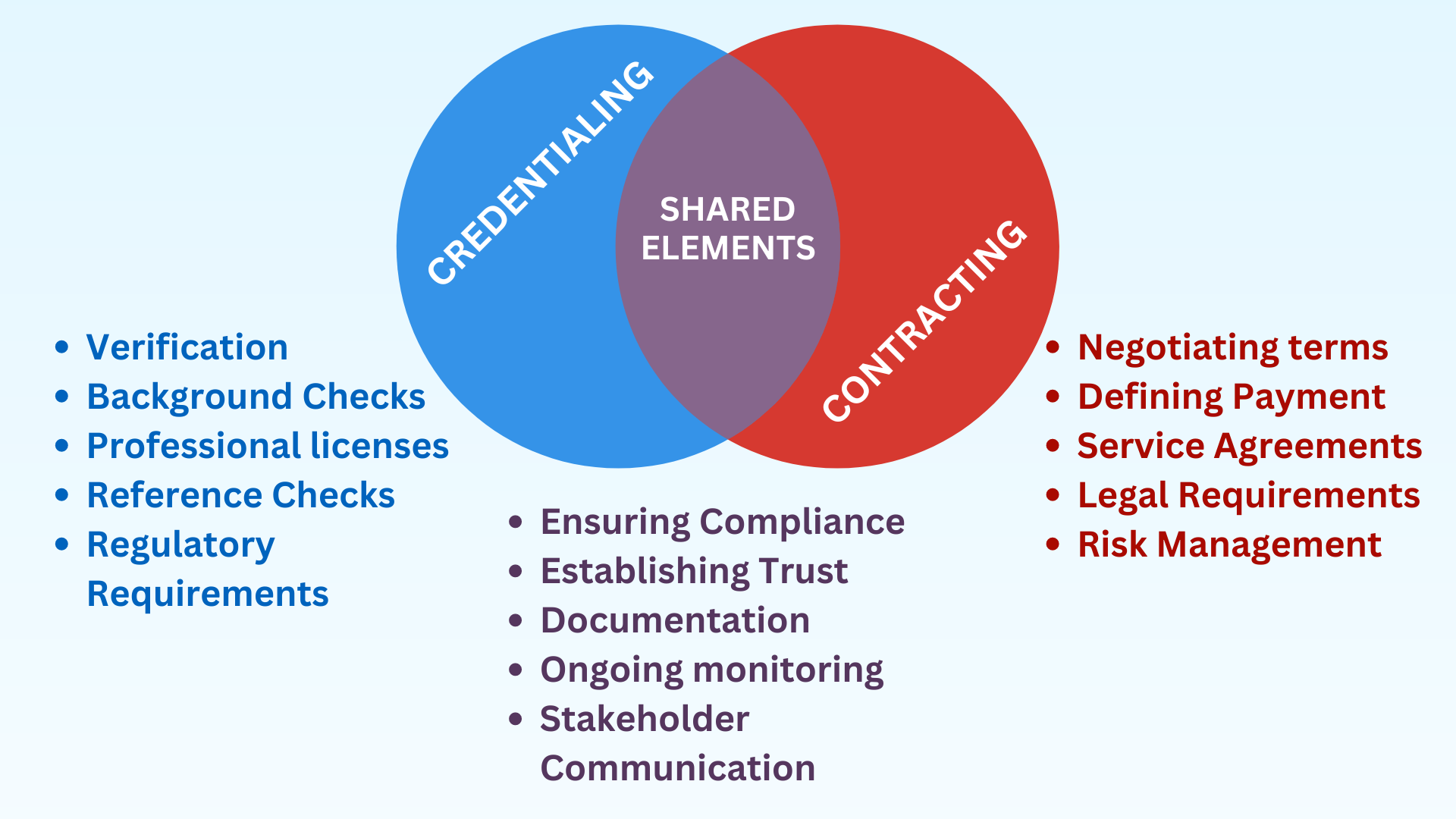
    Credentialing and contracting are two sides of the same coin in the DME industry:

    • Credentialing: The process of verifying a provider’s qualifications, experience, and compliance with regulatory standards.
    • Contracting: The negotiation and establishment of agreements with payers to provide DME services at agreed-upon rates.

    While credentialing focuses on establishing your eligibility to participate in healthcare programs, contracting determines the terms under which you’ll operate. The success of your contracting efforts often hinges on the strength of your credentialing profile.

    Credentialing and Contracting

    How Solid Credentialing Enhances Contracting Opportunities

    A robust credentialing profile can significantly impact your contracting success:

    • Increased Payer Trust: Thorough credentialing demonstrates your commitment to quality and compliance, making payers more likely to offer favorable contract terms.
    • Expanded Network Opportunities: Many payers require specific credentialing achievements before considering providers for their networks.
    • Competitive Advantage: Strong credentials can set you apart from competitors, potentially leading to preferred provider status.
    • Faster Contracting Process: Well-organized credentialing documentation can expedite the contracting process, allowing you to start serving patients sooner.

    Leveraging Credentialing Success in Contract Negotiations

    Here are strategies to use your credentialing achievements to your advantage during contract negotiations:

    • Highlight Unique Qualifications: Emphasize any specialized training, certifications, or accreditations that set you apart.
    • Demonstrate Compliance History: Showcase your track record of meeting and exceeding regulatory requirements.
    • Present Quality Metrics: If available, share data on patient outcomes, satisfaction scores, or other quality indicators tied to your credentialing efforts.
    • Emphasize Breadth of Services: Use your credentialing profile to illustrate the full range of DME services you’re qualified to provide.

    Streamlining Credentialing and Contracting Processes

    Efficiency in managing both credentialing and contracting can lead to significant time and cost savings:

    • Centralize Documentation: Maintain a centralized repository of all credentialing and contracting documents for easy access and updates.
    • Implement Tracking Systems: Use software solutions to monitor expiration dates, renewal requirements, and contract terms.
    • Align Timelines: Coordinate your credentialing renewal schedule with contract negotiation cycles to ensure you’re always negotiating from a position of strength.
    • Cross-train Staff: Ensure your team understands the interplay between credentialing and contracting to facilitate smoother processes.

    Case Studies: DME Providers Who Excel at Both

    Let’s look at two anonymized examples of DME providers who have successfully leveraged the synergy between credentialing and contracting:

    Case Study 1: Midwest DME Solutions

    • Challenge: Struggling to expand into new payer networks
    • Strategy: Invested in obtaining additional accreditations and certifications
    • Result: Secured contracts with three major regional payers, increasing revenue by 35% within one year

    Case Study 2: Coastal Home Health Supplies

    • Challenge: Facing pressure to reduce rates during contract renewals
    • Strategy: Used detailed credentialing data to demonstrate superior quality metrics and compliance record
    • Result: Maintained current rates and secured a preferred provider status with a key payer

    Future Trends: The Evolving Credentialing-Contracting Landscape

    As we look ahead, several trends are shaping the future of credentialing and contracting in the DME industry:

    • Digital Transformation: Increased adoption of blockchain and AI technologies for more efficient credentialing verification and contract management.
    • Value-Based Contracting: Growing emphasis on outcomes-based payments, making strong credentialing even more crucial.
    • Telehealth Integration: New credentialing and contracting considerations for DME providers offering telehealth services.
    • Increased Scrutiny: Heightened focus on fraud prevention, requiring more robust credentialing processes and stricter contract terms.
    • Consolidation: Mergers and acquisitions in the payer landscape may lead to more complex credentialing and contracting requirements.

    Conclusion:

    The synergy between credentialing and contracting in the DME industry is undeniable. By recognizing and leveraging this connection, DME providers can unlock new opportunities, strengthen payer relationships, and drive business growth. Remember, success in this area requires ongoing attention and strategic alignment of both processes.

    As you navigate the complex world of DME credentialing and contracting, consider how you can create a cohesive strategy that maximizes the benefits of both. With the right approach, you can turn these necessary business processes into powerful tools for differentiation and success in the competitive DME marketplace.

    How WWS Can Help:

    At WWS we understand the intricate relationship between credentialing and contracting in the DME industry. Our team of experts can help you:

    • Develop a comprehensive strategy that aligns your credentialing and contracting efforts
    • Streamline your documentation processes for both credentialing and contracting
    • Prepare compelling presentations for contract negotiations that highlight your credentialing strengths
    • Stay ahead of industry trends and regulatory changes that impact both areas
    • Maximize your revenue potential through optimized credentialing and contracting practices

    Let WWS be your partner in creating synergy between your credentialing and contracting efforts, driving your DME business towards greater success and profitability.

    CTA:

    Ready to unlock the full potential of your DME business through strategic credentialing and contracting? Schedule an introductory meeting with our experts today! Click here to book your

    Collaborative Discovery Meeting: https://calendly.com/wwshcs/wws-collaborative-discovery-meeting
  • Understanding the Role of Credentialing in Healthcare Contracting

    Understanding the Role of Credentialing in Healthcare Contracting

    Introduction:

    Credentialing is a vital process in the healthcare industry that verifies healthcare providers’ qualifications, skills, and experience. In this blog post, we will discuss the importance of credentialing in the healthcare industry and how it affects healthcare contracts, quality assurance, compliance with regulatory requirements, reimbursement and payment accuracy, legal and liability considerations, patient satisfaction, and trust.

    Why Is Credentialing Necessary in Healthcare Contracting?

    Credentialing is the process of verifying a healthcare provider’s qualifications and skills to ensure that only qualified and competent professionals provide care to patients. It helps healthcare organizations identify professionals who meet the necessary standards of care and who are legally authorized to provide medical care. Credentialing is essential for healthcare providers who wish to participate in government-funded healthcare programs such as Medicare and Medicaid. Finally, credentialing plays a crucial role in managing liability and risk for healthcare organizations. It helps them mitigate risk by ensuring that only qualified and competent providers are providing medical care.

    How Does Credentialing Work?

    Credentialing is a comprehensive process conducted by healthcare organizations to evaluate and verify the qualifications, experience, and credentials of healthcare providers. It ensures that healthcare professionals meet the necessary standards of care and are legally authorized to practice in their respective fields. Here is a detailed explanation of how the credentialing process works:

    Application Review:

    Healthcare providers submit their application to the credentialing committee of the healthcare organization. This application typically includes personal information, educational background, work experience, areas of specialization, and any certifications or licenses held.

    Verification of Credentials:

    The credentialing committee conducts a thorough review of the information provided in the application. They verify the authenticity of the provider’s credentials, such as educational degrees and diplomas, through direct contact with the educational institutions or certification boards. Licenses and certifications are verified with the relevant licensing bodies or professional organizations.

    Primary Source Verification (PSV):

    PSV is a critical step in credentialing that involves directly obtaining information from primary sources to validate the provider’s credentials. This can include contacting educational institutions, licensing boards, certification bodies, and previous employers to confirm the accuracy and validity of the information provided by the provider.

    Background Checks:

    Credentialing also involves conducting background checks on healthcare providers to identify any potential issues or red flags. These checks may include criminal background checks, checks for any history of malpractice litigation or disciplinary actions, and verification of professional references.

    Peer Review:

    In some cases, the credentialing committee may seek input from other healthcare professionals who have worked directly with the provider. This peer review helps to assess the provider’s clinical skills, communication abilities, and overall professionalism.

    Committee Evaluation:

    The credentialing committee carefully evaluates all the information gathered during the verification process. They consider factors such as the provider’s education, training, work experience, board certifications, peer reviews, and any potential concerns that may have surfaced during the verification and background checks.

    Decision-Making:

    Based on the evaluation, the credentialing committee decides the provider’s credentialing status. If the provider meets all the requirements and there are no significant concerns or discrepancies, they are granted credentialing privileges. However, if some issues or concerns need further investigation or clarification, the committee may request additional information from the provider before making a final decision.

    Ongoing Monitoring:

    Credentialing is not a one-time process. Healthcare organizations also conduct ongoing monitoring of healthcare providers to ensure that their credentials remain current and that they continue to meet the required standards. This may include periodic credential re-verification, licensure status tracking, and monitoring of any disciplinary actions or malpractice claims.

    How Does Credentialing Affect Healthcare Contracts?
    Quality Assurance:

    Credentialing helps healthcare organizations maintain a high standard of care by verifying that healthcare providers have the appropriate qualifications, skills, and experience to deliver quality healthcare services. By only contracting with credentialed providers, healthcare organizations can ensure that patients receive care from competent and qualified professionals.

    Compliance with Regulatory Requirements:

    Healthcare contracts must comply with various regulatory requirements from government bodies and health plans. These requirements often include specific credentialing criteria that healthcare providers must meet to participate in the contract. Credentialing ensures that healthcare providers meet these regulatory requirements, such as maintaining valid licenses and certifications, thereby ensuring compliance with contractual obligations.

    Reimbursement and Payment Accuracy:

    Health plans typically require healthcare providers to be credentialed for reimbursement purposes. Credentialing helps ensure that healthcare organizations are accurately reimbursed for the services provided by the credentialed providers. Health plans often have specific reimbursement rates and terms for credentialed providers, which may differ from those for non-credentialed providers.

    Legal and Liability Considerations:

    Credentialing helps healthcare organizations manage legal and liability risks. By ensuring that healthcare providers are properly credentialed, healthcare organizations can demonstrate that they have taken reasonable steps to verify the qualifications and competence of their contracted providers. In the event of medical malpractice or negligence claims, credentialing can serve as evidence that the healthcare organization has selected qualified professionals and fulfilled its duty of care.

    Patient Satisfaction and Trust:

    When patients choose a healthcare provider, they often expect that the provider has undergone a rigorous credentialing process to prove their competence and qualifications. Credentialing enhances patient trust and satisfaction by ensuring that the provider meets the necessary standards of care. By contracting with credentialed providers, healthcare organizations can maintain and enhance their reputation for delivering quality healthcare services.

    Conclusion:

    credentialing plays a crucial role in ensuring that healthcare providers meet the requirements to deliver high-quality care. It also helps healthcare organizations comply with regulatory requirements, accurately receive reimbursement, and manage legal and liability risks. Ongoing monitoring of credentials further ensures that healthcare providers continue to meet the required standards.